
Youth in Foster Care in North Carolina: The Road to Living Independently
As you move toward living on your own, here are some programs and resources that may help you with school, work, and finding a place to live.
Categories: Transition to Adulthood - Independent Living
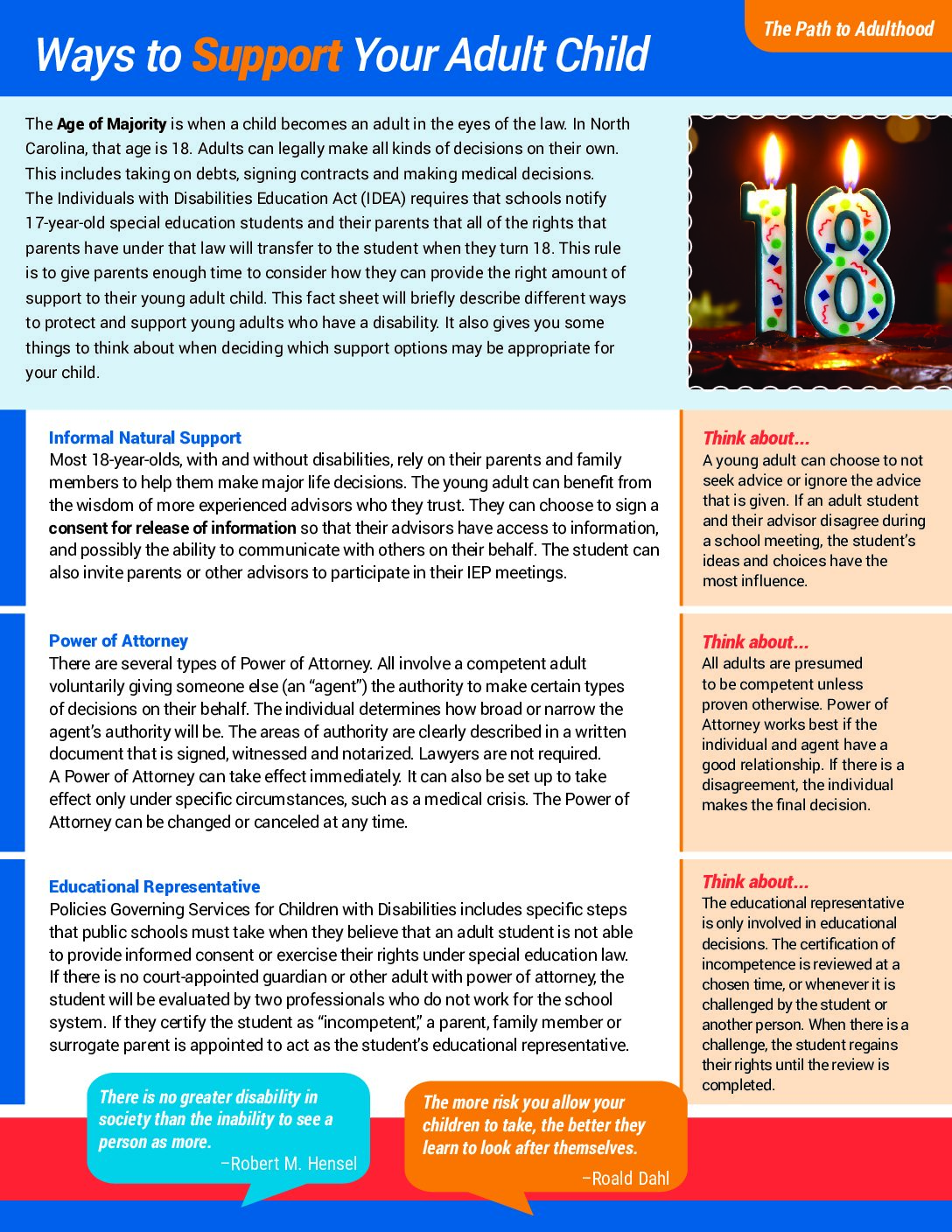
WAZE to Adulthood: Ways to Support Your Adult Child
Sehen Sie sich diese Ressourcen und Tipps zur Unterstützung erwachsener Kinder an!
Categories: Transition to Adulthood - Health Care, Transition to Adulthood - Independent Living
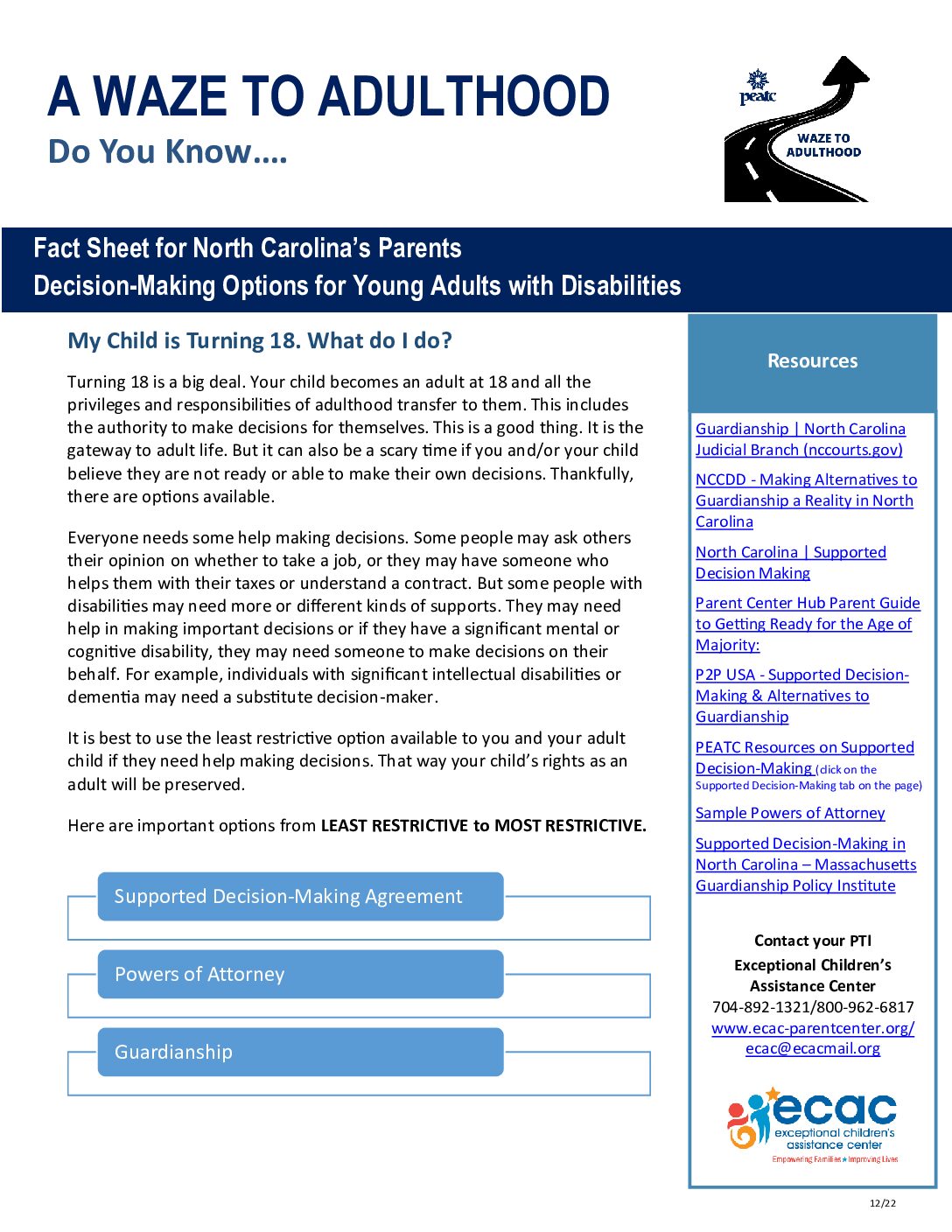
WAZE zum Erwachsensein: Optionen für die Entscheidungsfindung
Der 18. Geburtstag ist eine große Sache. Mit 18 wird Ihr Kind erwachsen und erhält alle Privilegien und Verantwortlichkeiten des Erwachsenseins. Dazu gehört auch die Befugnis, für sich selbst Entscheidungen zu treffen. Das ist eine gute Sache. Es ist das Tor zum Erwachsenenleben. Aber es kann auch eine beängstigende Zeit sein, wenn Sie und/oder Ihr Kind glauben, dass es nicht bereit oder in der Lage ist, seine eigenen Entscheidungen zu treffen. Zum Glück gibt es Optionen.
Categories: Guardianship and Alternatives, Transition to Adulthood - Health Care, Transition to Adulthood - Independent Living
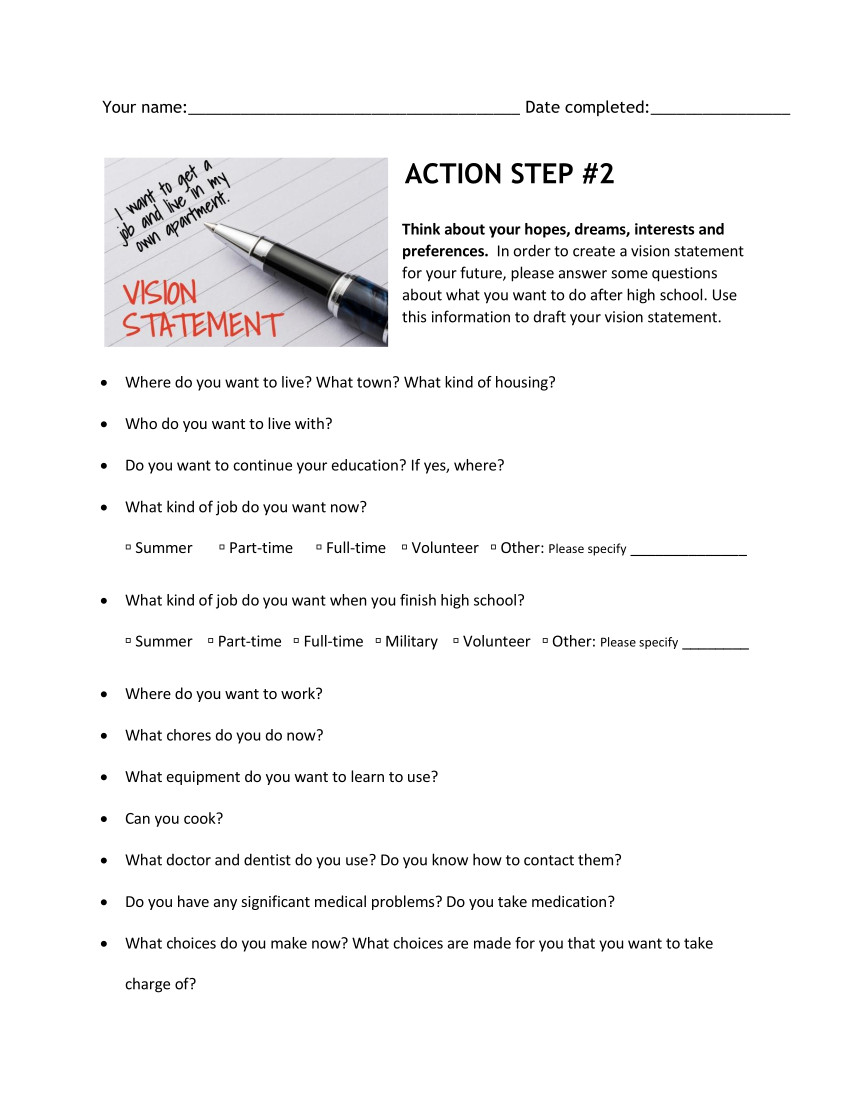
Arbeitsblatt Vision Statement Aktionsschritt Nr. 2
Dieses Arbeitsblatt hilft Jugendlichen, eine Vision für ihr Leben nach der Schule zu entwickeln!
Categories: Advocacy, Transition to Adulthood - Employment and Postsecondary Education, Transition to Adulthood - Health Care, Transition-age Youth, Transition to Adulthood - Independent Living
Rechte in die Realität umsetzen: Wie sich Vormundschaft und Alternativen auf die Autonomie von Menschen mit geistigen Behinderungen und Entwicklungsstörungen auswirken
Dieser Bericht bietet eine eingehende Untersuchung der besonderen Herausforderungen, mit denen Menschen mit geistiger Behinderung und Entwicklungsstörungen konfrontiert sind, und zeigt auf, wie der Einsatz von Alternativen wie der unterstützten Entscheidungsfindung es einigen Menschen mit geistiger Behinderung und Entwicklungsstörungen ermöglichen kann, mehr Selbstbestimmung auszuüben, umfassender an ihren Gemeinschaften teilzuhaben und eine größere wirtschaftliche Unabhängigkeit zu erreichen.
Categories: Guardianship and Alternatives, Transition to Adulthood - Independent Living

Turning 18 in North Carolina
Turning 18 is a big deal! When you turn 18, you are an adult in most states. This means you can make choices in your life about your education, where you live, what doctor you see, what to do with your money, and many other things. Here are some things you should think about as you become an adult.
Categories: Transition to Adulthood - Employment and Postsecondary Education, Transition to Adulthood - Health Care, Transition to Adulthood - Independent Living
Transitioning from School to Adulthood: A Guide for Families and Caregivers
The intention of this guide is to provide direction, advice, and information, and to present a collection of resources that you can use to help navigate your transition to adulthood as smoothly as possible. Our goal is to point you in some useful directions, but it is ultimately up to you to decide what will be helpful for you in your transition journey. In the sections that follow, you will find guidance on transition planning, person-centered planning, building a transition IEP, and exploring pre-employment services.
Categories: Transition to Adulthood - Employment and Postsecondary Education, Transition to Adulthood - Health Care, Transition to Adulthood - Independent Living

Transition Guide: Self-Advocacy
Self-advocacy means speaking up for yourself and taking an active role in decisions that affect your life. It’s about understanding your strengths and needs, asking questions, finding information, knowing your rights, and asking for help when needed. It’s also about learning how to solve problems, communicate clearly, and build supportive relationships.
Categories: Advocacy, Transition to Adulthood - Employment and Postsecondary Education, Transition to Adulthood - Health Care, Transition to Adulthood - Independent Living

Transition Guide: Person-Centered Planning - Fact Sheet for Parents
Begin with the End in Mind It’s never too soon to start planning with your child for their future. When your child is in middle school, this may seem far away and you are focused on today. But those middle and high school years will pass quickly and soon your child will be an adult. While planning is important for all students, it is even more important for students with disabilities who may face more challenges than their peers without disabilities.
Categories: Transition to Adulthood - Employment and Postsecondary Education, Transition to Adulthood - Health Care, Transition to Adulthood - Independent Living
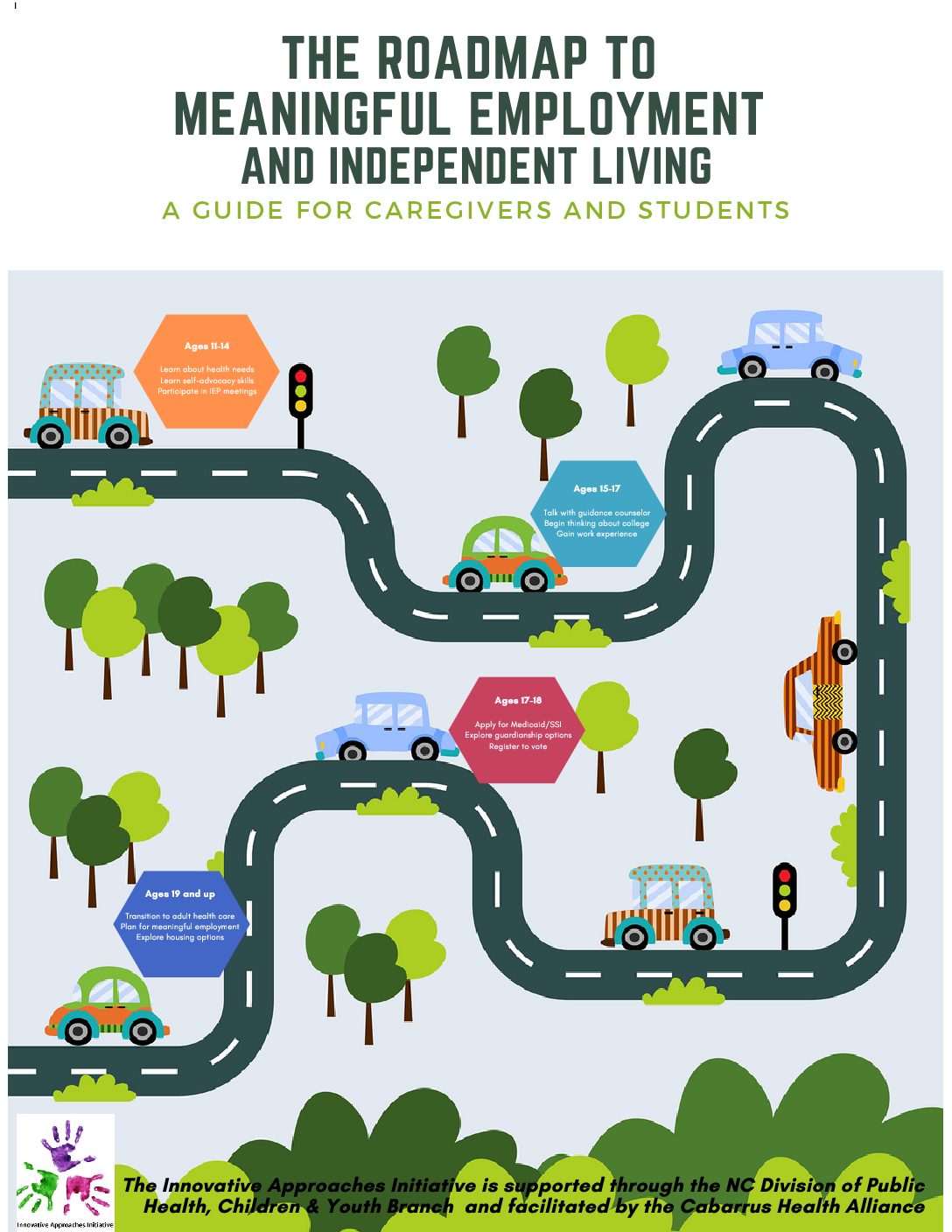
Der Fahrplan für eine sinnvolle Beschäftigung und ein unabhängiges Leben
Ein Leitfaden für Betreuer und Schüler beim Übergang ins Erwachsenenalter
Categories: Transition to Adulthood - Employment and Postsecondary Education, Transition-age Youth, Transition to Adulthood - Independent Living

Supported Decision-Making - When Do I Need Support?
Everyone needs support making some of their decisions. Some people may need support at the doctor’s office. Some people may need help with their taxes. Some people may need help with money. When you receive help with decisions, that is called Supported-Decision-Making. This document can help you decide what you are able to do on your own and what you may need help with.
Categories: Transition to Adulthood - Employment and Postsecondary Education, Transition to Adulthood - Health Care, Transition to Adulthood - Independent Living
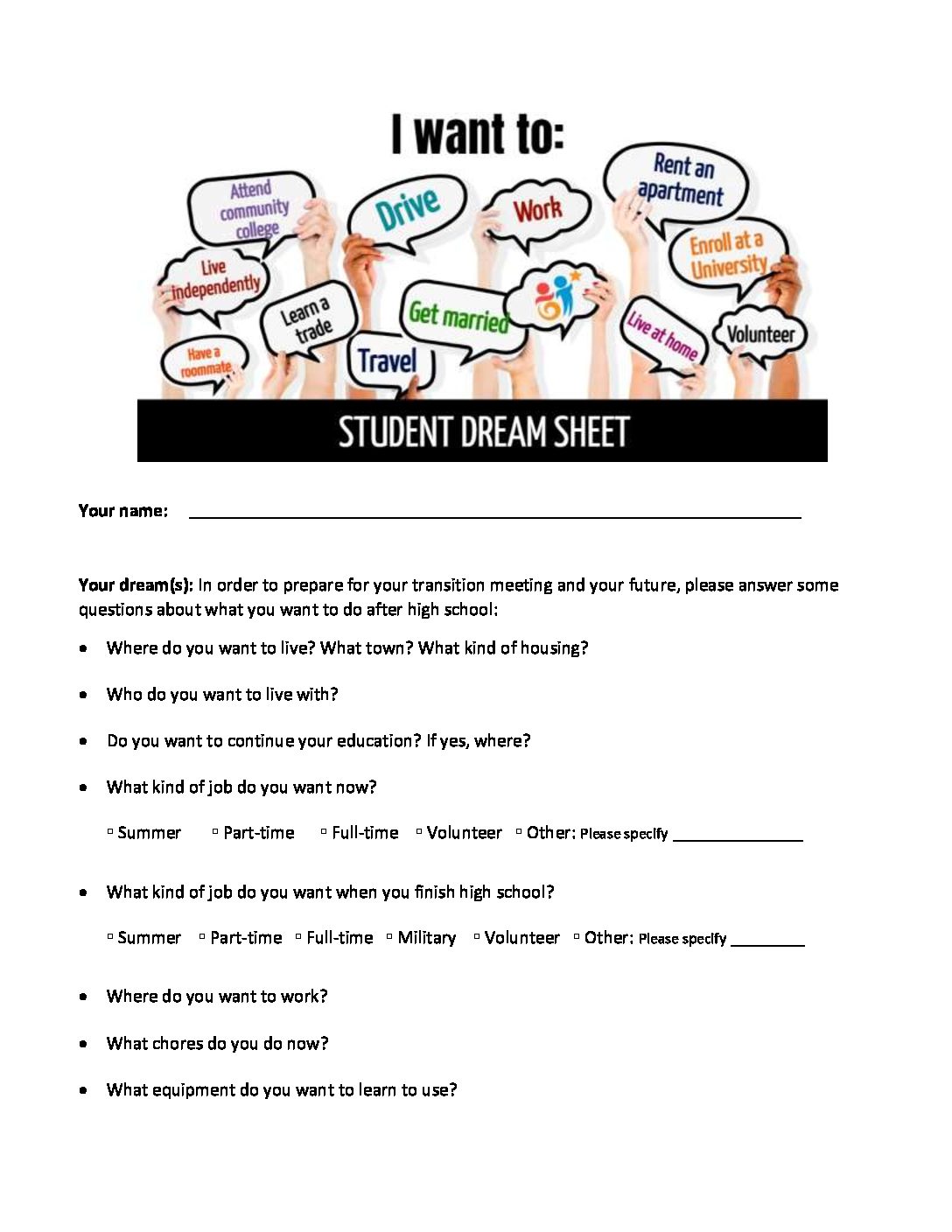
Traumblatt für Studenten
Der Übergang ist eine Reise. Beginnen Sie JETZT mit der Planung dieser Reise. Das Student Dream Sheet kann den Schülern helfen, Ziele zu setzen und ihre Interessen und Vorlieben mitzuteilen.
Categories: Advocacy, IEP, Transition to Adulthood - Employment and Postsecondary Education, Transition to Adulthood - Health Care, Transition-age Youth, Transition to Adulthood - Independent Living

Self-Advocacy - Ways to Speak Up For Yourself (Visual)
Categories: Advocacy, Transition to Adulthood - Employment and Postsecondary Education, Transition to Adulthood - Health Care, Transition to Adulthood - Independent Living
Planning For Your Future: Transitioning to Adulthood
Turning 18 is a big deal When you turn 18, you are considered an adult in North Carolina. You can make choices in your life about your education, where you live, what doctor you see, what to do with your money, and many other things. Use this document as a resource of some things to think about as you become an adult.
Categories: Transition to Adulthood - Employment and Postsecondary Education, Transition to Adulthood - Health Care, Transition to Adulthood - Independent Living

Planifye Lavni Ou: Tranzisyon pou Laj Adilt (Haitian Creole)
Categories: Transition to Adulthood - Employment and Postsecondary Education, Transition to Adulthood - Health Care, Transition to Adulthood - Independent Living

Person-Centered Planning (PCP)
Person-Centered Planning is all about YOU and YOUR plans for YOUR future!
Categories: Transition to Adulthood - Employment and Postsecondary Education, Transition to Adulthood - Health Care, Transition-age Youth, Transition to Adulthood - Independent Living

Person-Centered Planning - For Youth
Person-Centered Planning is all about YOU! YOU are focus of person-centered planning, also called PCP. That means that you get to let your family, your teachers, and others know what you want to do when you leave high school or college and how you want to live your life. People that you trust and care about can help you make those choices but you voice is the most important. PCP can help you achieve your goals and dreams for life after high school
Categories: Transition to Adulthood - Employment and Postsecondary Education, Transition to Adulthood - Health Care, Transition-age Youth, Transition to Adulthood - Independent Living
Npaj Koj Lub Neej Yav Tom Ntej: Hloov Mus Rau Kev Ua Neeg Laus (Hmong)
Categories: Transition to Adulthood - Employment and Postsecondary Education, Transition to Adulthood - Health Care, Transition to Adulthood - Independent Living
North Carolina Centers for Independent Living - Youth Fact Sheet
A Center for Independent Living or CIL is run by and for people with disabilities. North Carolina has 7 CILs that are located around the state. CILs can help people learn how to make decisions about their own lives. They also give people with disabilities advice when it is difficult to live, learn, and work in their communities. You don’t have to do everything yourself because we all need help and support!
Categories: Transition to Adulthood - Independent Living
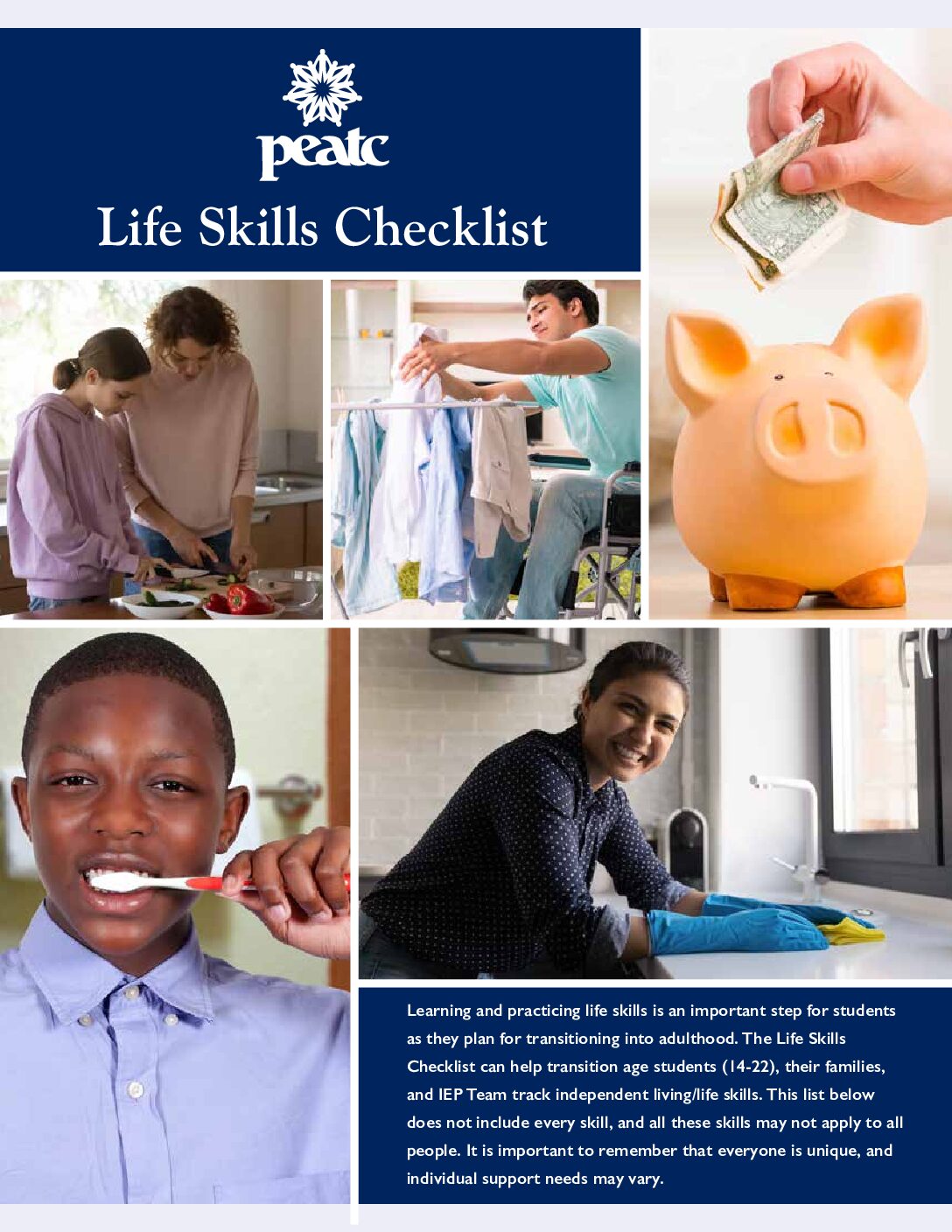
Life Skills Checklist
Learning and practicing life skills is an important step for students as they plan for transitioning into adulthood. The Life Skills Checklist can help transition age students (14-22), their families, and IEP Team track independent living/life skills.
Categories: Transition to Adulthood - Independent Living

Independent Living Toolkit
This guide is intended to provide resources for housing and independent living for people with IDD in North Carolina.
Categories: Transition to Adulthood - Independent Living

Independent Living Skills - Youth
It’s great to want to do things on your own and take care of yourself. That is what independent living skills mean. And the more you practice, the better you will get. But it’s also important to remember that all of us need help with some things. Some people are better at cooking, some are better at laundry, and some are better at solving problems. While you strive to be independent, never worry about having to ask for help! For some things, you may always need help, and that’s okay
Categories: Transition to Adulthood - Independent Living
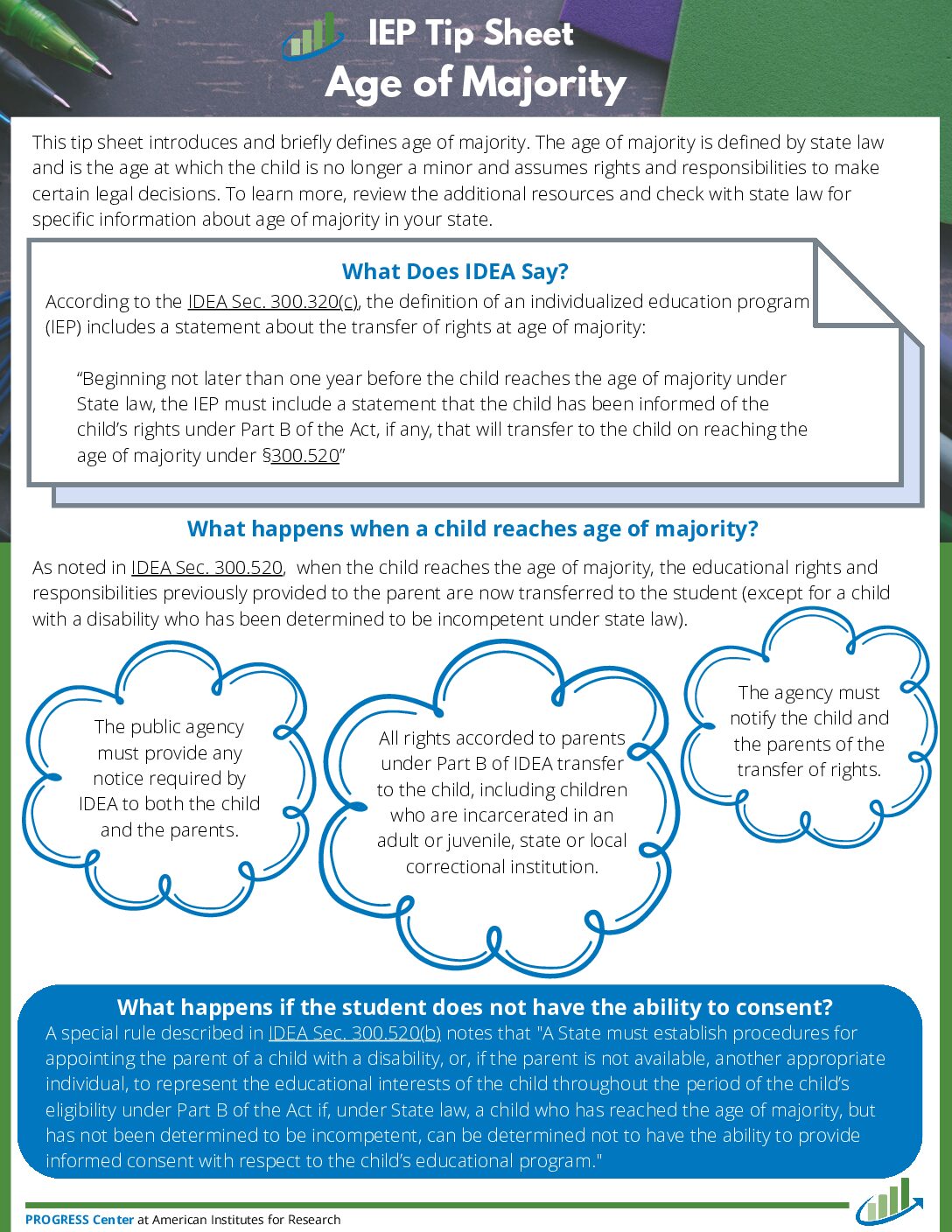
IEP Tip Sheet: Age of Majority
This tip sheet introduces and briefly defines age of majority. The age of majority is defined by state law and is the age at which the child is no longer a minor and assumes rights and responsibilities to make certain legal decisions. To learn more, review the additional resources and check with state law for specific information about age of majority in your state.
Categories: IEP, Special Education, Transition to Adulthood - Independent Living
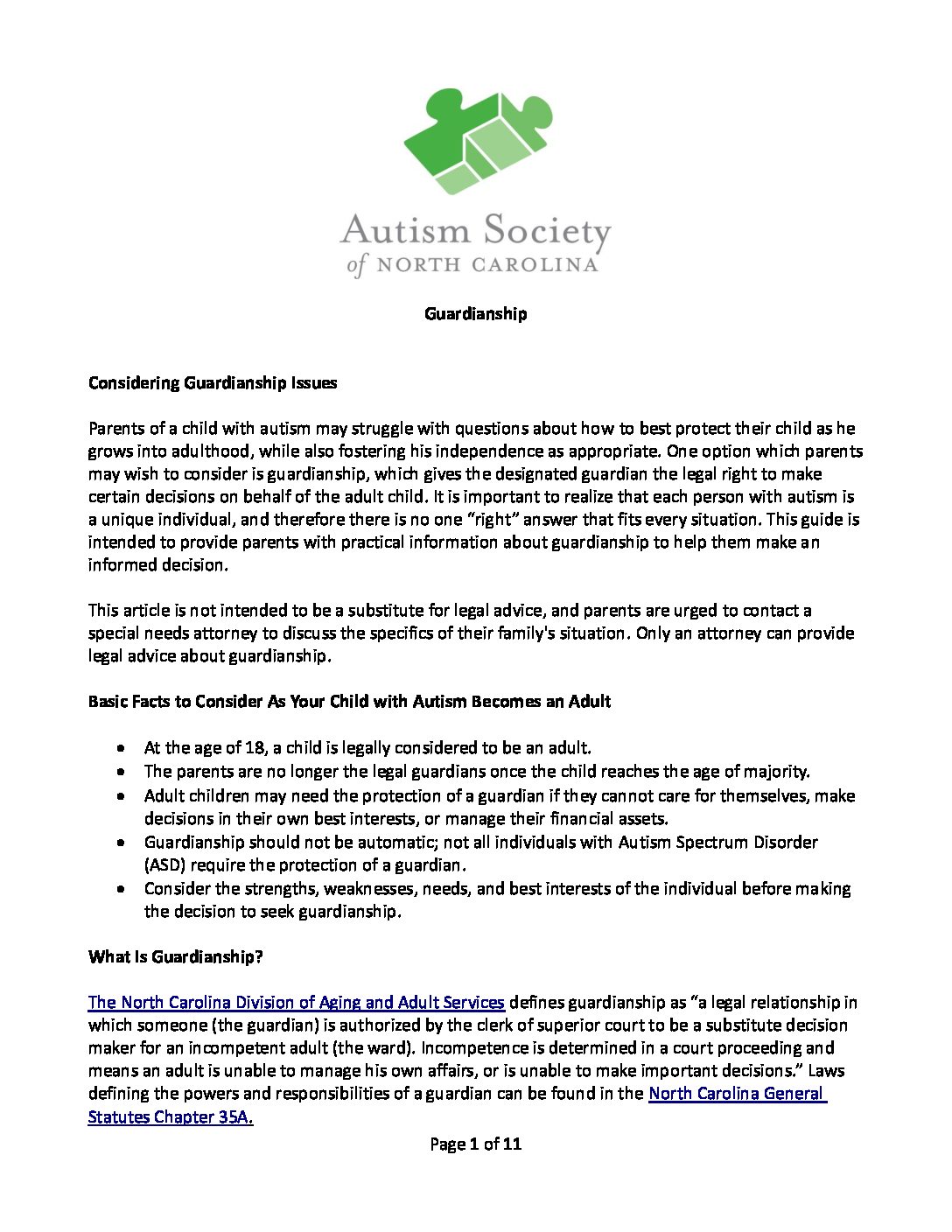
Vormundschaft - Ressourcenleitfaden der Autism Society of North Carolina
Dieser Leitfaden soll Eltern praktische Informationen über die Vormundschaft geben, damit sie eine fundierte Entscheidung treffen können.
Categories: Guardianship and Alternatives, Transition to Adulthood - Health Care, Transition to Adulthood - Independent Living
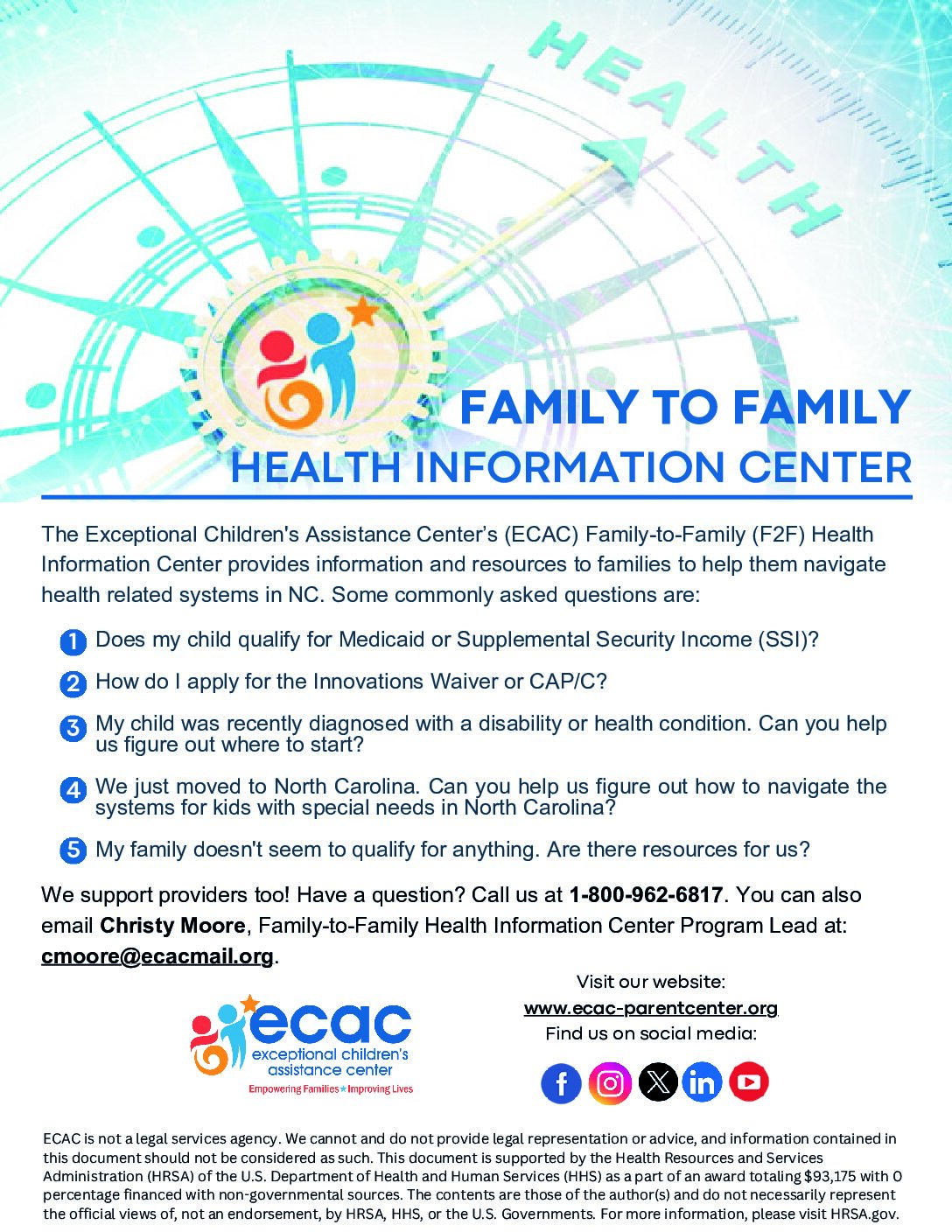
Informationsblatt des Family-to-Family (F2F) Health Information Center (Englisch)
ECAC hilft Familien nicht nur bei der Orientierung im Sonderschulsystem, sondern ist auch darauf spezialisiert, Familien bei der Orientierung im Gesundheitssystem in NC zu unterstützen.
Categories: Disability and Health Condition Specific Information, Guardianship and Alternatives, Health Care in Schools, Medicaid and Medicaid Waivers, Special Needs Financial Planning and Financial Resources, Social and Recreation, SSI and SSDI, Transition to Adulthood - Health Care, Transition to Adulthood - Independent Living

Do You Have It?
As an adult, there are a number of important items you should have close by so you know where they are when you need them. Look at the list below. Do you have it?
Categories: Transition to Adulthood - Independent Living
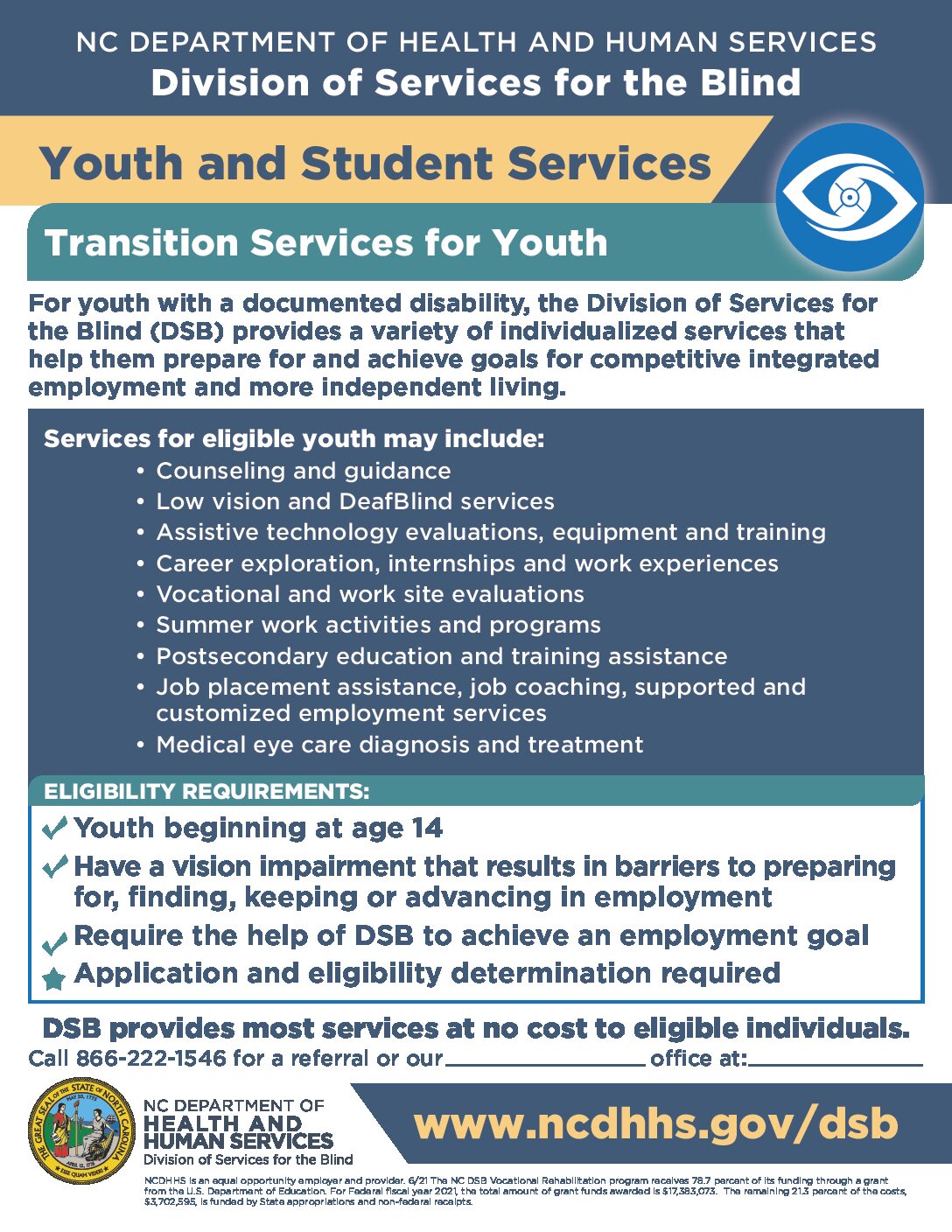
Abteilung für Dienstleistungen für Blinde - Übergangsdienste für Jugendliche
Für Jugendliche mit einer dokumentierten Behinderung bietet die Abteilung für Blindenhilfe (DSB) eine Vielzahl von individuellen Dienstleistungen an, die ihnen helfen, sich auf eine wettbewerbsfähige integrierte Beschäftigung und ein unabhängigeres Leben vorzubereiten und ihre Ziele zu erreichen.
Categories: NC Deaf-Blind Project, Transition to Adulthood - Employment and Postsecondary Education, Transition to Adulthood - Independent Living
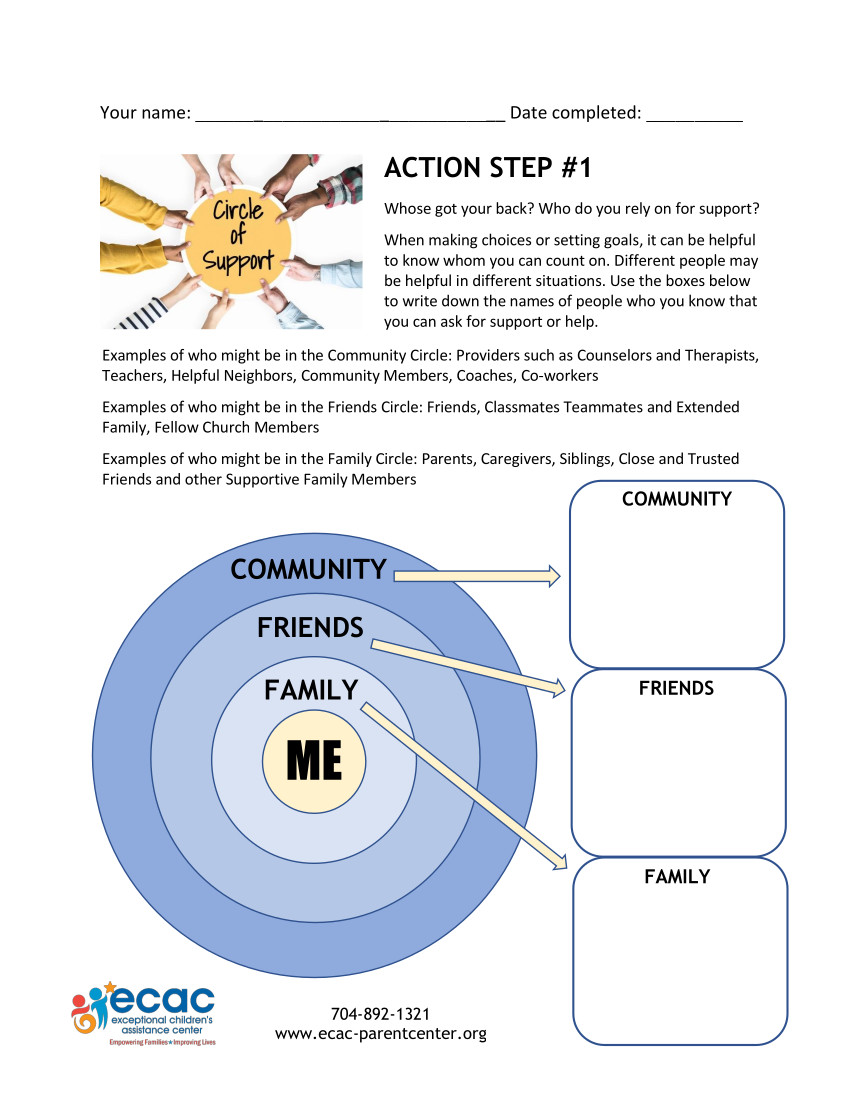
Unterstützungskreis - Aktionsschritt 1
Wenn Sie Entscheidungen treffen oder sich Ziele setzen, kann es hilfreich sein, zu wissen, auf wen Sie zählen können. Verschiedene Personen können in verschiedenen Situationen hilfreich sein. Verwenden Sie dieses Arbeitsblatt, um die Namen von Personen aufzuschreiben, die Sie kennen und die Sie um Unterstützung oder Hilfe bitten können.
Categories: Advocacy, Transition to Adulthood - Employment and Postsecondary Education, Transition to Adulthood - Health Care, Transition-age Youth, Transition to Adulthood - Independent Living
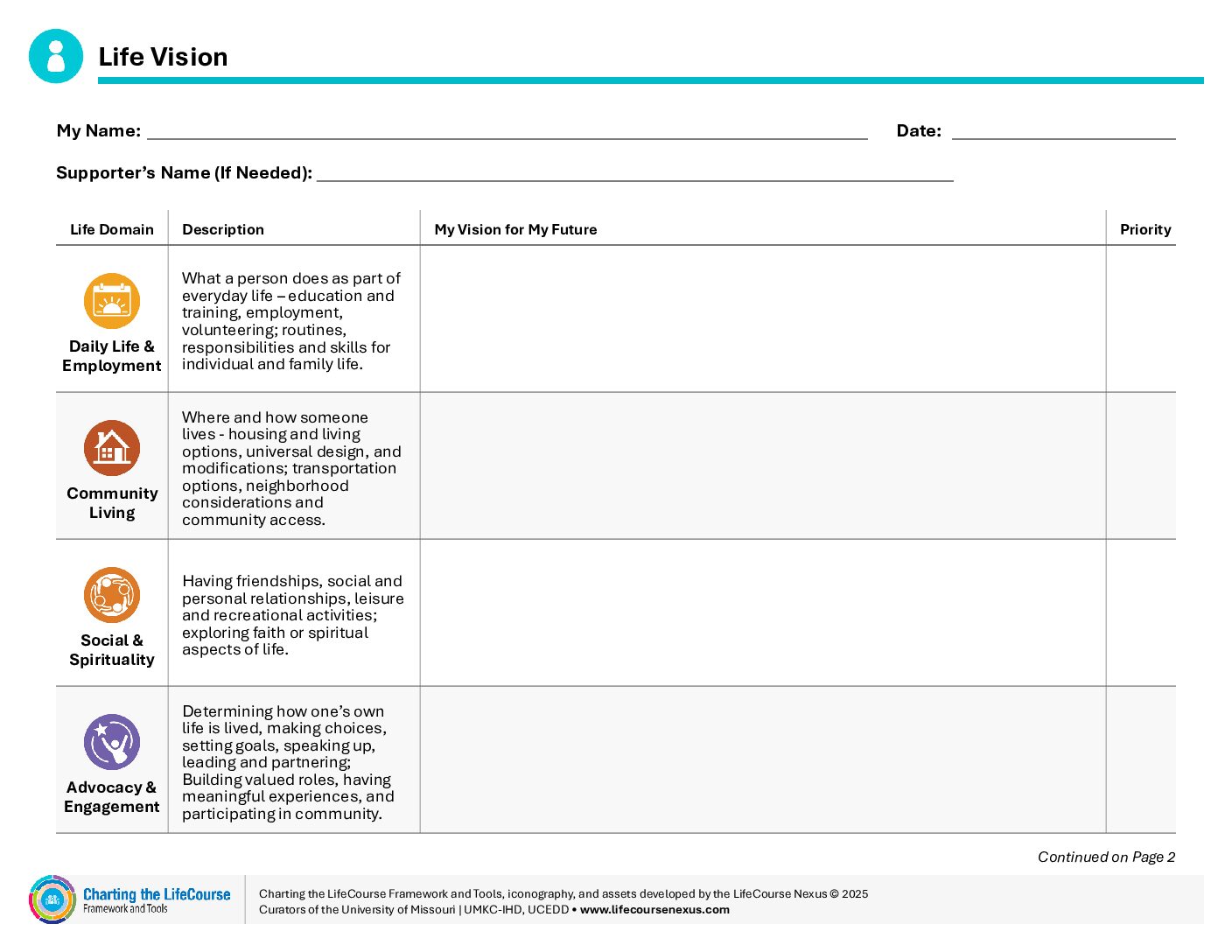
Charting the LifeCourse: Person Centered - Life Vision
This document is part of the Charting the LifeCourse set of tools. Visit https://www.lifecoursetools.com/ for examples on how to use this tool, and explore other tools.
Categories: Transition to Adulthood - Employment and Postsecondary Education, Transition to Adulthood - Health Care, Transition to Adulthood - Independent Living
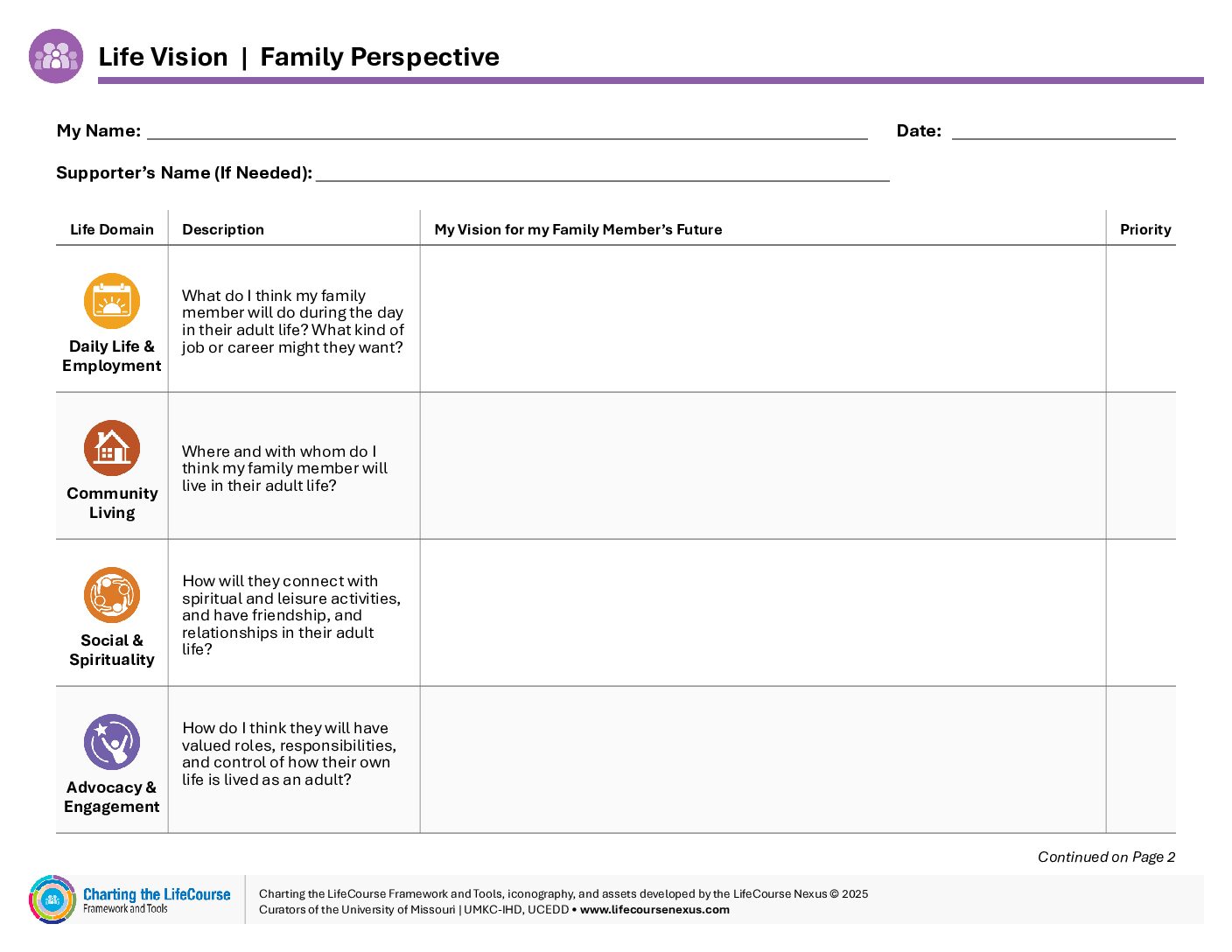
Charting the LifeCourse: Life Domain Vision Tool - Family Perspective
This document is part of the Charting the Life Course set of tools. Visit https://www.lifecoursetools.com/ for examples on how to use this tool, and explore other tools.
Categories: Transition to Adulthood - Employment and Postsecondary Education, Transition to Adulthood - Health Care, Transition to Adulthood - Independent Living
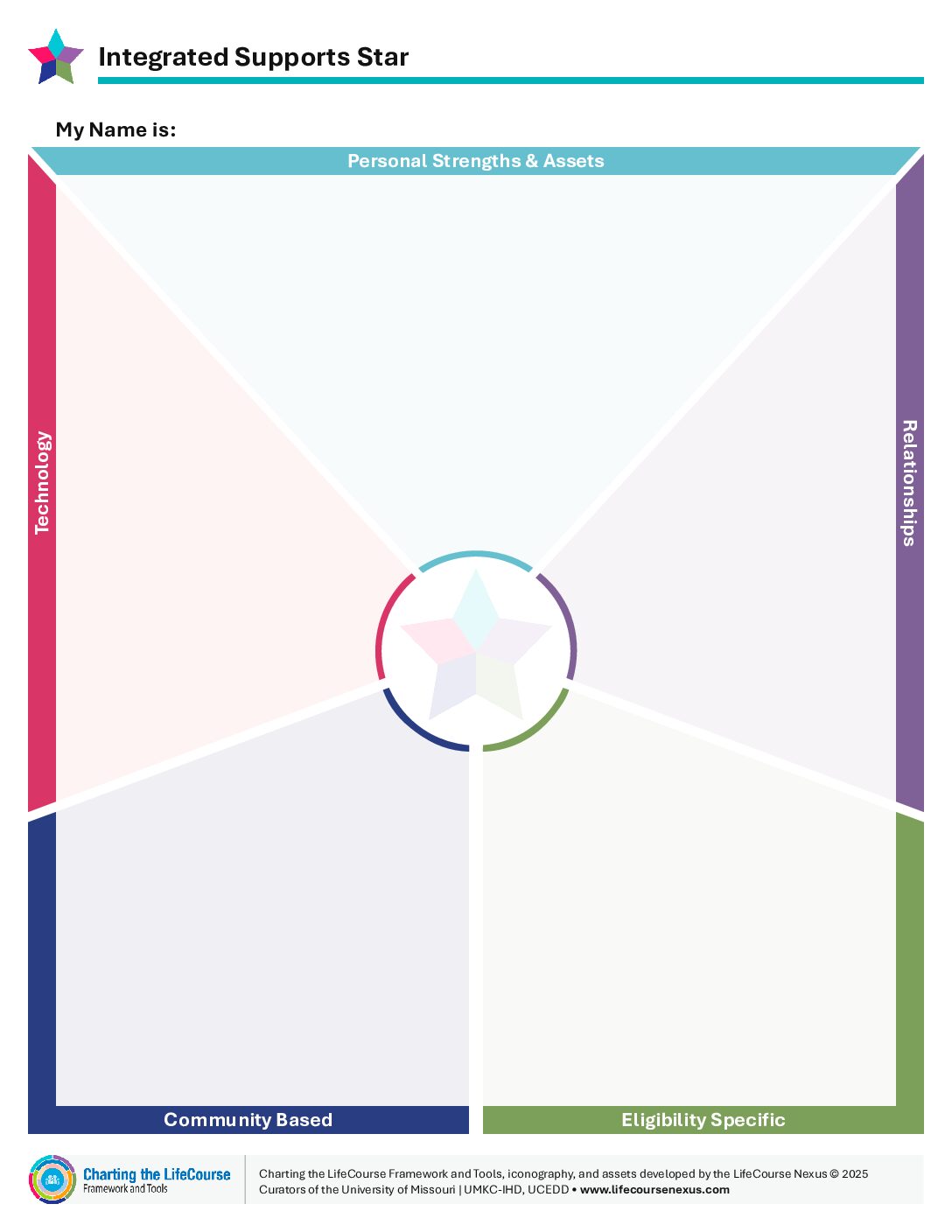
Charting the LifeCourse: Integrated Supports Star
This document is part of the Charting the LifeCourse set of tools. Visit https://www.lifecoursetools.com/ for examples on how to use this tool, and explore other tools.
Categories: Transition to Adulthood - Employment and Postsecondary Education, Transition to Adulthood - Health Care, Transition to Adulthood - Independent Living
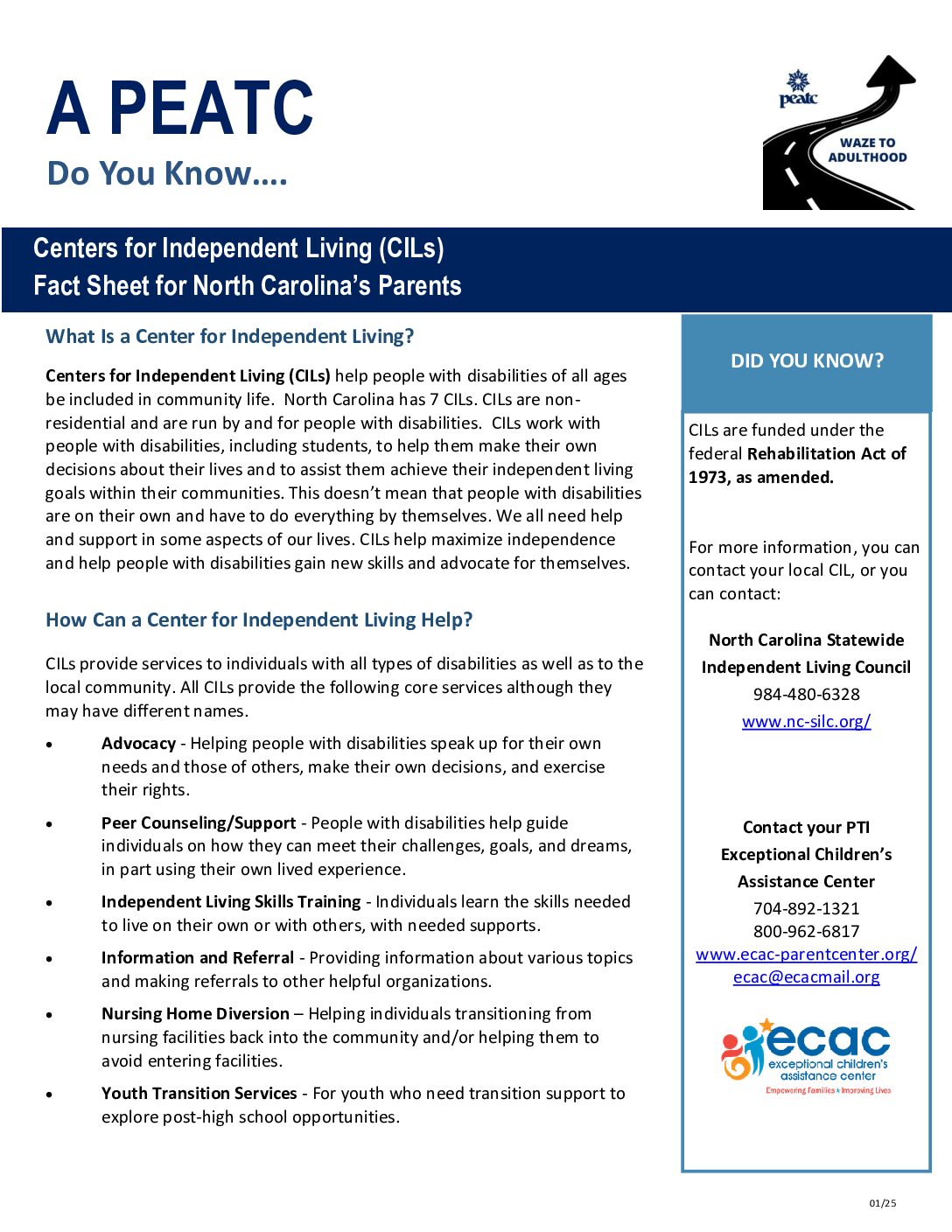
Centers for Independent Living (CILs) Fact Sheet for North Carolina’s Parents
Centers for Independent Living (CILs) help people with disabilities of all ages be included in community life. North Carolina has 7 CILs. CILs are nonresidential and are run by and for people with disabilities. CILs work with people with disabilities, including students, to help them make their own decisions about their lives and to assist them achieve their independent living goals within their communities.
Categories: Transition to Adulthood - Independent Living

Being Involved in Person-Centered Planning for Students & Young Adults with Disabilities in Foster, Kinship, or Adoptive Families
Creating a vision for the future helps provide a plan for youth with disabilities who are unclear and/or anxious about becoming an adult. Person-centered planning (PCP) is directed by the youth to help them plan their life and supports.
Categories: Transition to Adulthood - Employment and Postsecondary Education, Transition to Adulthood - Health Care, Transition to Adulthood - Independent Living
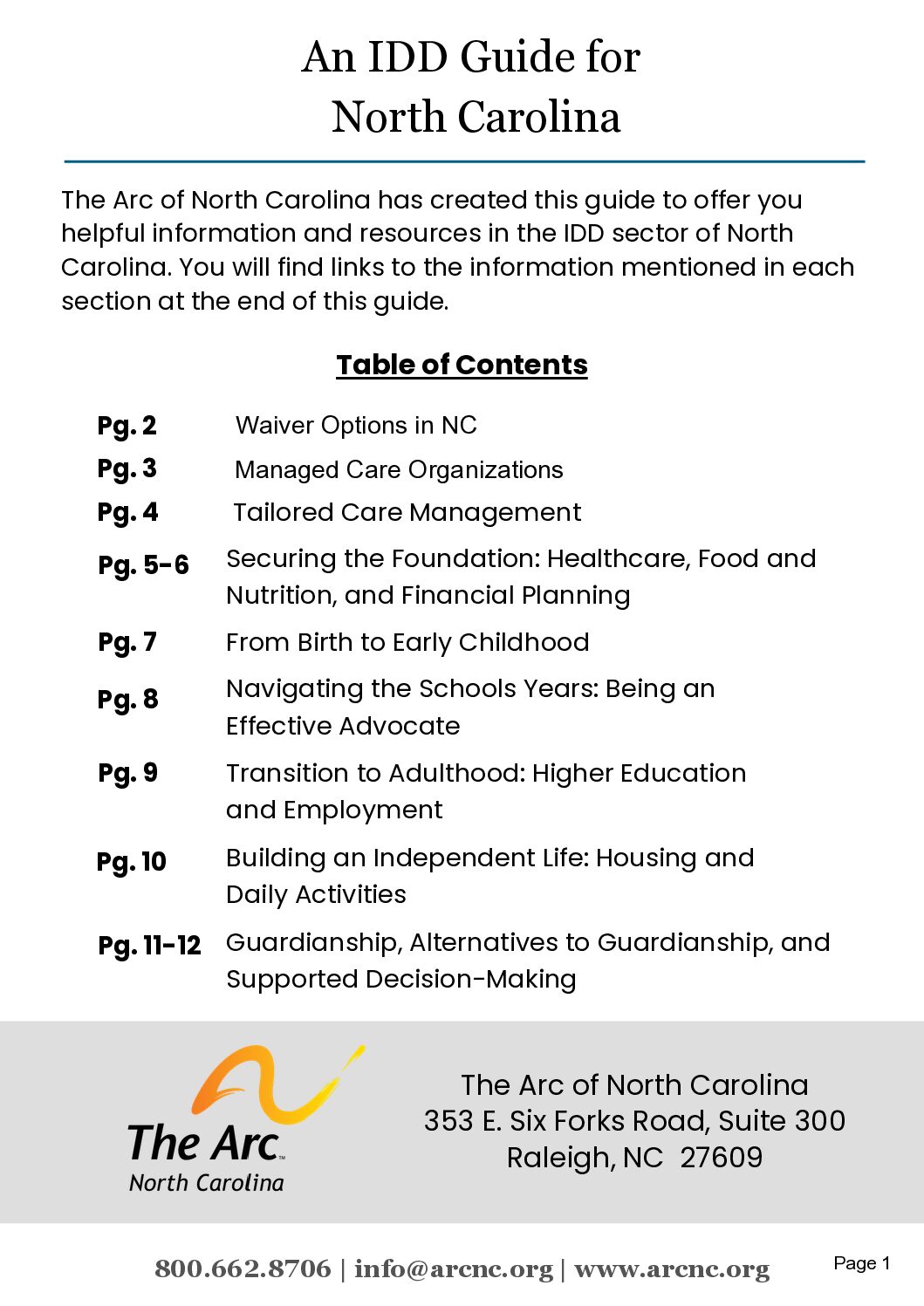
An IDD Guide for North Carolina
The Arc of North Carolina has created this guide to offer you helpful information and resources in the IDD sector of North Carolina. You will find links to the information mentioned in each section at the end of this guide.
Categories: Medicaid and Medicaid Waivers, Special Needs Financial Planning and Financial Resources, Transition to Adulthood - Independent Living
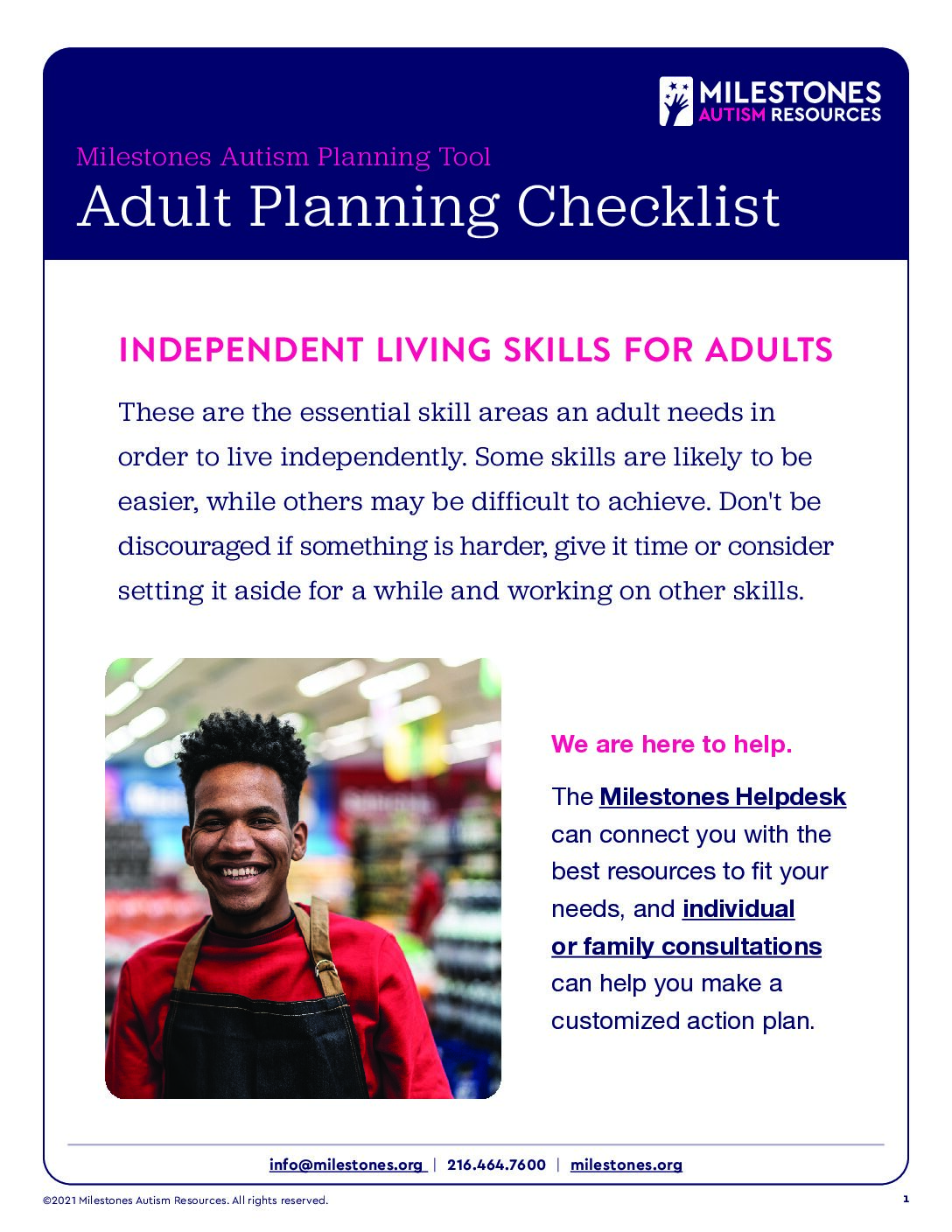
Adult Planning Checklist
Independent Living Skills for Adults - These are the essential skill areas an adult needs in order to live independently
Categories: Transition to Adulthood - Independent Living