
Youth in Foster Care in North Carolina: The Road to Living Independently
As you move toward living on your own, here are some programs and resources that may help you with school, work, and finding a place to live.
Categories: Transition to Adulthood - Independent Living
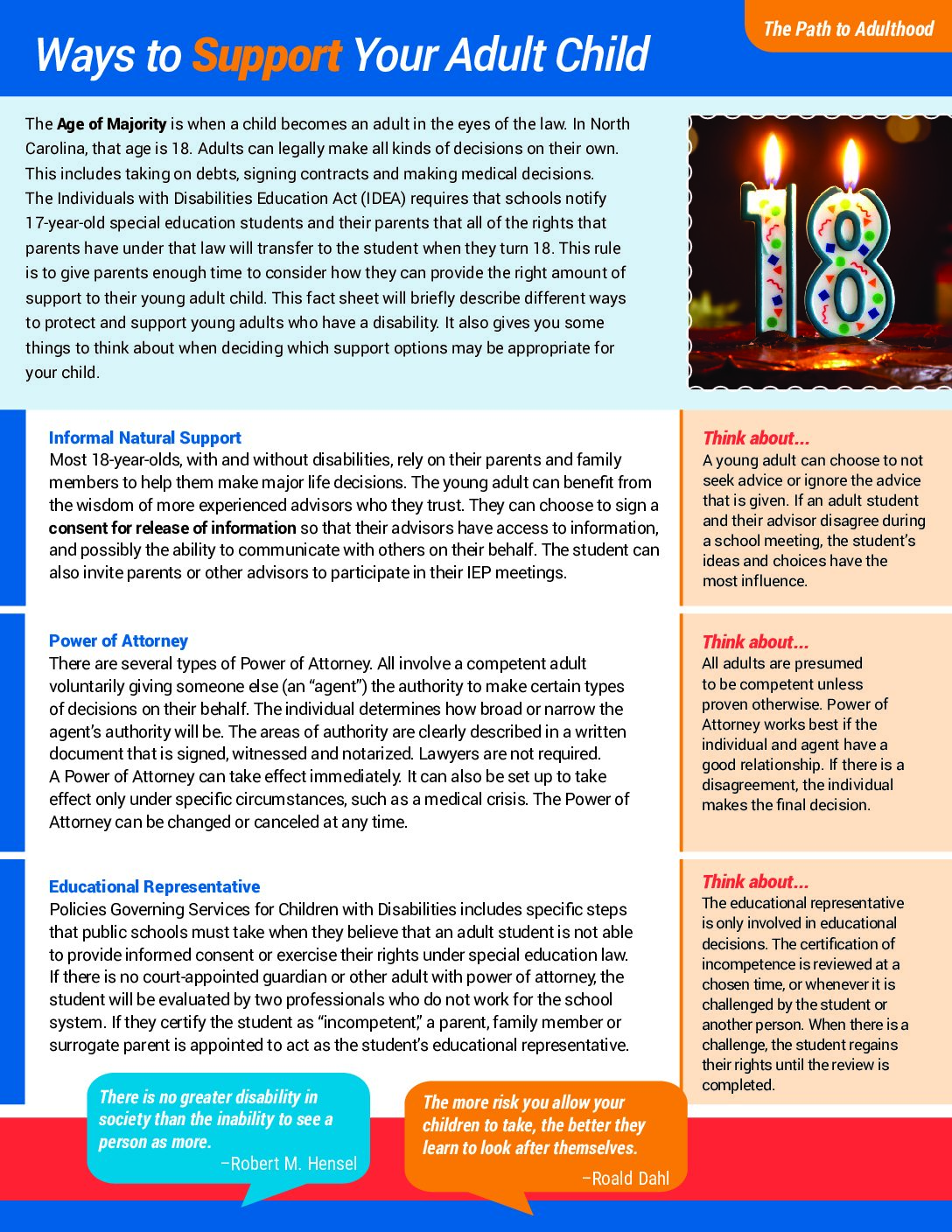
WAZE to Adulthood: Ways to Support Your Adult Child
Consultez ces ressources et conseils pour soutenir les enfants adultes !
Categories: Transition to Adulthood - Health Care, Transition to Adulthood - Independent Living
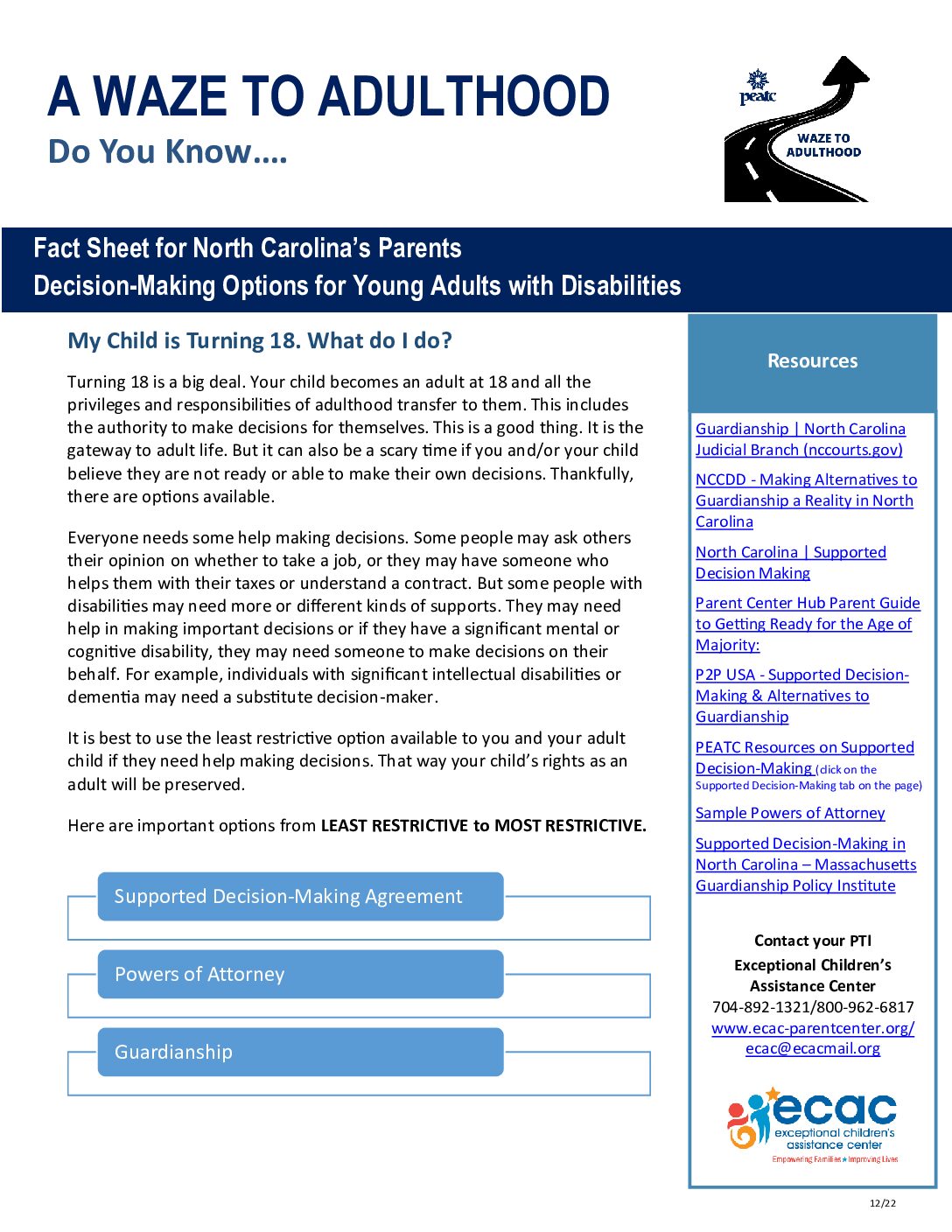
WAZE à l'âge adulte : Options de prise de décision
Avoir 18 ans est un événement important. Votre enfant devient un adulte à 18 ans et tous les privilèges et responsabilités de l'âge adulte lui sont transférés. Cela inclut le pouvoir de prendre des décisions pour lui-même. C'est une bonne chose. C'est le passage à la vie adulte. Mais cela peut aussi être une période effrayante si vous et/ou votre enfant pensez qu'il n'est pas prêt ou capable de prendre ses propres décisions. Heureusement, il existe des solutions.
Categories: Guardianship and Alternatives, Transition to Adulthood - Health Care, Transition to Adulthood - Independent Living
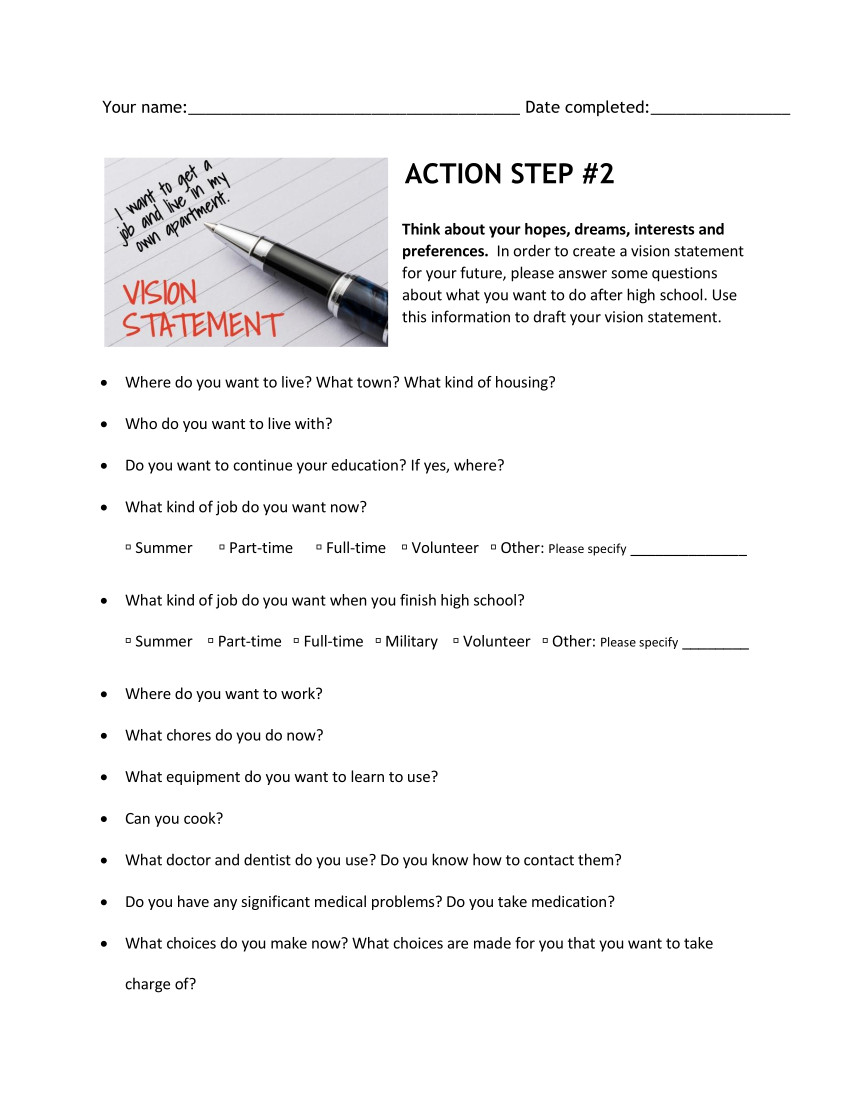
Feuille de travail sur la déclaration de vision Étape d'action n° 2
Cette feuille de travail aidera les jeunes à élaborer une déclaration de vision sur ce qu'ils veulent pour leur vie après le lycée !
Categories: Advocacy, Transition to Adulthood - Employment and Postsecondary Education, Transition to Adulthood - Health Care, Transition-age Youth, Transition to Adulthood - Independent Living
Faire des droits une réalité : comment la tutelle et les solutions de remplacement influent sur l'autonomie des personnes présentant une déficience intellectuelle et développementale
Ce rapport fournit un examen approfondi des défis uniques auxquels sont confrontées les personnes atteintes de déficiences intellectuelles et développementales (ID/DD), et comment l'utilisation d'alternatives telles que la prise de décision assistée peut permettre à certaines personnes atteintes d'ID/DD d'exercer une plus grande autodétermination, de participer plus pleinement à leurs communautés et d'atteindre une plus grande autosuffisance économique.
Categories: Guardianship and Alternatives, Transition to Adulthood - Independent Living

Turning 18 in North Carolina
Turning 18 is a big deal! When you turn 18, you are an adult in most states. This means you can make choices in your life about your education, where you live, what doctor you see, what to do with your money, and many other things. Here are some things you should think about as you become an adult.
Categories: Transition to Adulthood - Employment and Postsecondary Education, Transition to Adulthood - Health Care, Transition to Adulthood - Independent Living
Transitioning from School to Adulthood: A Guide for Families and Caregivers
The intention of this guide is to provide direction, advice, and information, and to present a collection of resources that you can use to help navigate your transition to adulthood as smoothly as possible. Our goal is to point you in some useful directions, but it is ultimately up to you to decide what will be helpful for you in your transition journey. In the sections that follow, you will find guidance on transition planning, person-centered planning, building a transition IEP, and exploring pre-employment services.
Categories: Transition to Adulthood - Employment and Postsecondary Education, Transition to Adulthood - Health Care, Transition to Adulthood - Independent Living

Transition Guide: Self-Advocacy
Self-advocacy means speaking up for yourself and taking an active role in decisions that affect your life. It’s about understanding your strengths and needs, asking questions, finding information, knowing your rights, and asking for help when needed. It’s also about learning how to solve problems, communicate clearly, and build supportive relationships.
Categories: Advocacy, Transition to Adulthood - Employment and Postsecondary Education, Transition to Adulthood - Health Care, Transition to Adulthood - Independent Living

Transition Guide: Person-Centered Planning - Fact Sheet for Parents
Begin with the End in Mind It’s never too soon to start planning with your child for their future. When your child is in middle school, this may seem far away and you are focused on today. But those middle and high school years will pass quickly and soon your child will be an adult. While planning is important for all students, it is even more important for students with disabilities who may face more challenges than their peers without disabilities.
Categories: Transition to Adulthood - Employment and Postsecondary Education, Transition to Adulthood - Health Care, Transition to Adulthood - Independent Living
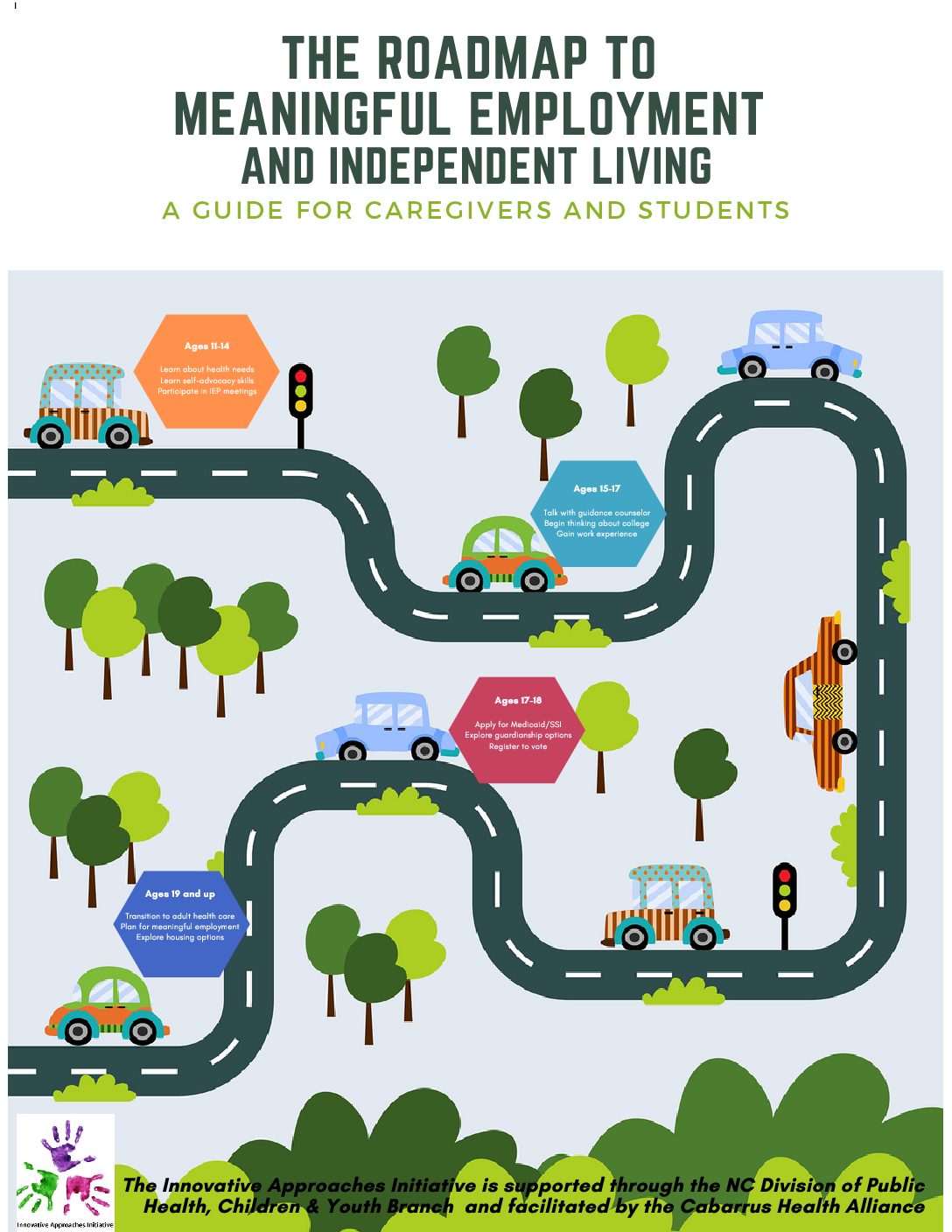
La feuille de route vers un emploi significatif et une vie indépendante
Un guide pour les soignants et les étudiants en transition vers l'âge adulte
Categories: Transition to Adulthood - Employment and Postsecondary Education, Transition-age Youth, Transition to Adulthood - Independent Living

Supported Decision-Making - When Do I Need Support?
Everyone needs support making some of their decisions. Some people may need support at the doctor’s office. Some people may need help with their taxes. Some people may need help with money. When you receive help with decisions, that is called Supported-Decision-Making. This document can help you decide what you are able to do on your own and what you may need help with.
Categories: Transition to Adulthood - Employment and Postsecondary Education, Transition to Adulthood - Health Care, Transition to Adulthood - Independent Living
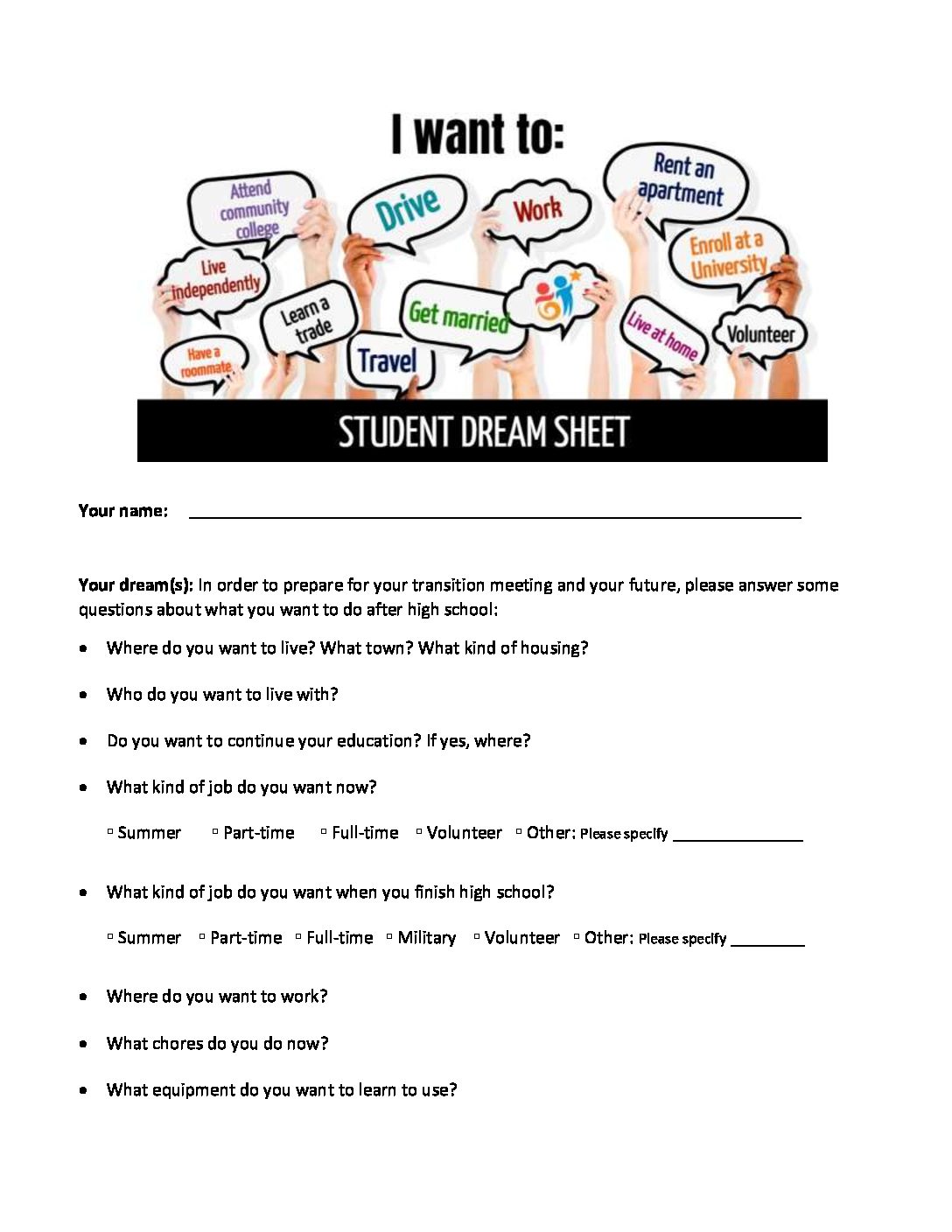
Feuille de rêve des élèves
La transition est un voyage, commencez dès maintenant à le planifier. La feuille de rêve de l'élève peut aider les élèves à se fixer des objectifs et à partager leurs intérêts et leurs préférences.
Categories: Advocacy, IEP, Transition to Adulthood - Employment and Postsecondary Education, Transition to Adulthood - Health Care, Transition-age Youth, Transition to Adulthood - Independent Living

Self-Advocacy - Ways to Speak Up For Yourself (Visual)
Categories: Advocacy, Transition to Adulthood - Employment and Postsecondary Education, Transition to Adulthood - Health Care, Transition to Adulthood - Independent Living
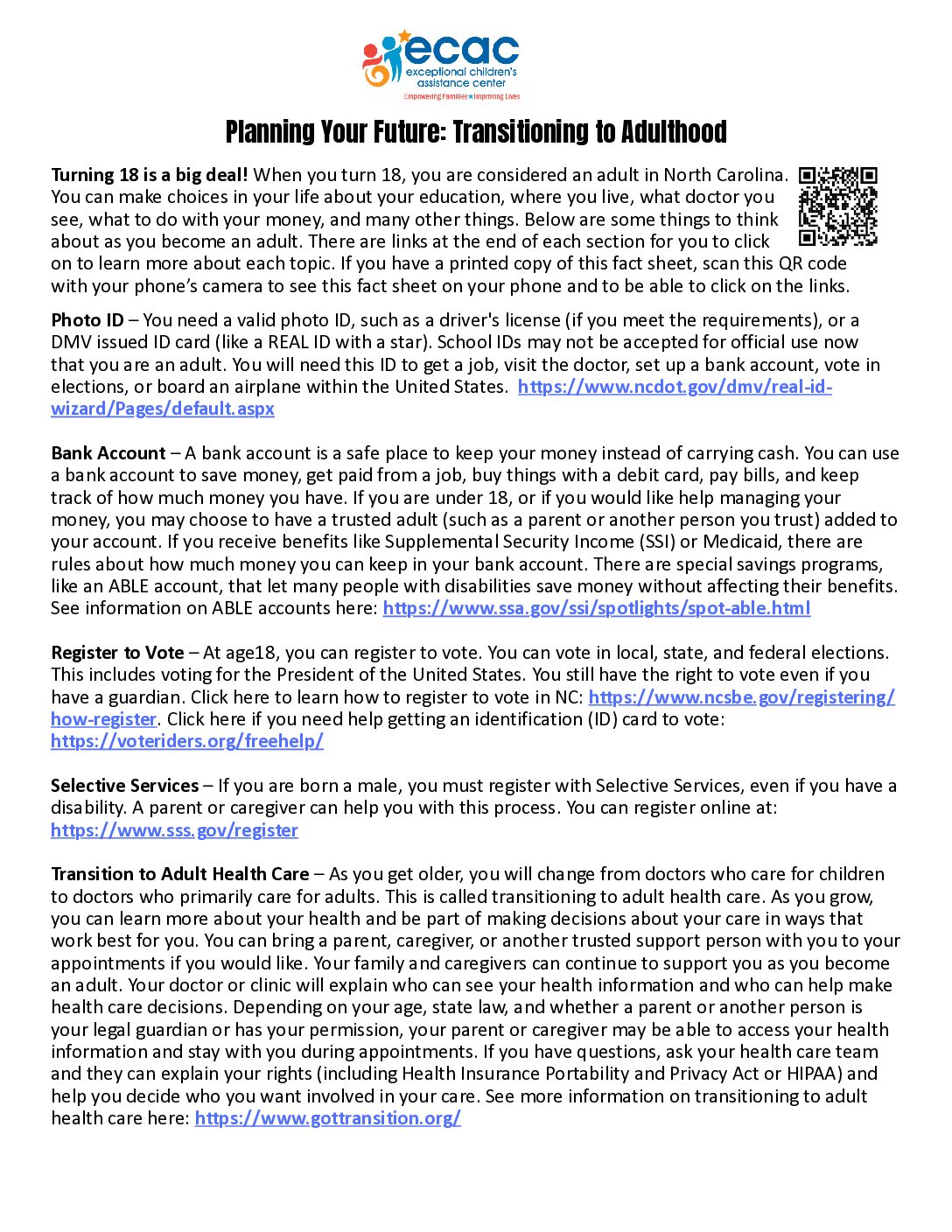
Planning For Your Future: Transitioning to Adulthood
Turning 18 is a big deal When you turn 18, you are considered an adult in North Carolina. You can make choices in your life about your education, where you live, what doctor you see, what to do with your money, and many other things. Use this document as a resource of some things to think about as you become an adult.
Categories: Transition to Adulthood - Employment and Postsecondary Education, Transition to Adulthood - Health Care, Transition to Adulthood - Independent Living

Planifye Lavni Ou: Tranzisyon pou Laj Adilt (Haitian Creole)
Categories: Transition to Adulthood - Employment and Postsecondary Education, Transition to Adulthood - Health Care, Transition to Adulthood - Independent Living

Person-Centered Planning (PCP)
Person-Centered Planning is all about YOU and YOUR plans for YOUR future!
Categories: Transition to Adulthood - Employment and Postsecondary Education, Transition to Adulthood - Health Care, Transition-age Youth, Transition to Adulthood - Independent Living

Person-Centered Planning - For Youth
Person-Centered Planning is all about YOU! YOU are focus of person-centered planning, also called PCP. That means that you get to let your family, your teachers, and others know what you want to do when you leave high school or college and how you want to live your life. People that you trust and care about can help you make those choices but you voice is the most important. PCP can help you achieve your goals and dreams for life after high school
Categories: Transition to Adulthood - Employment and Postsecondary Education, Transition to Adulthood - Health Care, Transition-age Youth, Transition to Adulthood - Independent Living
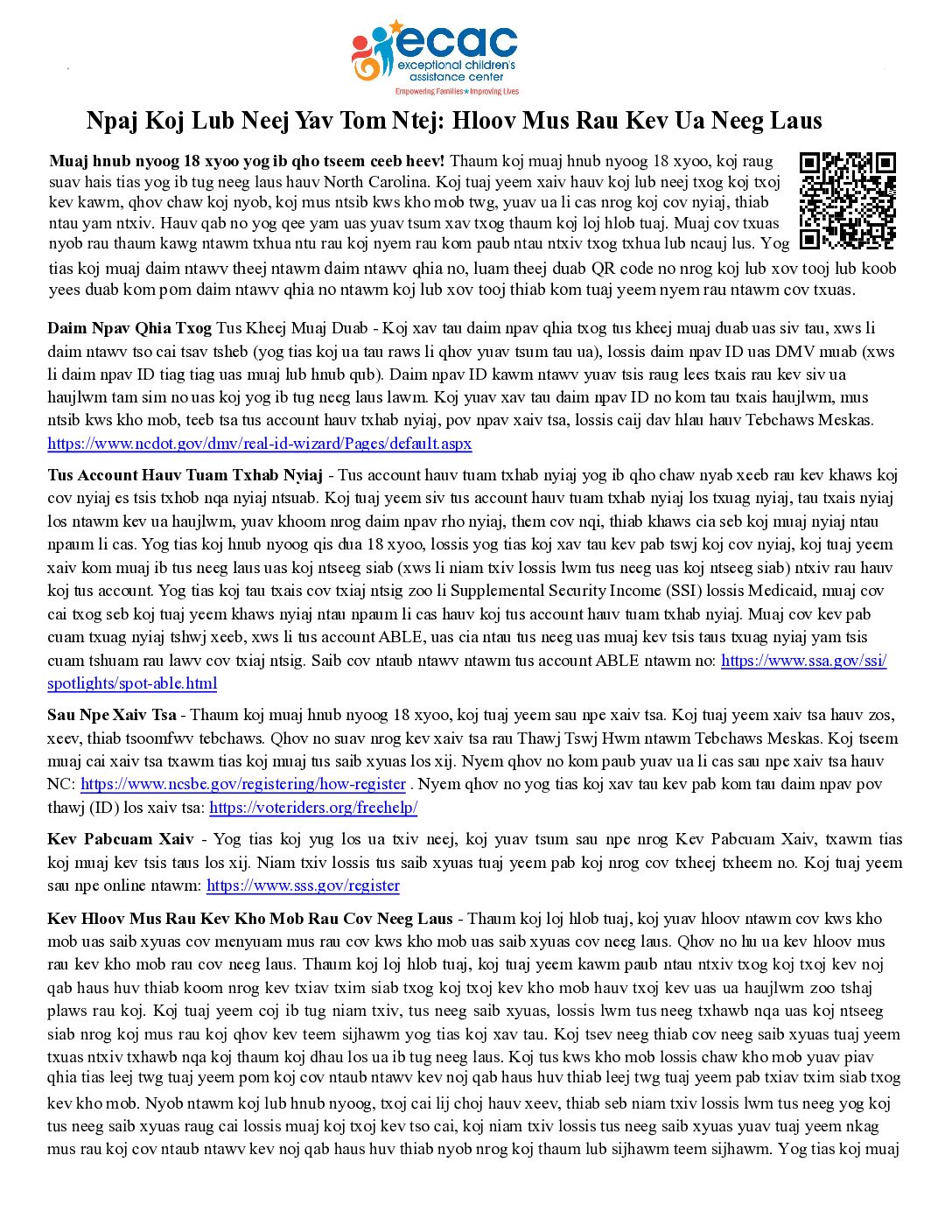
Npaj Koj Lub Neej Yav Tom Ntej: Hloov Mus Rau Kev Ua Neeg Laus (Hmong)
Categories: Transition to Adulthood - Employment and Postsecondary Education, Transition to Adulthood - Health Care, Transition to Adulthood - Independent Living
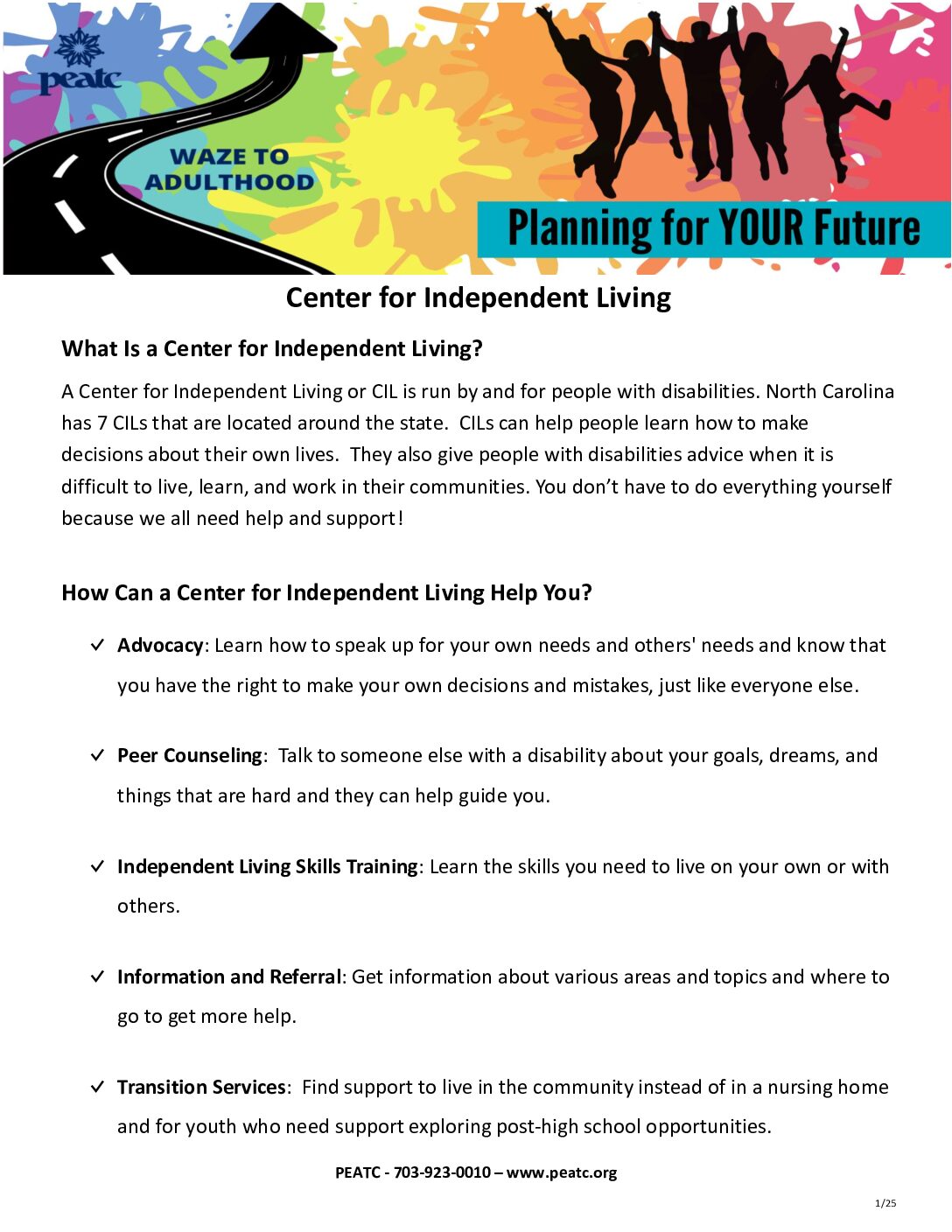
North Carolina Centers for Independent Living - Youth Fact Sheet
A Center for Independent Living or CIL is run by and for people with disabilities. North Carolina has 7 CILs that are located around the state. CILs can help people learn how to make decisions about their own lives. They also give people with disabilities advice when it is difficult to live, learn, and work in their communities. You don’t have to do everything yourself because we all need help and support!
Categories: Transition to Adulthood - Independent Living
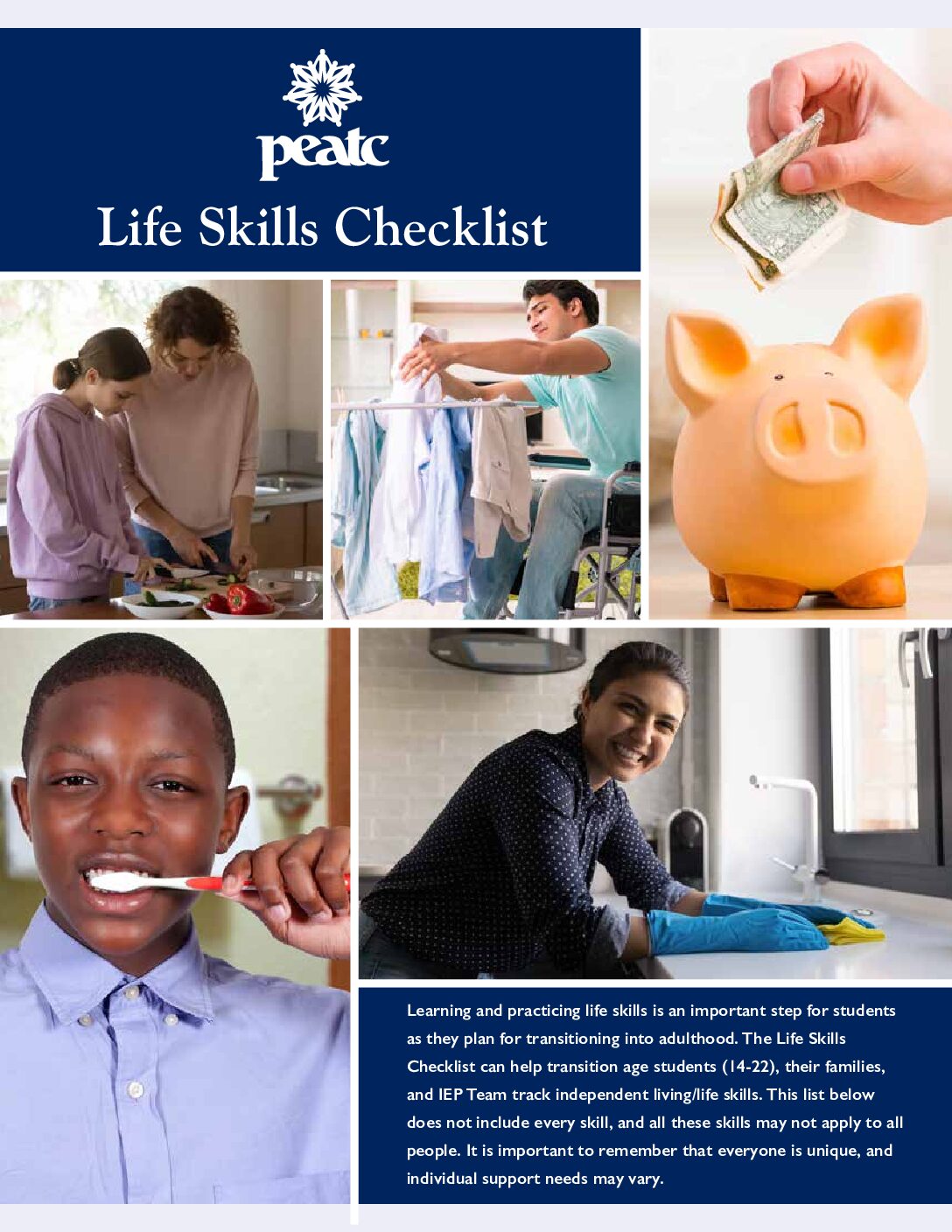
Life Skills Checklist
Learning and practicing life skills is an important step for students as they plan for transitioning into adulthood. The Life Skills Checklist can help transition age students (14-22), their families, and IEP Team track independent living/life skills.
Categories: Transition to Adulthood - Independent Living

Independent Living Toolkit
This guide is intended to provide resources for housing and independent living for people with IDD in North Carolina.
Categories: Transition to Adulthood - Independent Living

Independent Living Skills - Youth
It’s great to want to do things on your own and take care of yourself. That is what independent living skills mean. And the more you practice, the better you will get. But it’s also important to remember that all of us need help with some things. Some people are better at cooking, some are better at laundry, and some are better at solving problems. While you strive to be independent, never worry about having to ask for help! For some things, you may always need help, and that’s okay
Categories: Transition to Adulthood - Independent Living
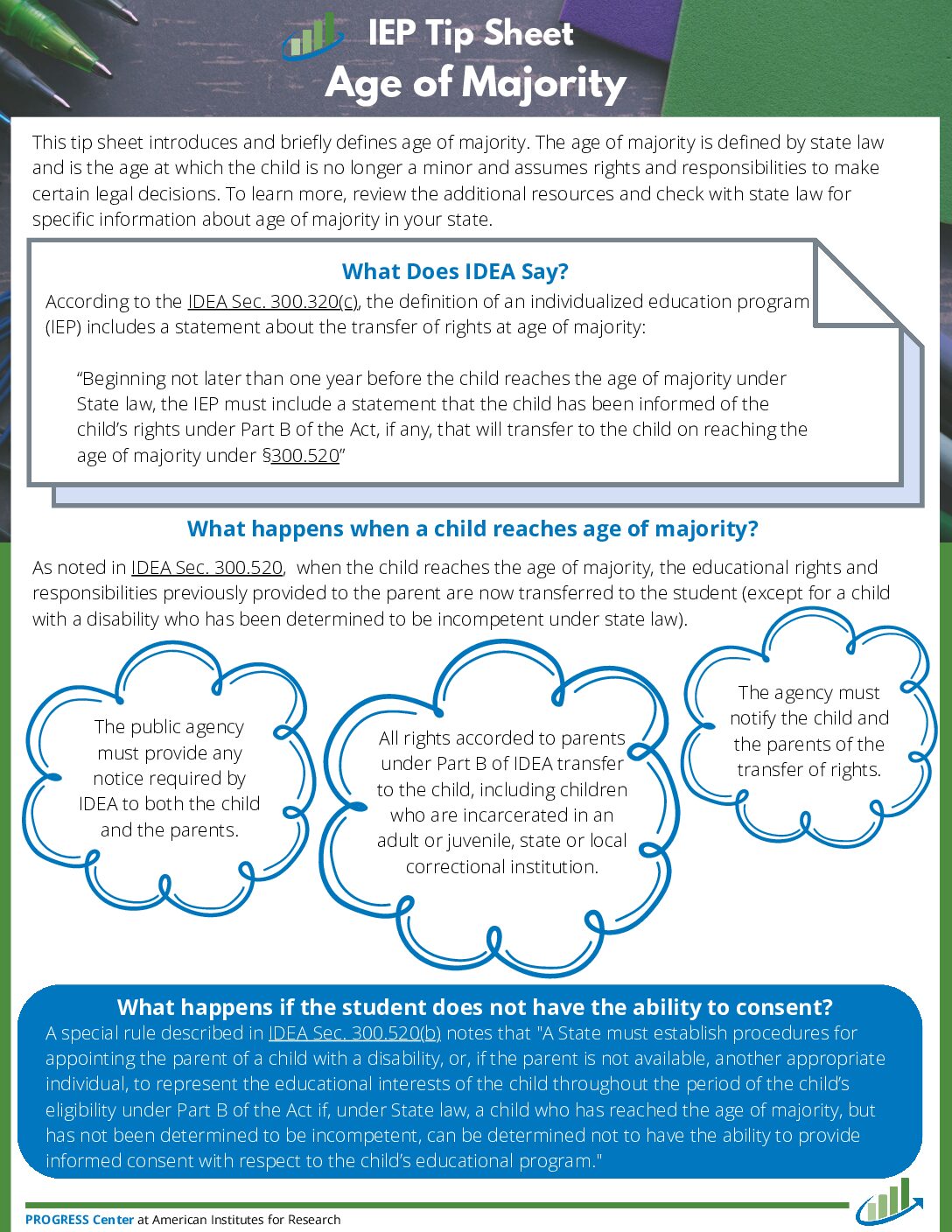
IEP Tip Sheet: Age of Majority
This tip sheet introduces and briefly defines age of majority. The age of majority is defined by state law and is the age at which the child is no longer a minor and assumes rights and responsibilities to make certain legal decisions. To learn more, review the additional resources and check with state law for specific information about age of majority in your state.
Categories: IEP, Special Education, Transition to Adulthood - Independent Living
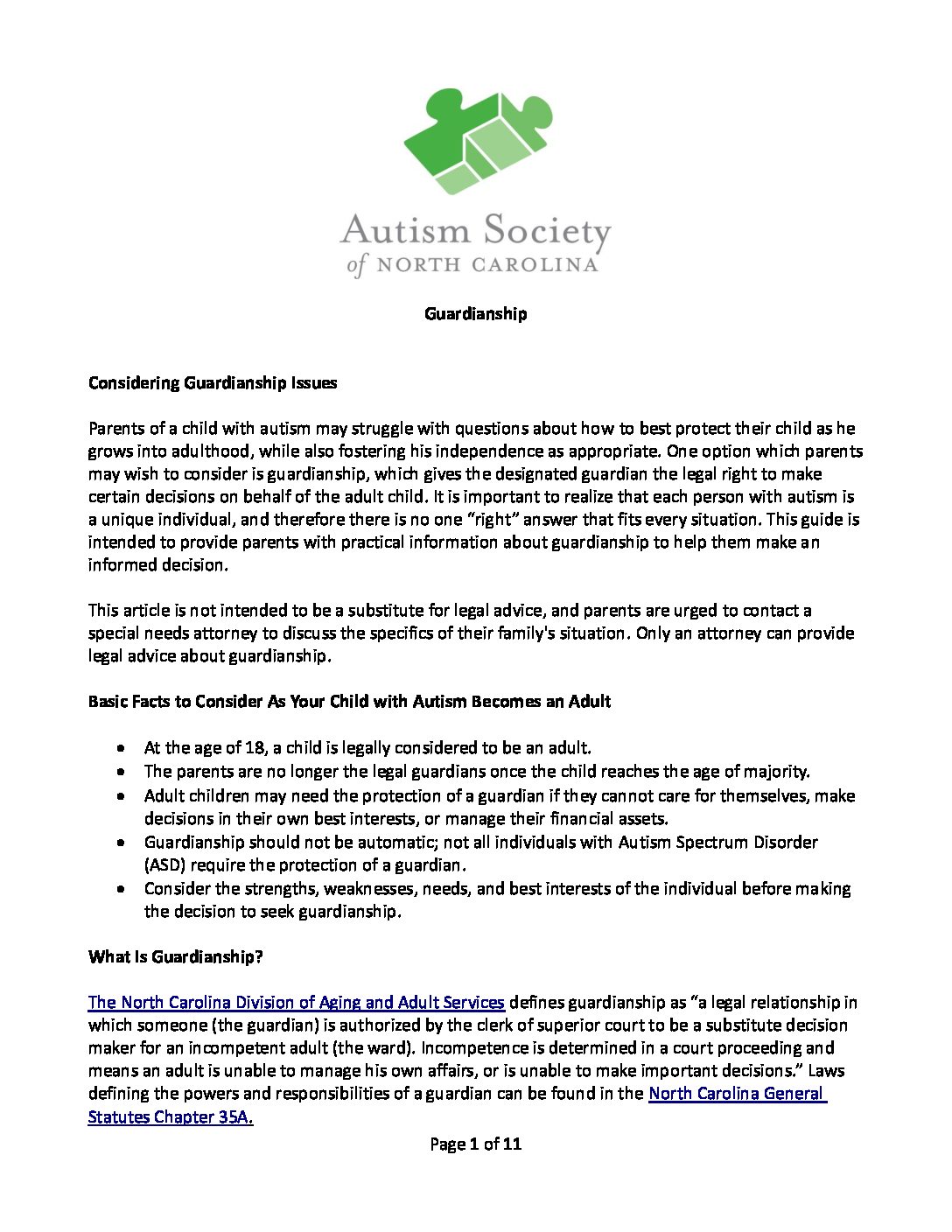
Tutelle - Guide de ressources de la Société d'autisme de Caroline du Nord.
Ce guide a pour but de fournir aux parents des informations pratiques sur la tutelle afin de les aider à prendre une décision éclairée.
Categories: Guardianship and Alternatives, Transition to Adulthood - Health Care, Transition to Adulthood - Independent Living
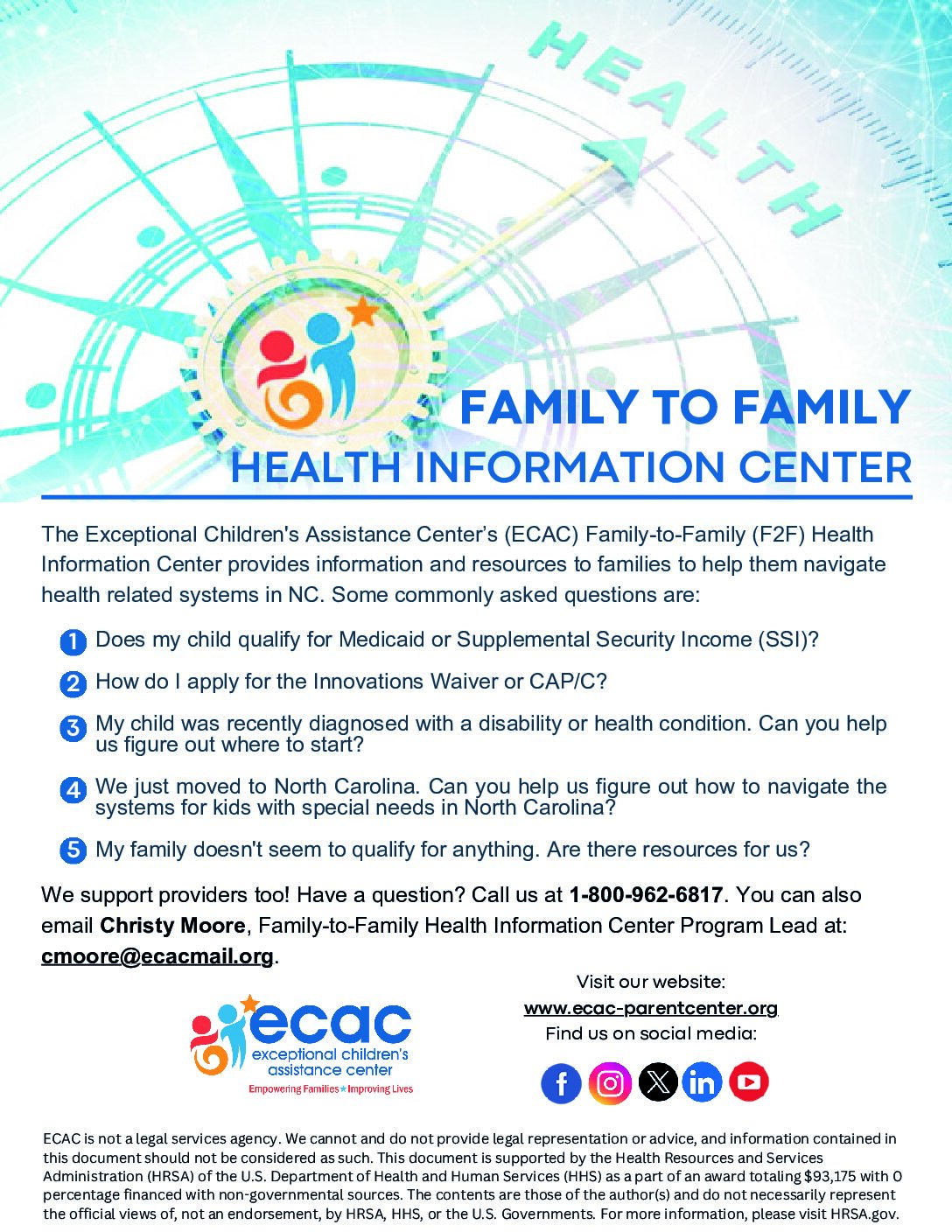
Fiche d'information du Centre d'information sur la santé de famille à famille (F2F) (anglais)
En plus d'aider les familles à s'orienter dans le système d'éducation spéciale, l'ECAC est également spécialisée dans l'aide aux familles dans les systèmes de santé en Caroline du Nord.
Categories: Disability and Health Condition Specific Information, Guardianship and Alternatives, Health Care in Schools, Medicaid and Medicaid Waivers, Special Needs Financial Planning and Financial Resources, Social and Recreation, SSI and SSDI, Transition to Adulthood - Health Care, Transition to Adulthood - Independent Living

Do You Have It?
As an adult, there are a number of important items you should have close by so you know where they are when you need them. Look at the list below. Do you have it?
Categories: Transition to Adulthood - Independent Living
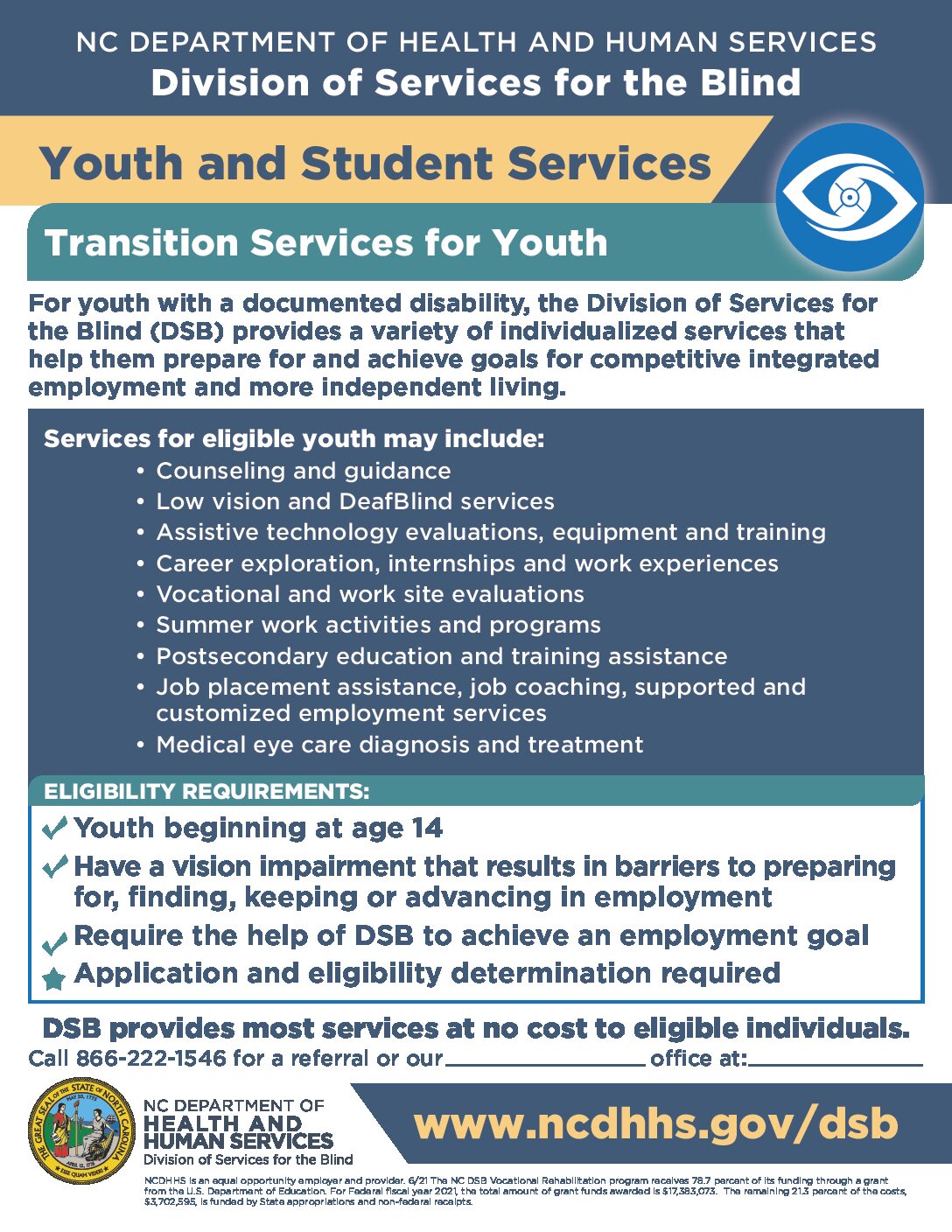
Division des services aux aveugles - Services de transition pour les jeunes
La Division of Services for the Blind (DSB) propose aux jeunes souffrant d'un handicap avéré une variété de services individualisés qui les aident à se préparer et à atteindre leurs objectifs en matière d'emploi intégré compétitif et de vie plus indépendante.
Categories: NC Deaf-Blind Project, Transition to Adulthood - Employment and Postsecondary Education, Transition to Adulthood - Independent Living
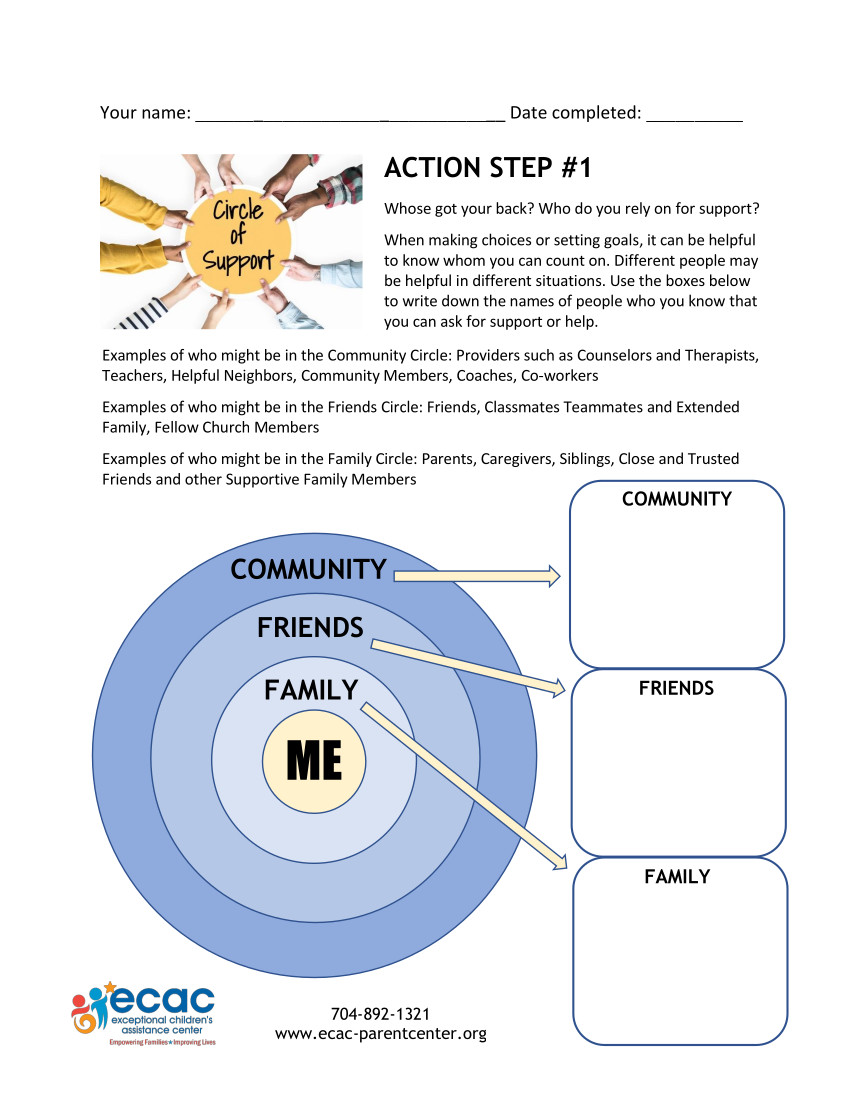
Cercle de soutien - Première étape
Lorsque vous faites des choix ou que vous vous fixez des objectifs, il peut être utile de savoir sur qui vous pouvez compter. Différentes personnes peuvent être utiles dans différentes situations. Utilisez cette feuille de travail pour noter le nom de personnes que vous connaissez et à qui vous pouvez demander du soutien ou de l'aide.
Categories: Advocacy, Transition to Adulthood - Employment and Postsecondary Education, Transition to Adulthood - Health Care, Transition-age Youth, Transition to Adulthood - Independent Living
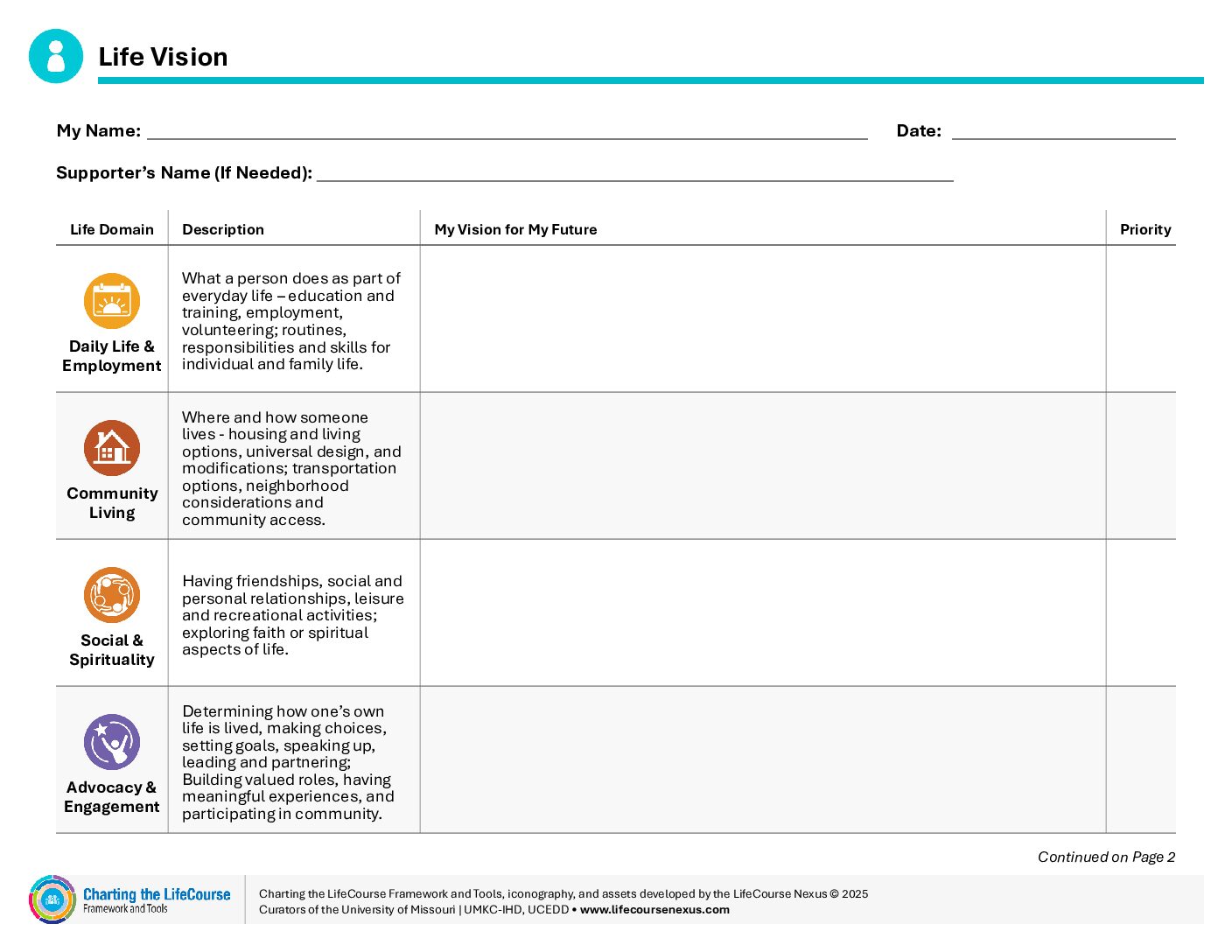
Charting the LifeCourse: Person Centered - Life Vision
This document is part of the Charting the LifeCourse set of tools. Visit https://www.lifecoursetools.com/ for examples on how to use this tool, and explore other tools.
Categories: Transition to Adulthood - Employment and Postsecondary Education, Transition to Adulthood - Health Care, Transition to Adulthood - Independent Living
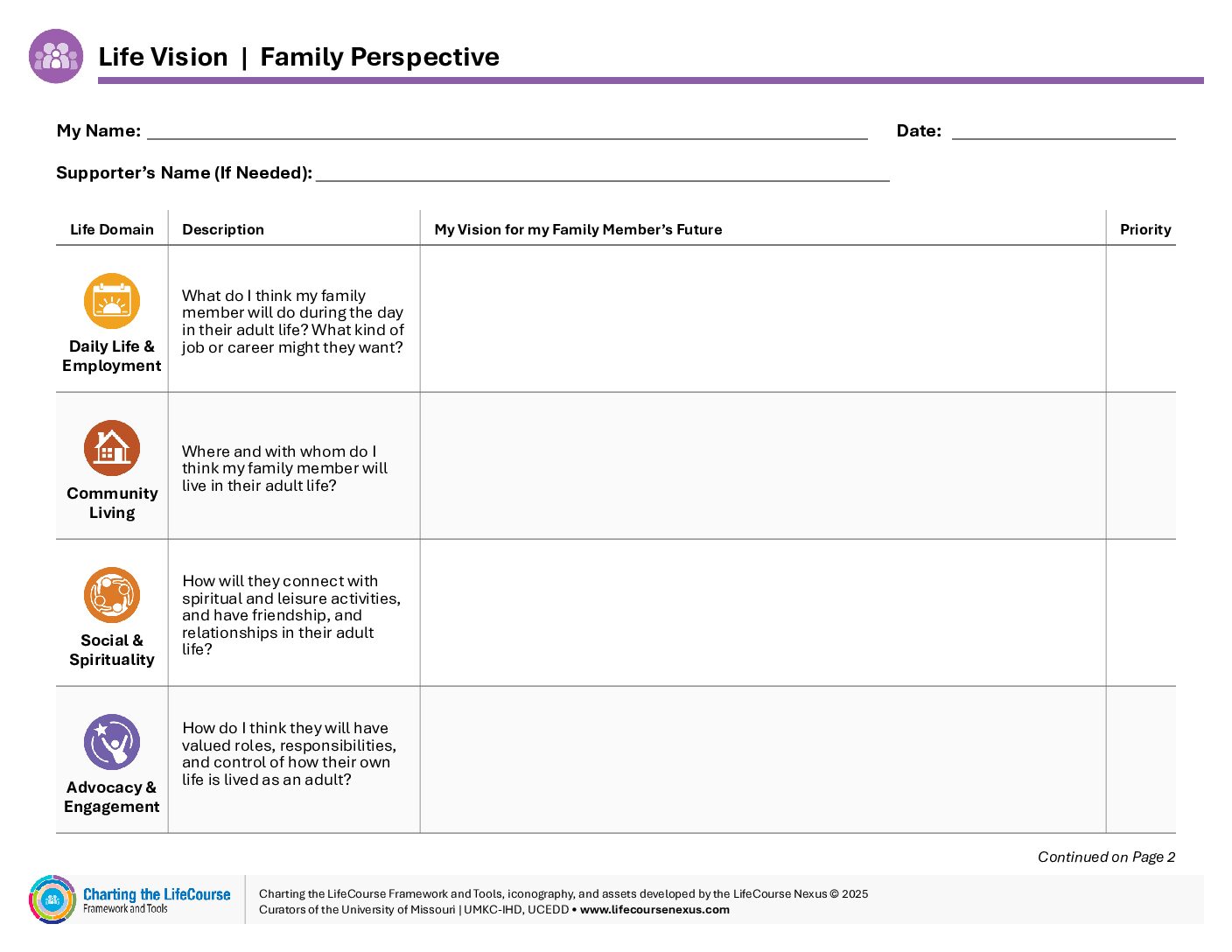
Charting the LifeCourse: Life Domain Vision Tool - Family Perspective
This document is part of the Charting the Life Course set of tools. Visit https://www.lifecoursetools.com/ for examples on how to use this tool, and explore other tools.
Categories: Transition to Adulthood - Employment and Postsecondary Education, Transition to Adulthood - Health Care, Transition to Adulthood - Independent Living
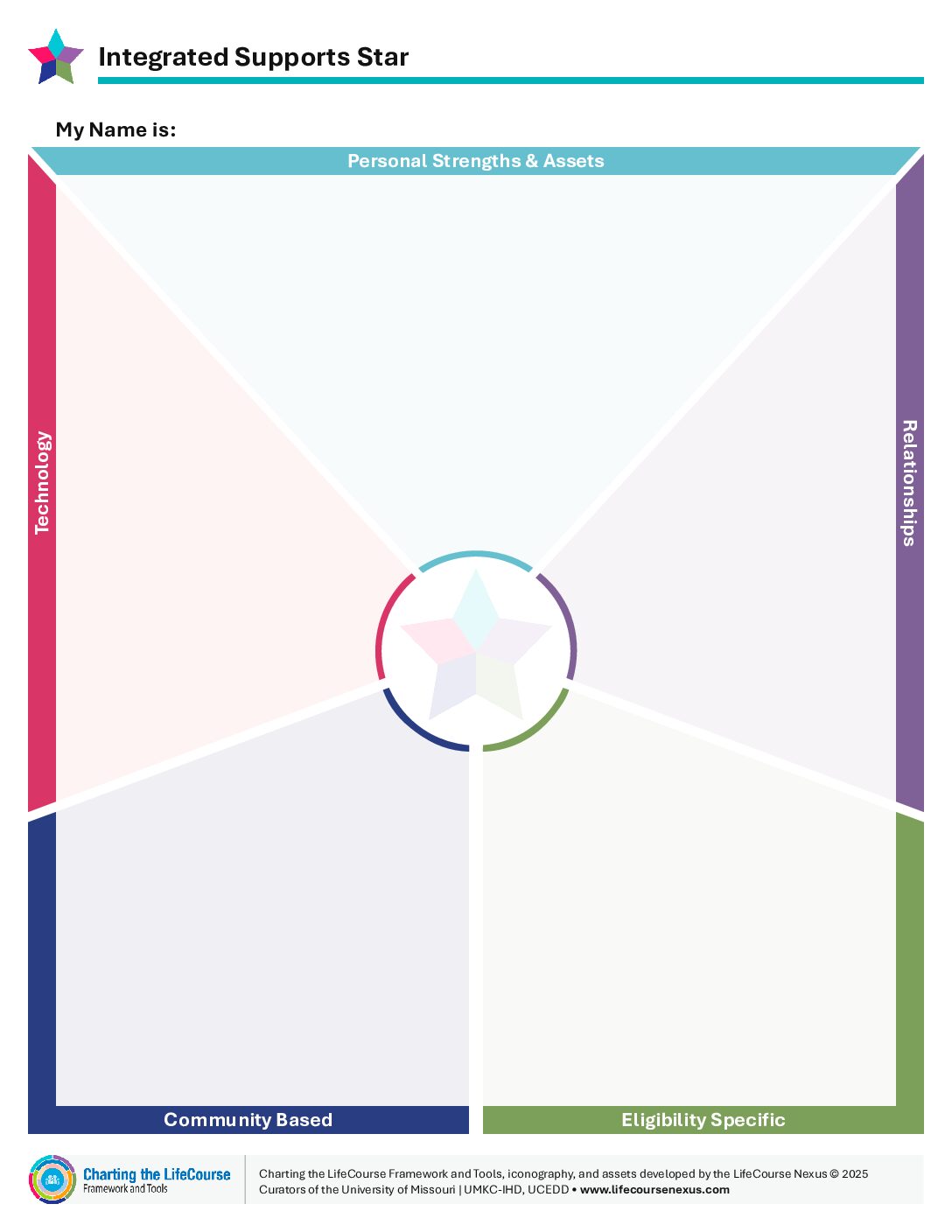
Charting the LifeCourse: Integrated Supports Star
This document is part of the Charting the LifeCourse set of tools. Visit https://www.lifecoursetools.com/ for examples on how to use this tool, and explore other tools.
Categories: Transition to Adulthood - Employment and Postsecondary Education, Transition to Adulthood - Health Care, Transition to Adulthood - Independent Living
Centers for Independent Living (CILs) Fact Sheet for North Carolina’s Parents
Centers for Independent Living (CILs) help people with disabilities of all ages be included in community life. North Carolina has 7 CILs. CILs are nonresidential and are run by and for people with disabilities. CILs work with people with disabilities, including students, to help them make their own decisions about their lives and to assist them achieve their independent living goals within their communities.
Categories: Transition to Adulthood - Independent Living

Being Involved in Person-Centered Planning for Students & Young Adults with Disabilities in Foster, Kinship, or Adoptive Families
Creating a vision for the future helps provide a plan for youth with disabilities who are unclear and/or anxious about becoming an adult. Person-centered planning (PCP) is directed by the youth to help them plan their life and supports.
Categories: Transition to Adulthood - Employment and Postsecondary Education, Transition to Adulthood - Health Care, Transition to Adulthood - Independent Living
An IDD Guide for North Carolina
The Arc of North Carolina has created this guide to offer you helpful information and resources in the IDD sector of North Carolina. You will find links to the information mentioned in each section at the end of this guide.
Categories: Medicaid and Medicaid Waivers, Special Needs Financial Planning and Financial Resources, Transition to Adulthood - Independent Living
Adult Planning Checklist
Independent Living Skills for Adults - These are the essential skill areas an adult needs in order to live independently
Categories: Transition to Adulthood - Independent Living