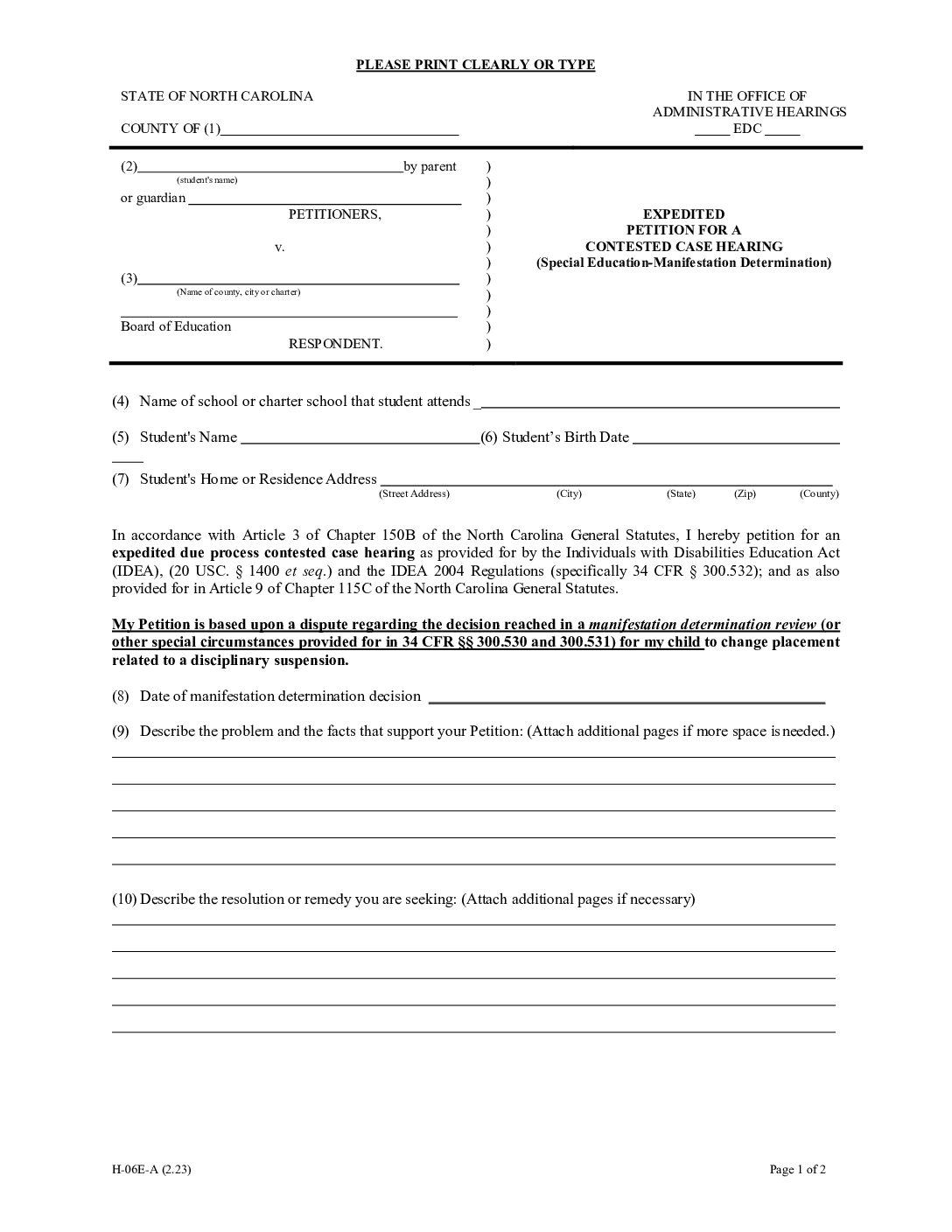
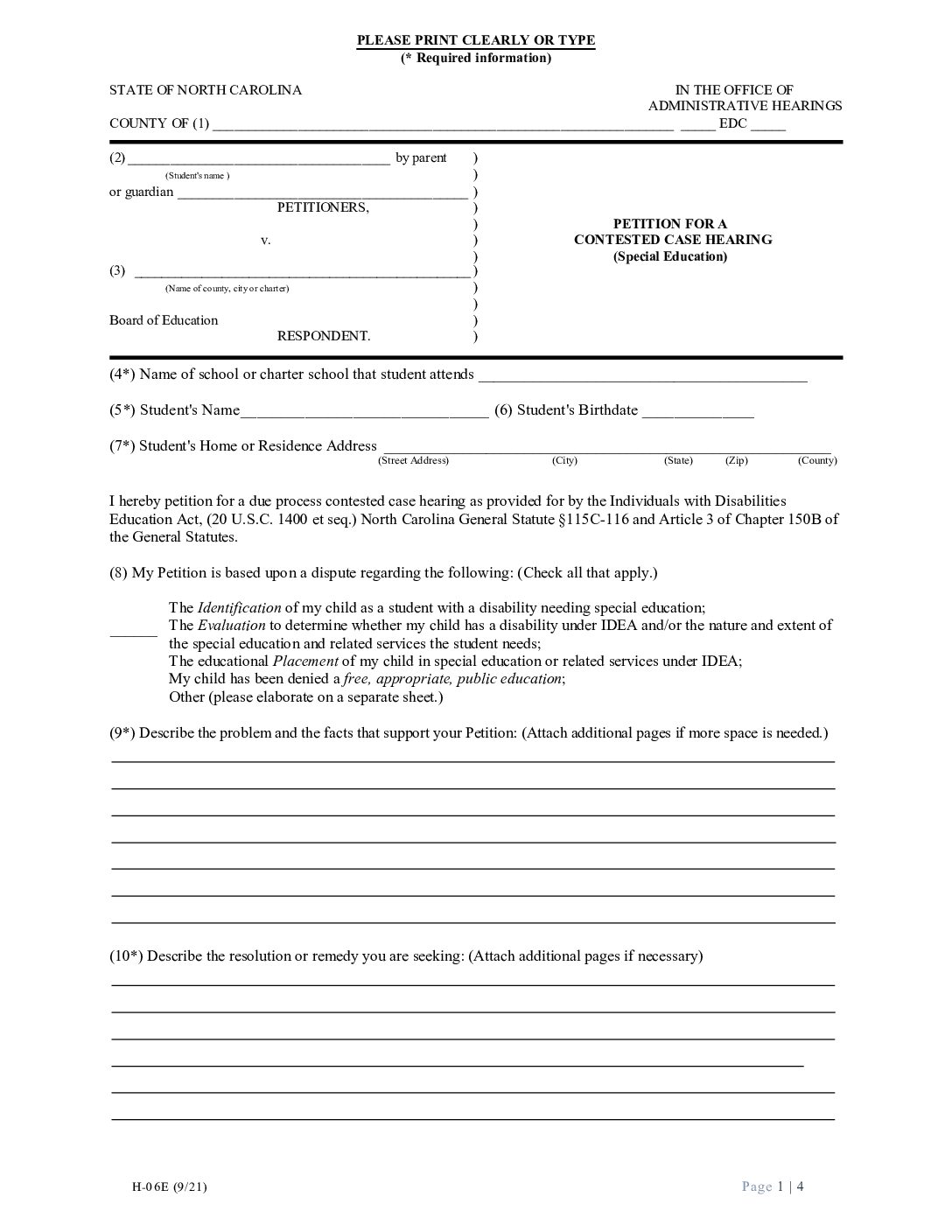
Expedited Petition for a Contested Case Hearing (Special Education - Manifestation Determination)
類別:行為

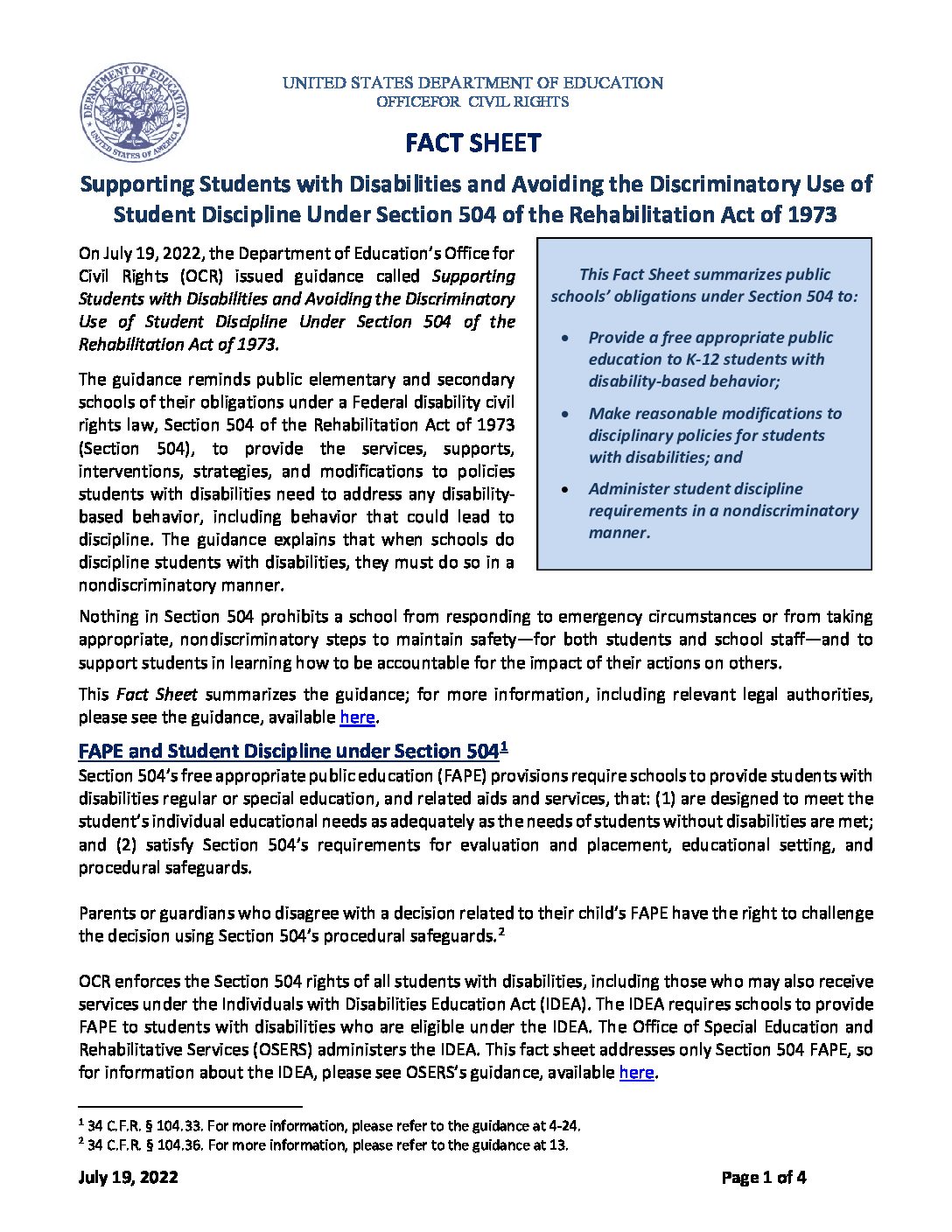
情況說明書 - 根據1973年《康復法》第504條,支援殘疾學生並避免歧視性地使用學生紀律
美國教育部關於殘疾學生紀律的新指南。
Categories: 504, Behavior, IDEA

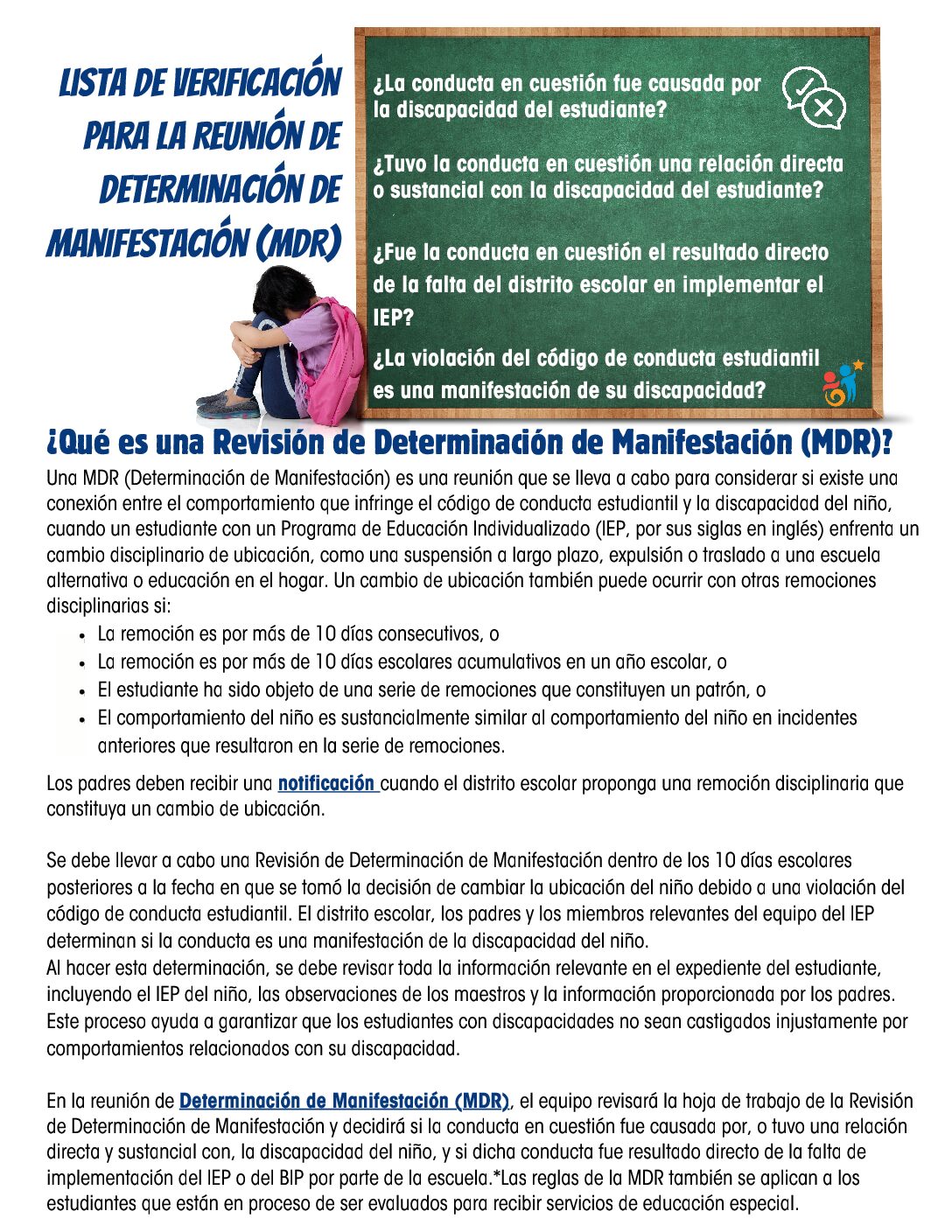
Lista de Verificación para la Reunión de Determinación de Manifestación (MDR)
Una MDR (Determinación de Manifestación) es una reunión que se lleva a cabo para considerar si existe una conexión entre el comportamiento que infringe el código de conducta estudiantil y la discapacidad del niño, cuando un estudiante con un Programa de Educación Individualizado (IEP, por sus siglas en inglés) enfrenta un cambio disciplinario de ubicación, como una suspensión a largo plazo, expulsión o traslado a una escuela alternativa o educación en el hogar.
Categories: Behavior, Spanish

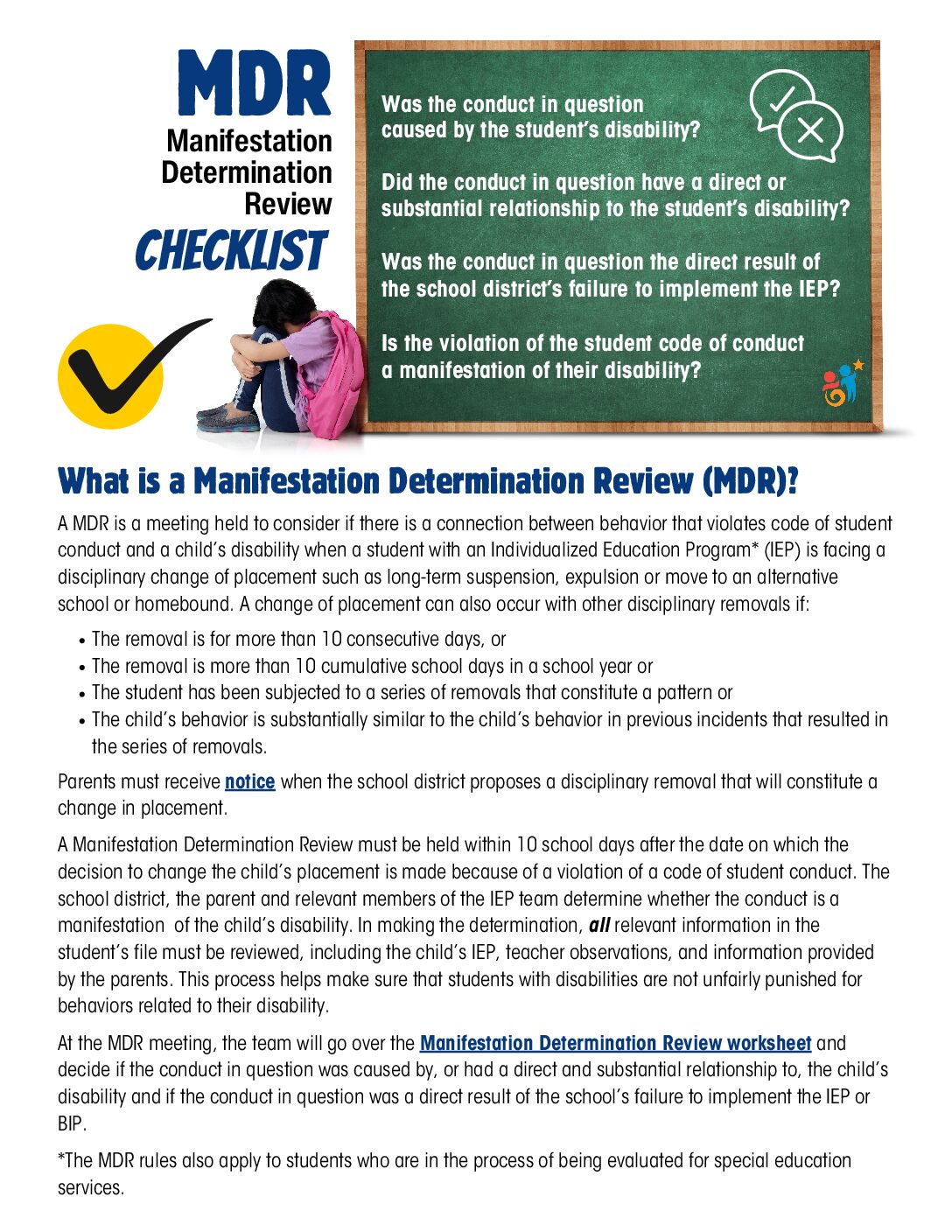
Manifestation Determination Review (MDR) Checklist
A MDR is a meeting held to consider if there is a connection between behavior that violates code of student conduct and a child’s disability when a student with an Individualized Education Program* (IEP) is facing a disciplinary change of placement such as long-term suspension, expulsion or move to an alternative school or homebound.
Categories: Behavior, IEP, Parent Rights, Special Education

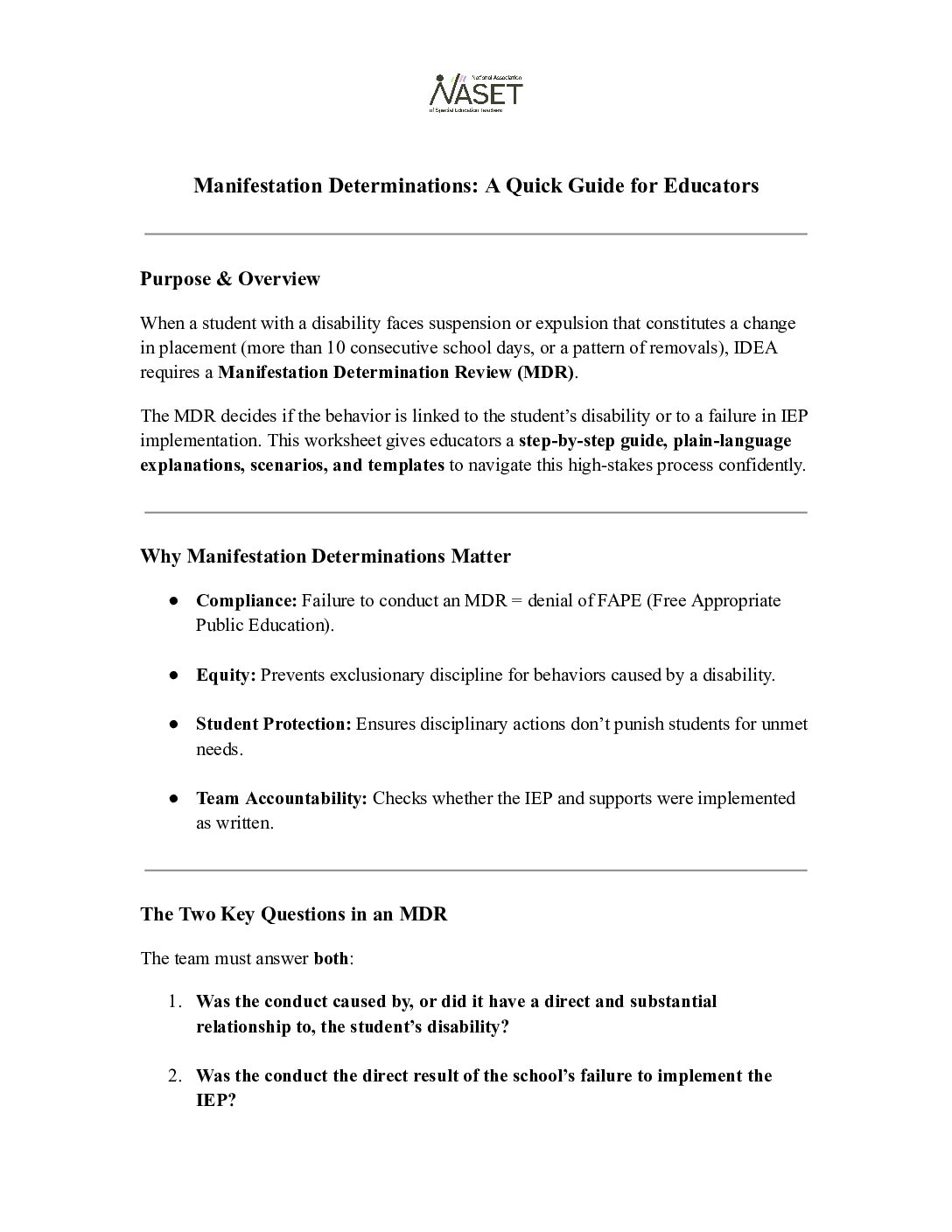
Manifestation Determinations: A Quick Guide for Educators
When a student with a disability faces suspension or expulsion that constitutes a change in placement (more than 10 consecutive school days, or a pattern of removals), IDEA requires a Manifestation Determination Review (MDR). The MDR decides if the behavior is linked to the student’s disability or to a failure in IEP implementation. This worksheet gives educators a step-by-step guide, plain-language explanations, scenarios, and templates to navigate this high-stakes process confidently.

類別:行為

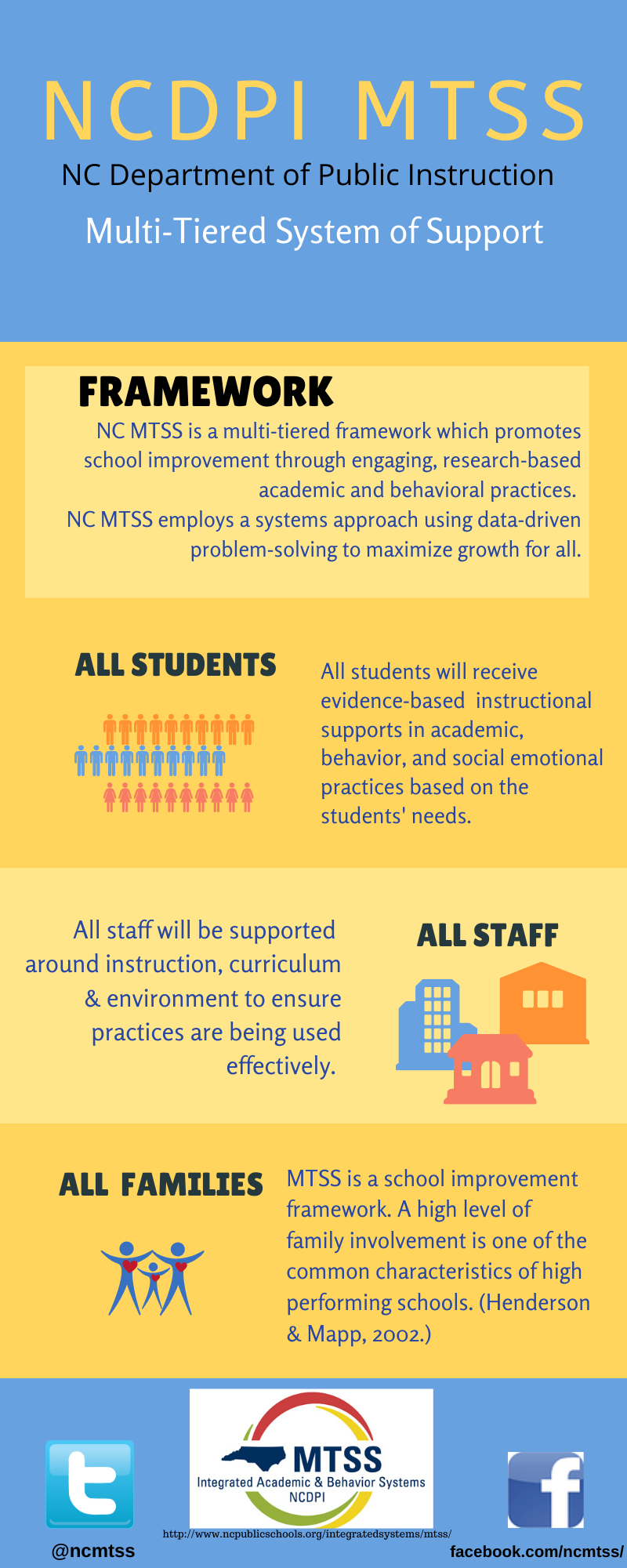
NCDPI 多層支援系統 (MTSS) 家庭資訊圖
NC MTSS 是一個多層次的框架,通過參與、基於研究的學術和行為實踐以及社會情感學習 (SEL) 來促進學校改進。NC MTSS 採用系統方法,使用數據驅動的問題解決,以最大限度地提高所有人都實現的增長。
類別: 行為, MTS


Positive, Proactive Approaches to Supporting Children with Disabilities: A Guide for Stakeholders
U.S. Department of Education, Office of Special Education and Rehabilitative Services
類別:行為

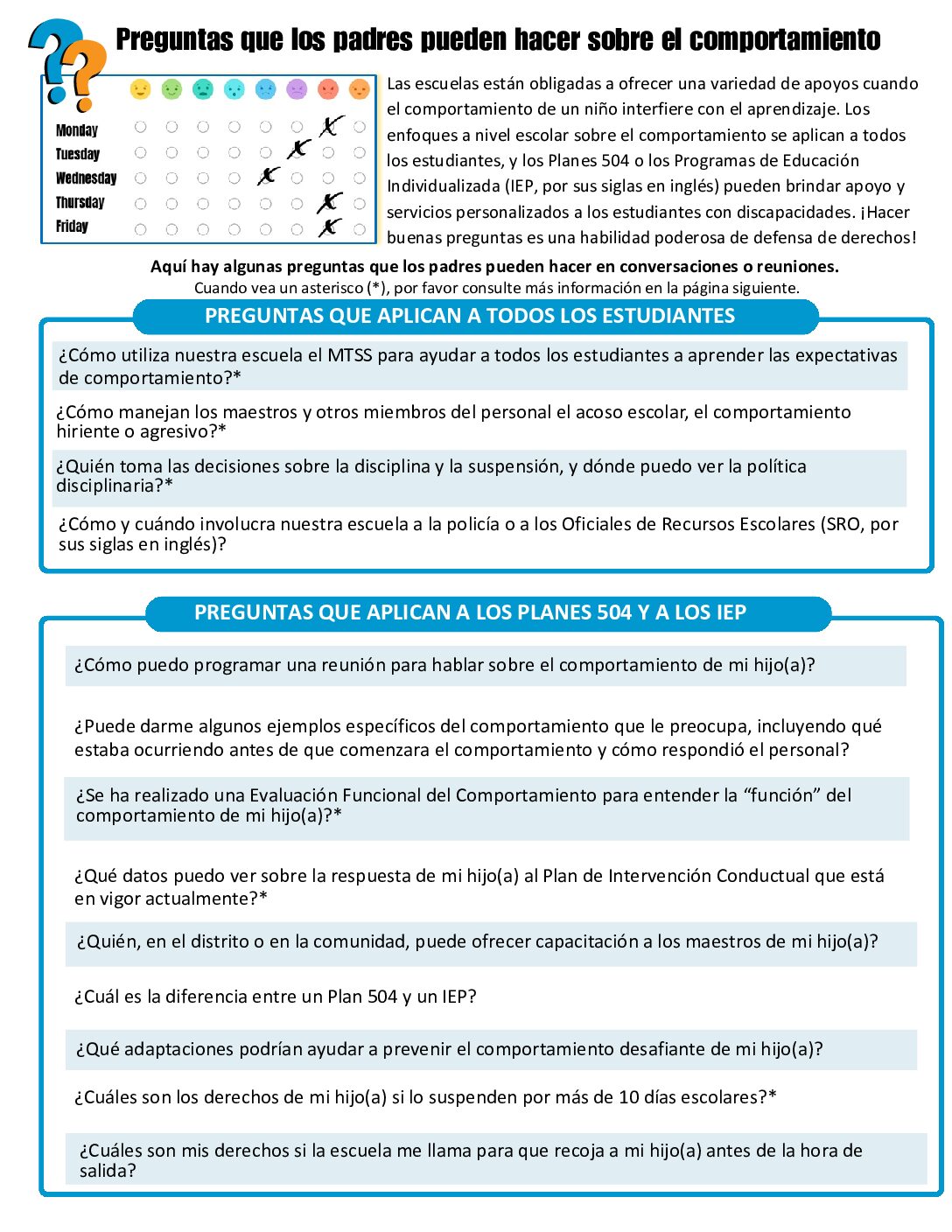
Preguntas que los padres pueden hacer sobre el comportamiento (Questions Parents Can Ask About Behavior)
Aquí hay algunas preguntas que los padres pueden hacer en conversaciones o reuniones.
Categories: Behavior, IEP, Spanish

Questions and Answers: Addressing the Needs of Children with Disabilities and IDEA's Discipline Provisions
From the U.S. Department of Education, Office of Special Education and Rehabilitative Servies
分類: 行為, 理念

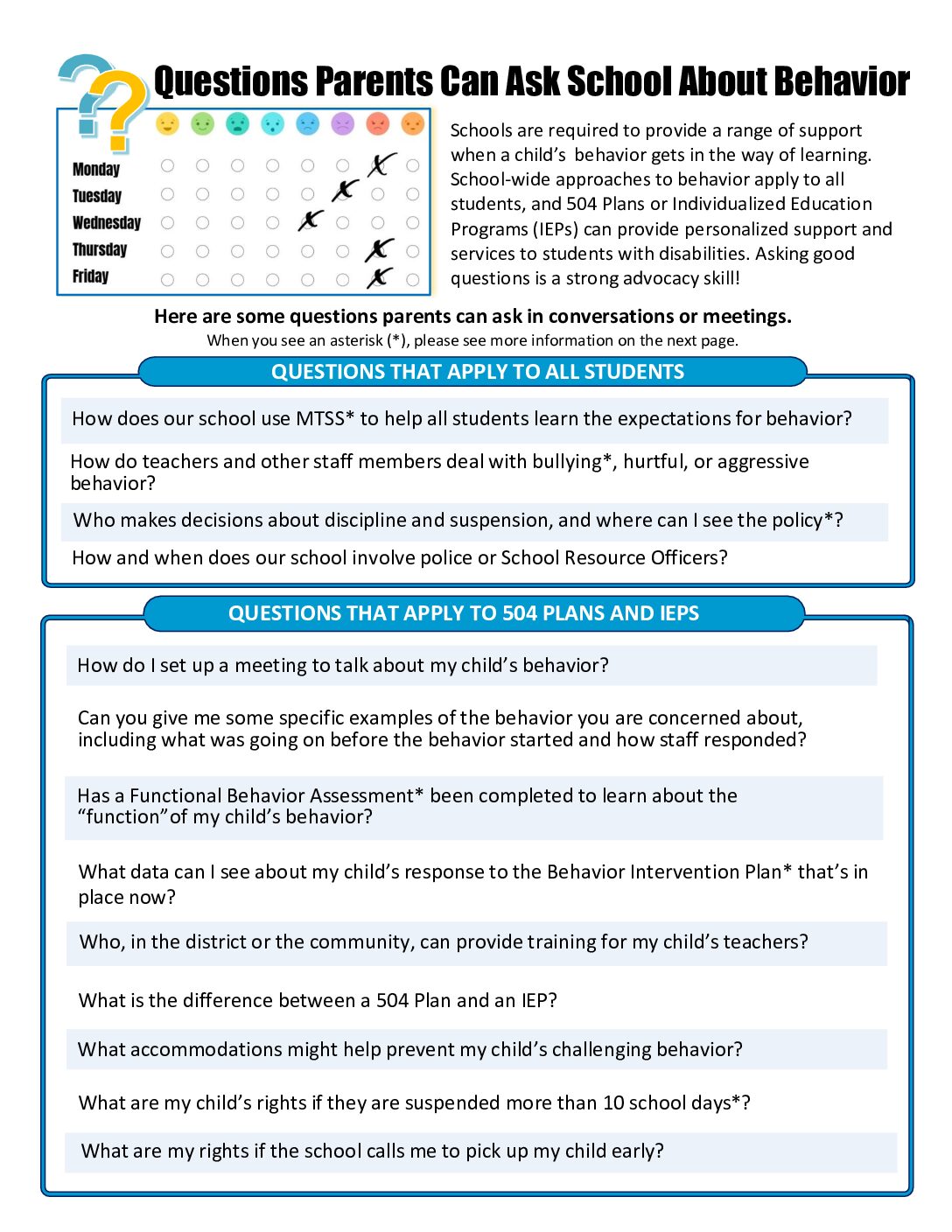
Questions Parents Can Ask School About Behavior
Schools are required to provide a range of support when a child’s behavior gets in the way of learning. School-wide approaches to behavior apply to all students, and 504 Plans or Individualized Education Programs (IEPs) can provide personalized support and services to students with disabilities. Asking good questions is a strong advocacy skill!
Categories: Behavior, Communication, Special Education

Section 504 Discipline Guidance
Supporting Students with Disabilities and Avoiding the Discriminatory Use of Student Discipline under Section 504 of the Rehabilitation Act of 1973, U.S. Department of Education Office for Civil Rights, July 2022
Categories: 504, Behavior

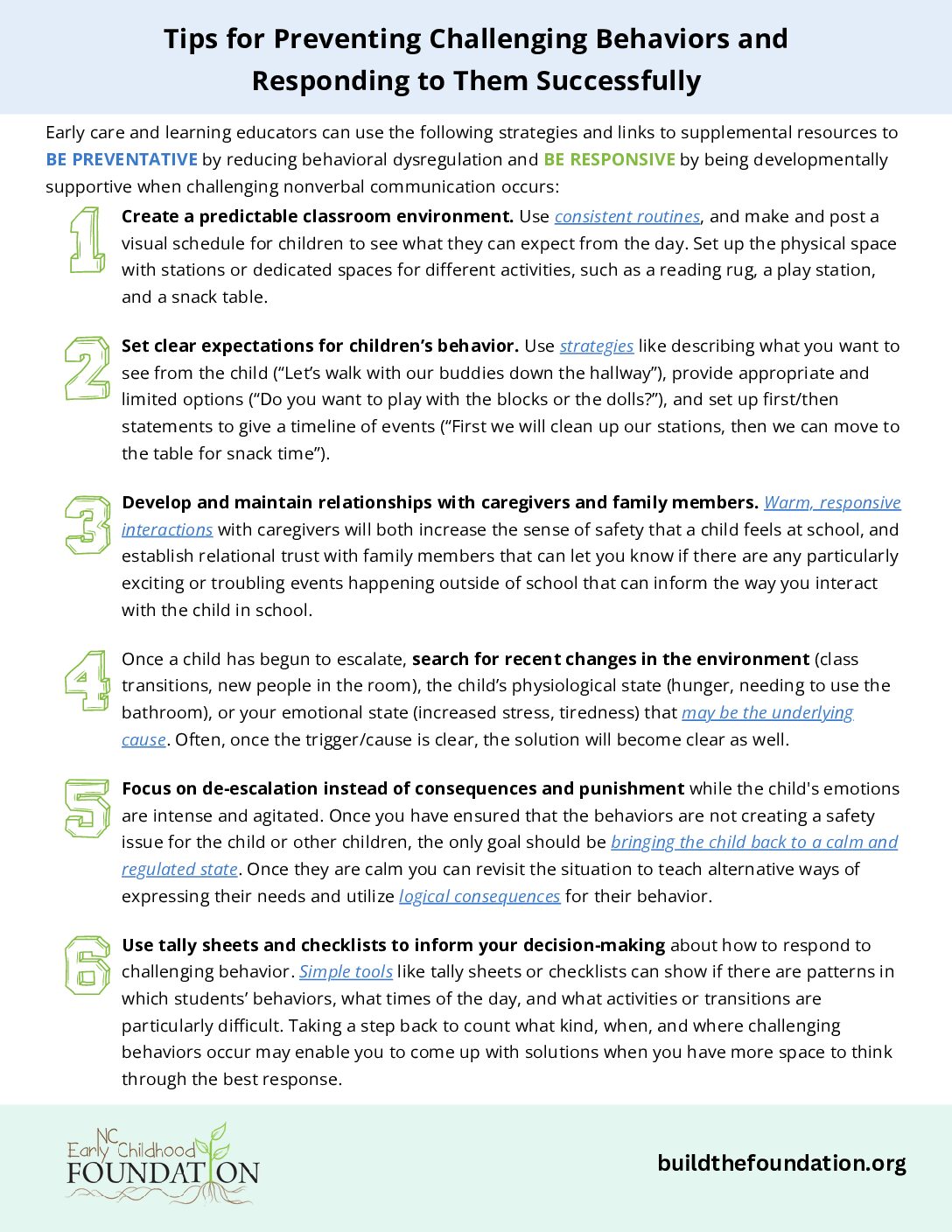
預防挑戰性行為並成功應對這些行為的技巧
早期護理和學習教育者可以使用以下策略和補充資源連結,通過減少行為失調來預防,並在發生具有挑戰性的非語言交流時通過發展支援來做出反應。
分類: 行為, 幼兒

Using Functional Behavioral Assessments to Create Supportive Learning Environments
From the U.S. Department of Education - Using Functional Behavioral Assessments to Create Supportive Learning Environments, guidance to help schools and early childhood programs better support students’ behavioral needs. This guidance focuses on evidence-based practices to support students, with or without disabilities, whose behavior interferes with learning, and is part of the Department’s effort to reduce exclusionary discipline.
Categories: Behavior, Special Education