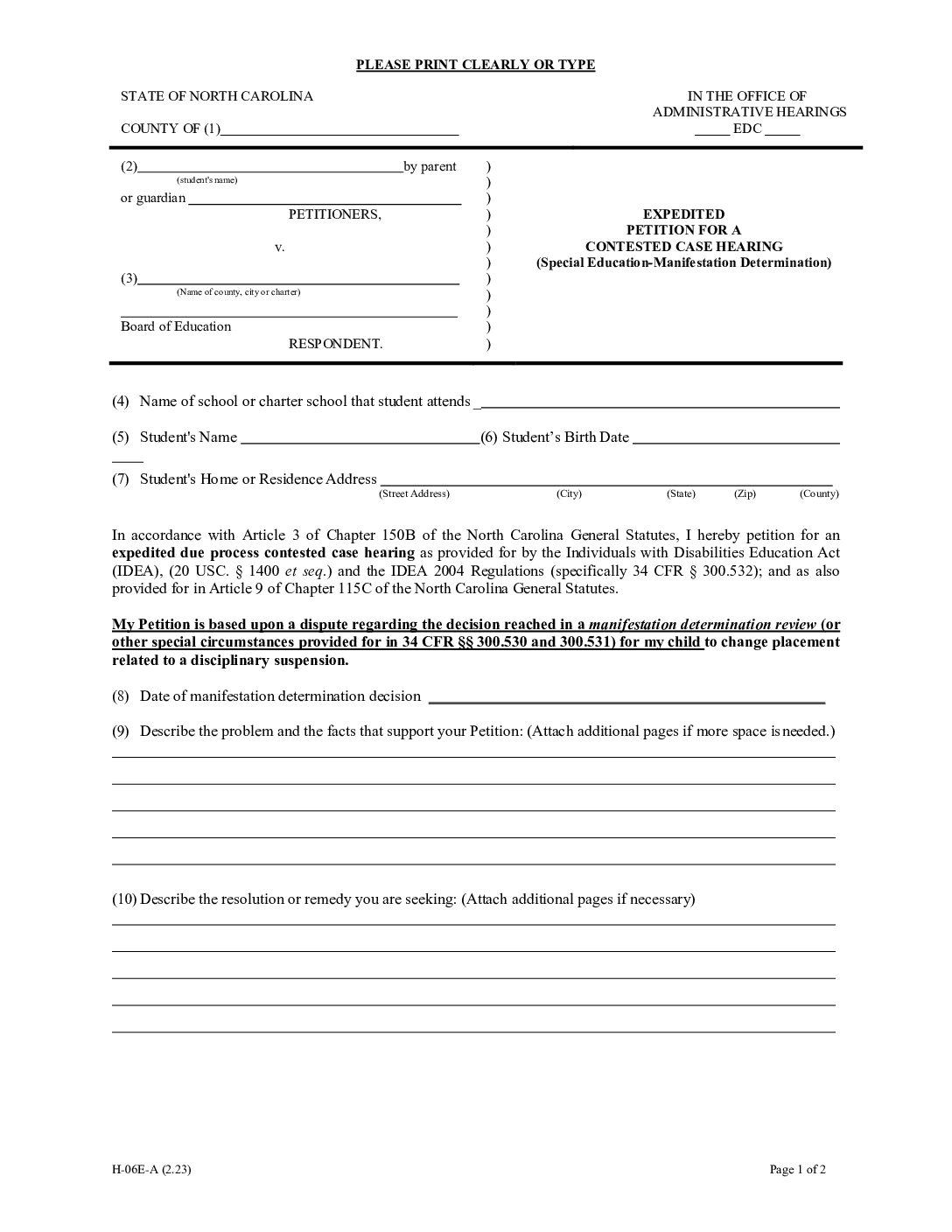
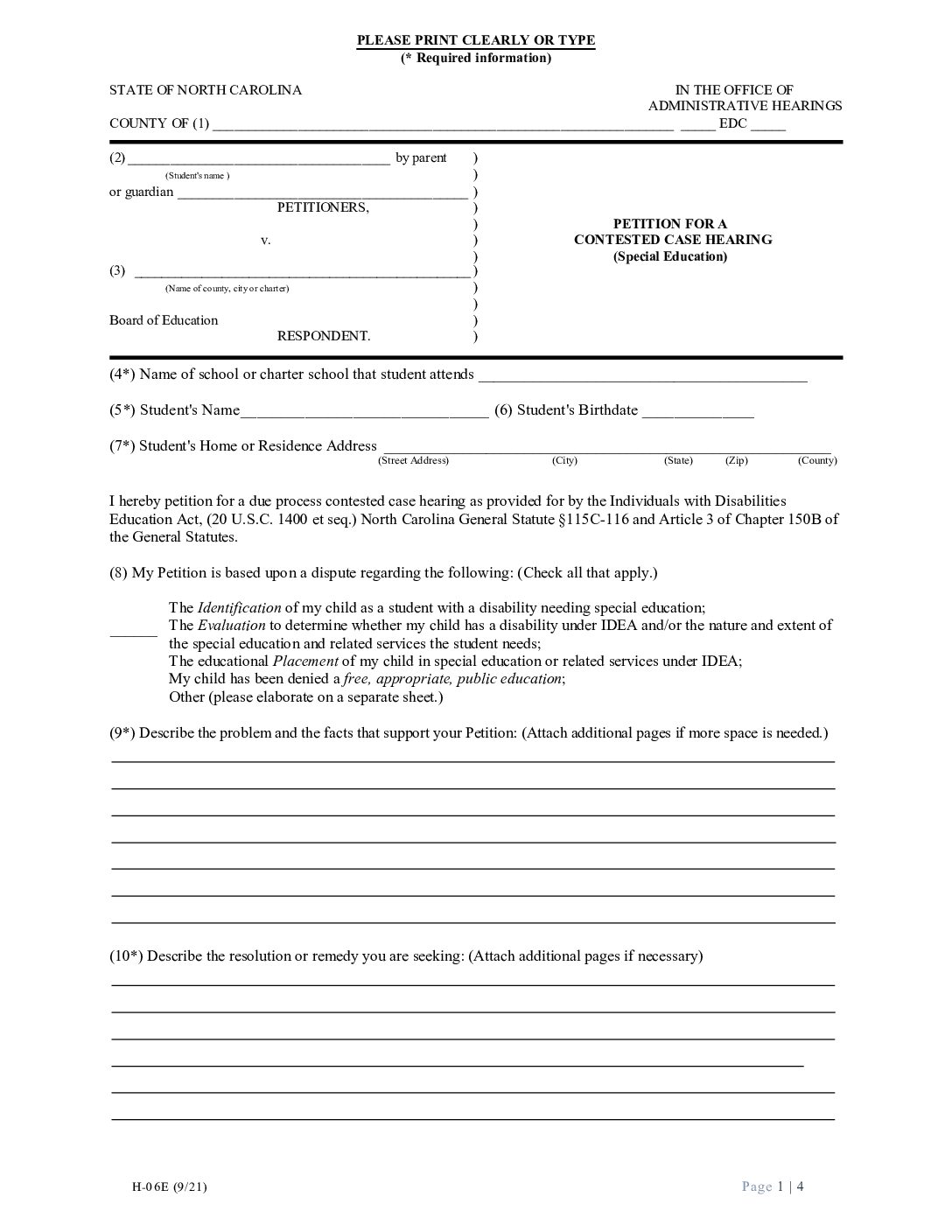
Expedited Petition for a Contested Case Hearing (Special Education - Manifestation Determination)
Categorías: Comportamiento

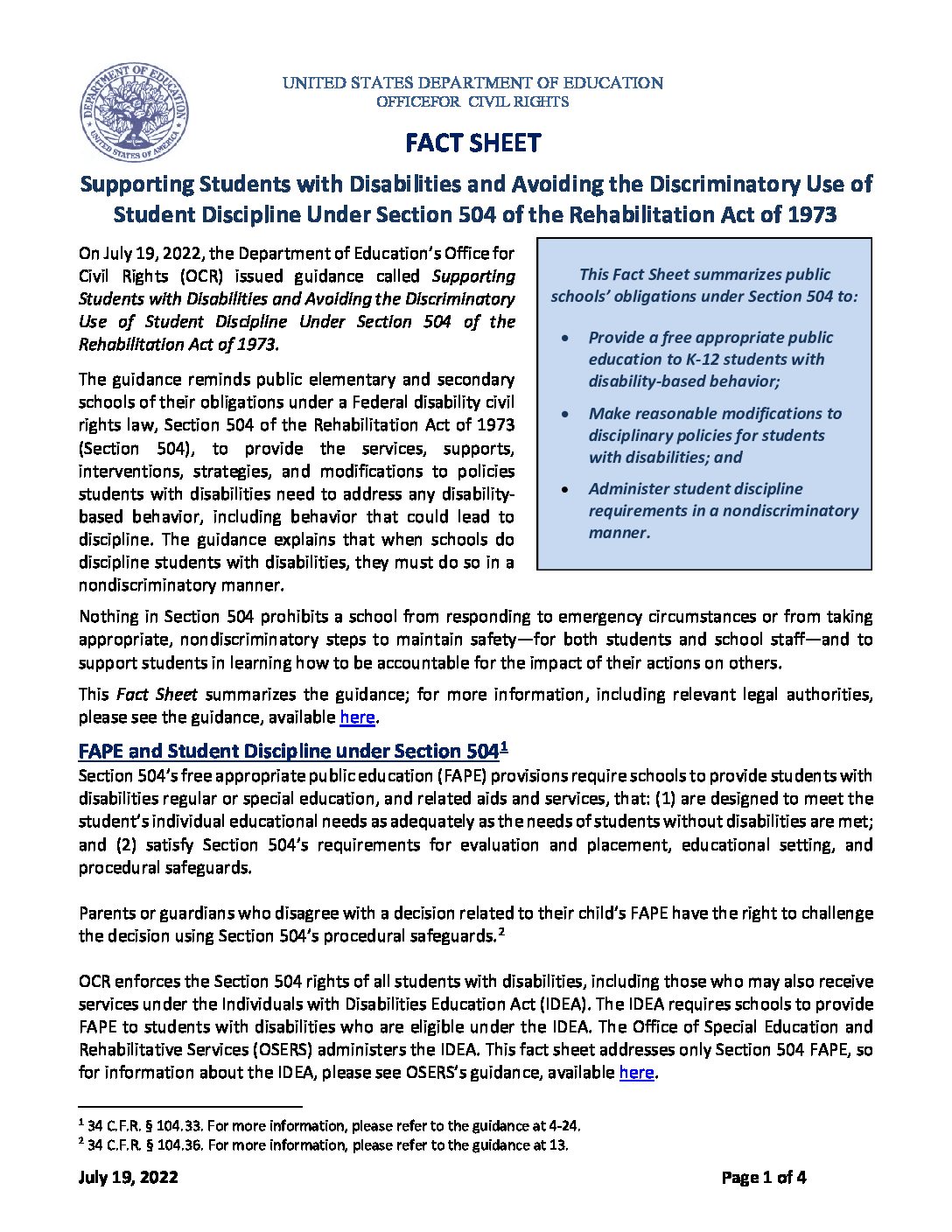
HOJA DE DATOS - Apoyar a los estudiantes con discapacidades y evitar el uso discriminatorio de la disciplina estudiantil bajo la Sección 504 de la Ley de Rehabilitación de 1973
Nuevas orientaciones del Departamento de Educación de los Estados Unidos sobre la disciplina de los alumnos con discapacidad.
Categories: 504, Behavior, IDEA

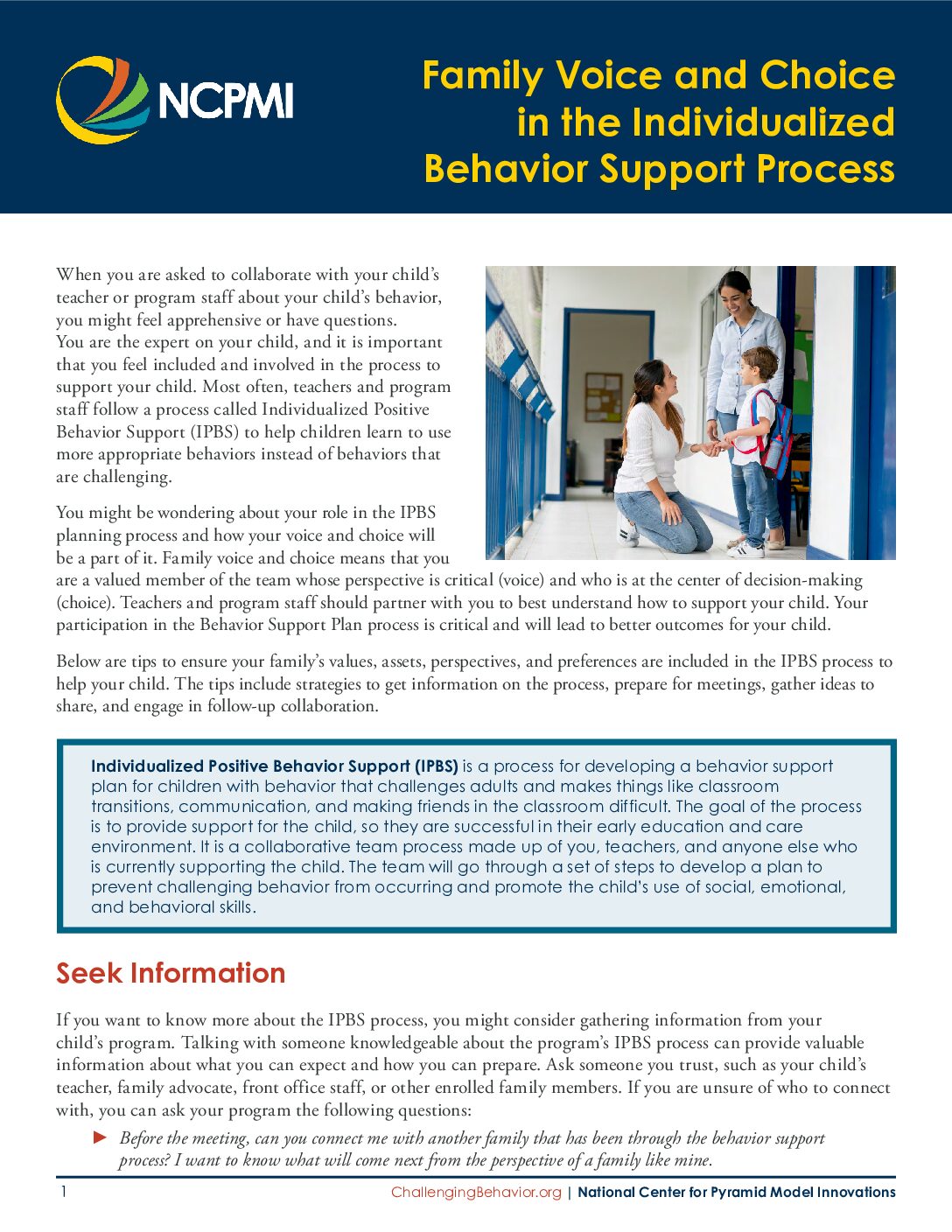
Family Voice and Choice in the Individualized Behavior Support Process
Empowering families to be active and valued participants in the Individualized Positive Behavior Support Plan (IPBS) is foundational to the Pyramid Model. This set of tips and strategies helps families ensure their values, assets, perspectives, and preferences are included in individualized support for their children.
Categorías: Comportamiento

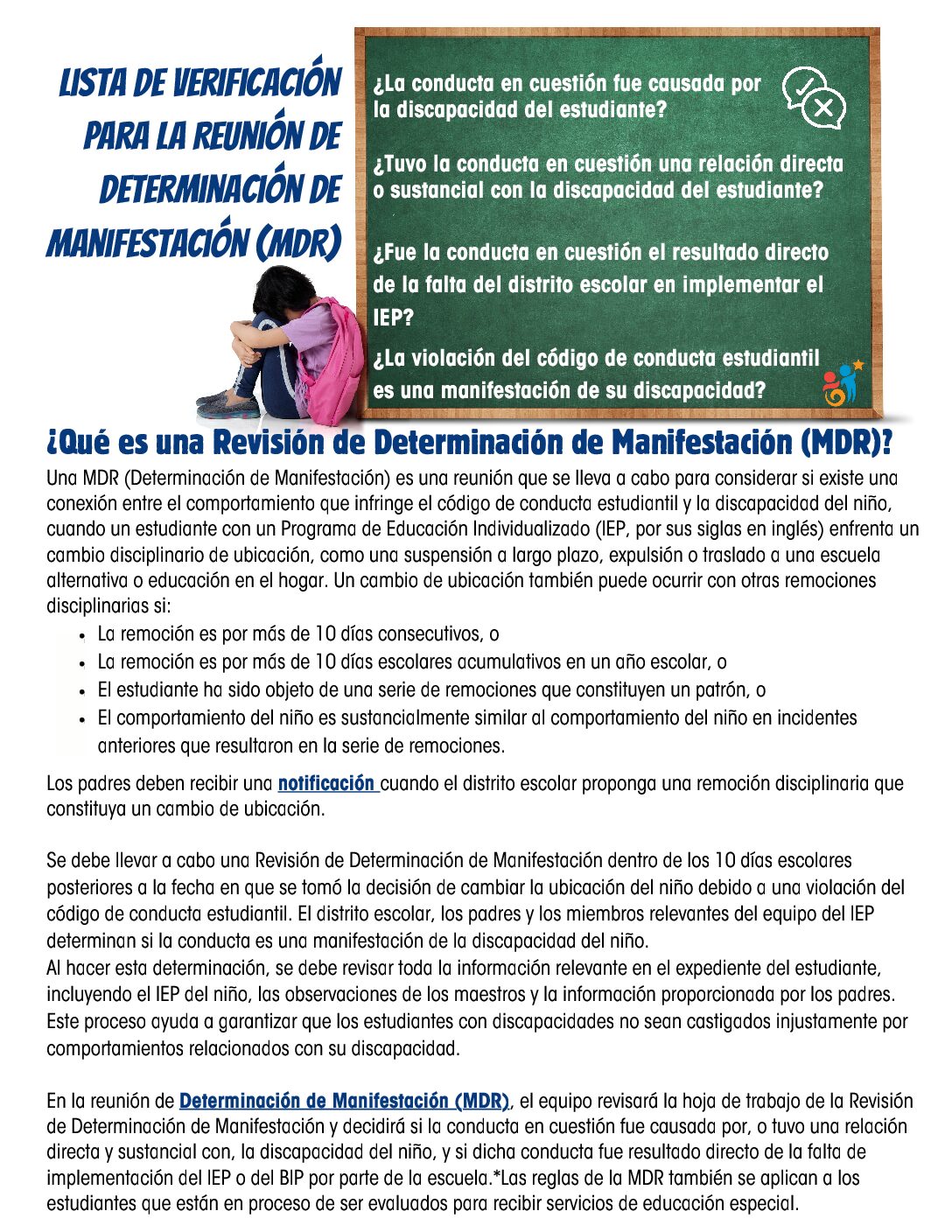
Lista de Verificación para la Reunión de Determinación de Manifestación (MDR)
Una MDR (Determinación de Manifestación) es una reunión que se lleva a cabo para considerar si existe una conexión entre el comportamiento que infringe el código de conducta estudiantil y la discapacidad del niño, cuando un estudiante con un Programa de Educación Individualizado (IEP, por sus siglas en inglés) enfrenta un cambio disciplinario de ubicación, como una suspensión a largo plazo, expulsión o traslado a una escuela alternativa o educación en el hogar.
Categories: Behavior, Spanish

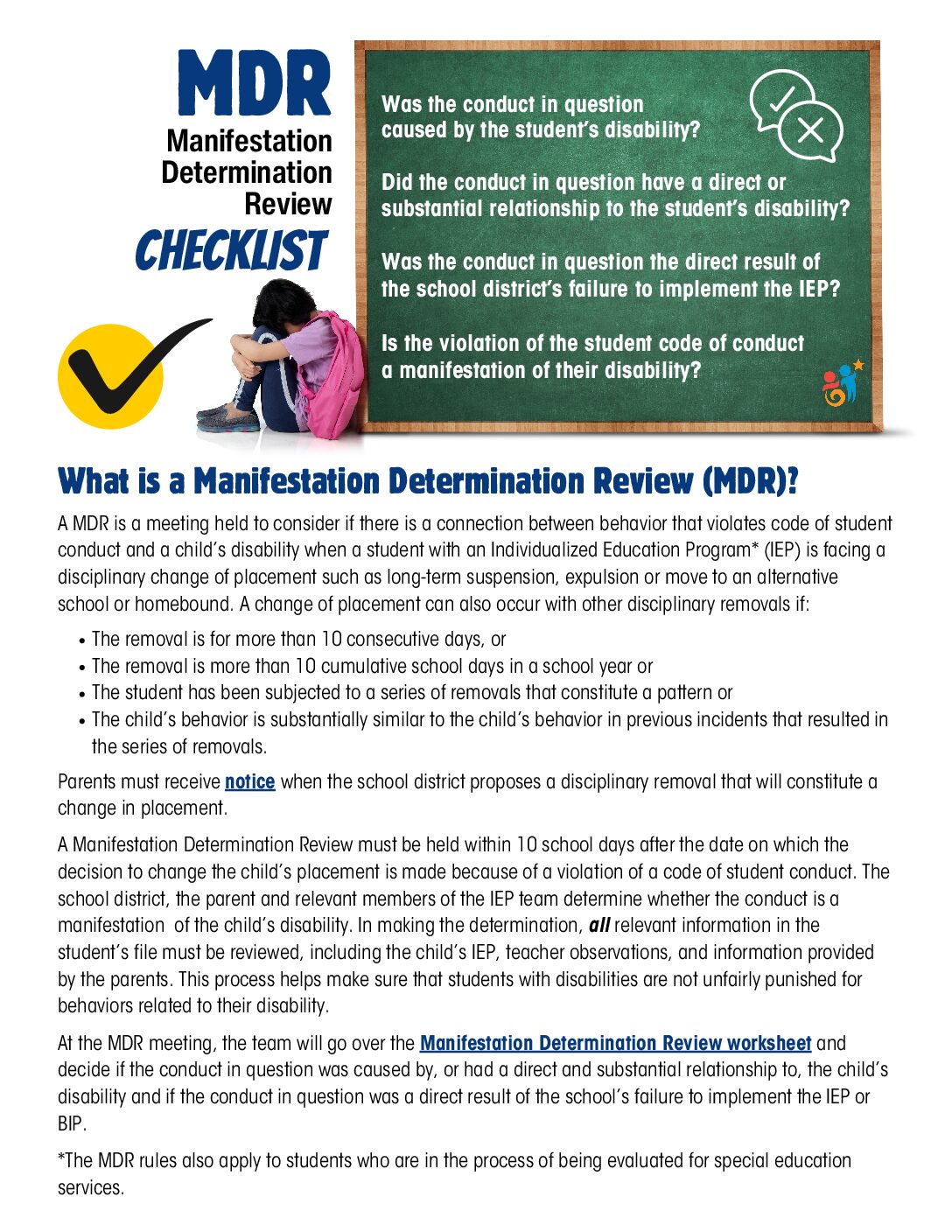
Manifestation Determination Review (MDR) Checklist
A MDR is a meeting held to consider if there is a connection between behavior that violates code of student conduct and a child’s disability when a student with an Individualized Education Program* (IEP) is facing a disciplinary change of placement such as long-term suspension, expulsion or move to an alternative school or homebound.
Categories: Behavior, IEP, Parent Rights, Special Education

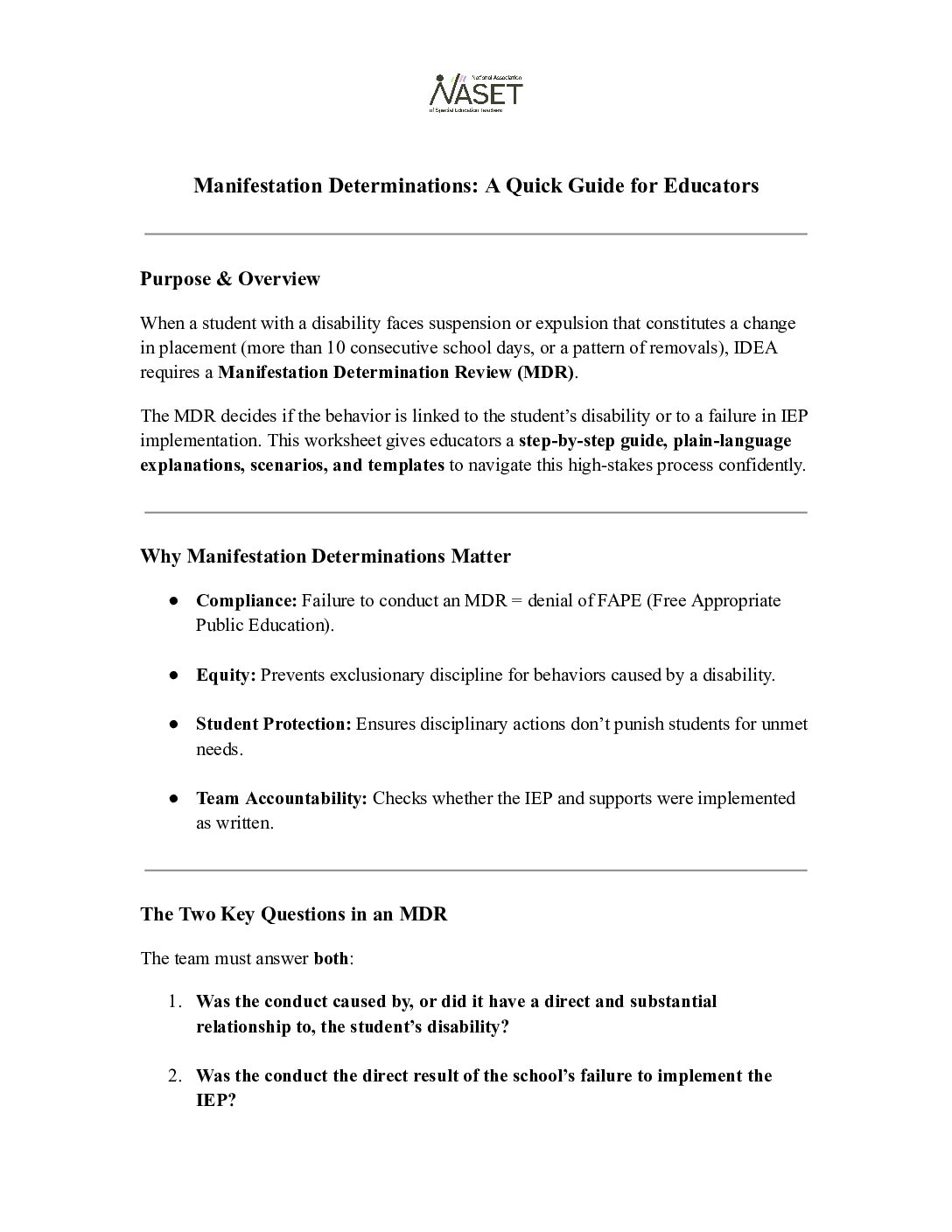
Manifestation Determinations: A Quick Guide for Educators
When a student with a disability faces suspension or expulsion that constitutes a change in placement (more than 10 consecutive school days, or a pattern of removals), IDEA requires a Manifestation Determination Review (MDR). The MDR decides if the behavior is linked to the student’s disability or to a failure in IEP implementation. This worksheet gives educators a step-by-step guide, plain-language explanations, scenarios, and templates to navigate this high-stakes process confidently.
Categorías: Comportamiento

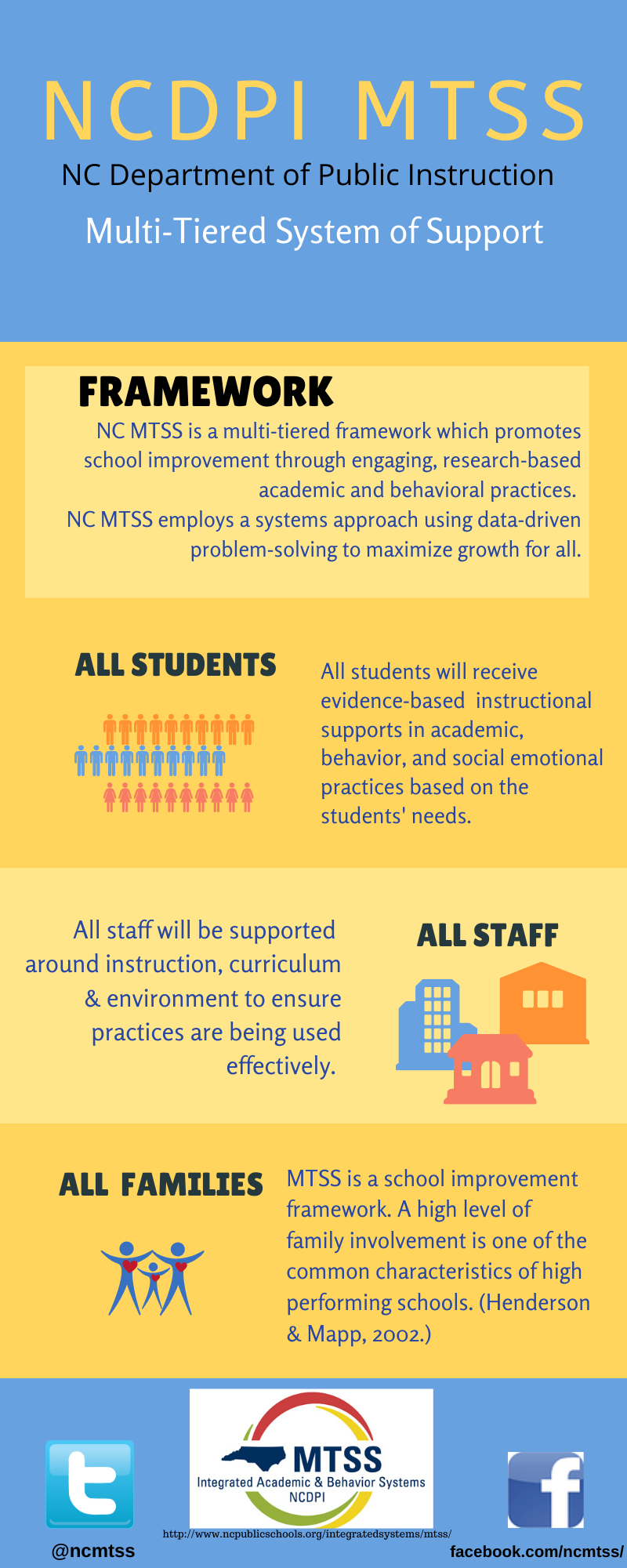
NCDPI Sistema de Apoyo Multi-Nivel (MTSS) Infografía para las familias
NC MTSS es un marco de varios niveles que promueve el mejoramiento de la escuela a través de prácticas académicas y conductuales atractivas y basadas en la investigación, así como el aprendizaje socio-emocional (SEL). NC MTSS emplea un enfoque de sistemas que utiliza la resolución de problemas basada en datos para maximizar el crecimiento para todos.
Categorías: Comportamiento, MTSS

Salir de las sombras
Infórmese sobre la retirada informal de los niños con discapacidad de las escuelas públicas.
Categories: Behavior, Special Education

Petition for a Contested Case Hearing (Special Education)
Categorías: Comportamiento

Positive, Proactive Approaches to Supporting Children with Disabilities: A Guide for Stakeholders
U.S. Department of Education, Office of Special Education and Rehabilitative Services
Categorías: Comportamiento

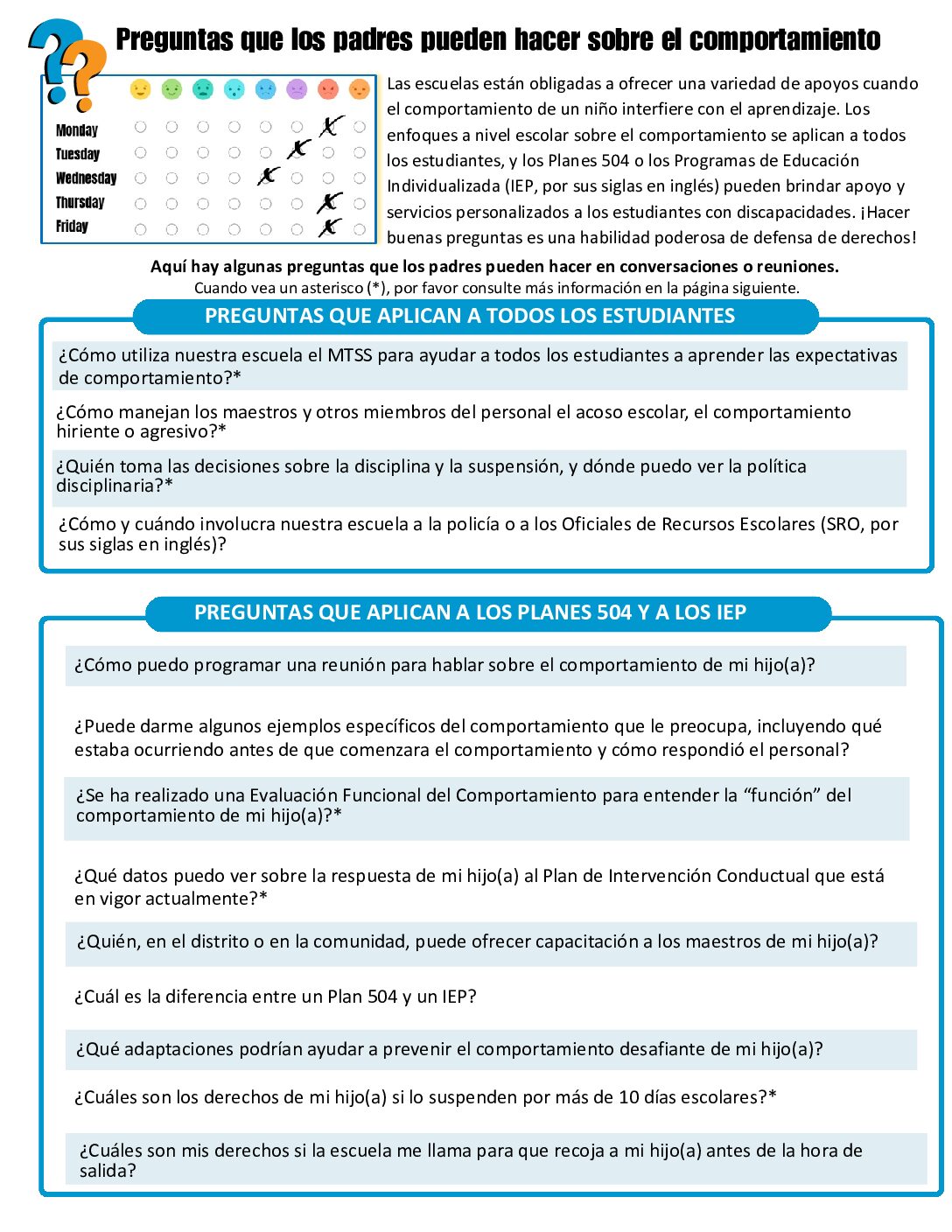
Preguntas que los padres pueden hacer sobre el comportamiento (Questions Parents Can Ask About Behavior)
Aquí hay algunas preguntas que los padres pueden hacer en conversaciones o reuniones.
Categories: Behavior, IEP, Spanish

Questions and Answers: Addressing the Needs of Children with Disabilities and IDEA's Discipline Provisions
From the U.S. Department of Education, Office of Special Education and Rehabilitative Servies
Categorías: Comportamiento, IDEA

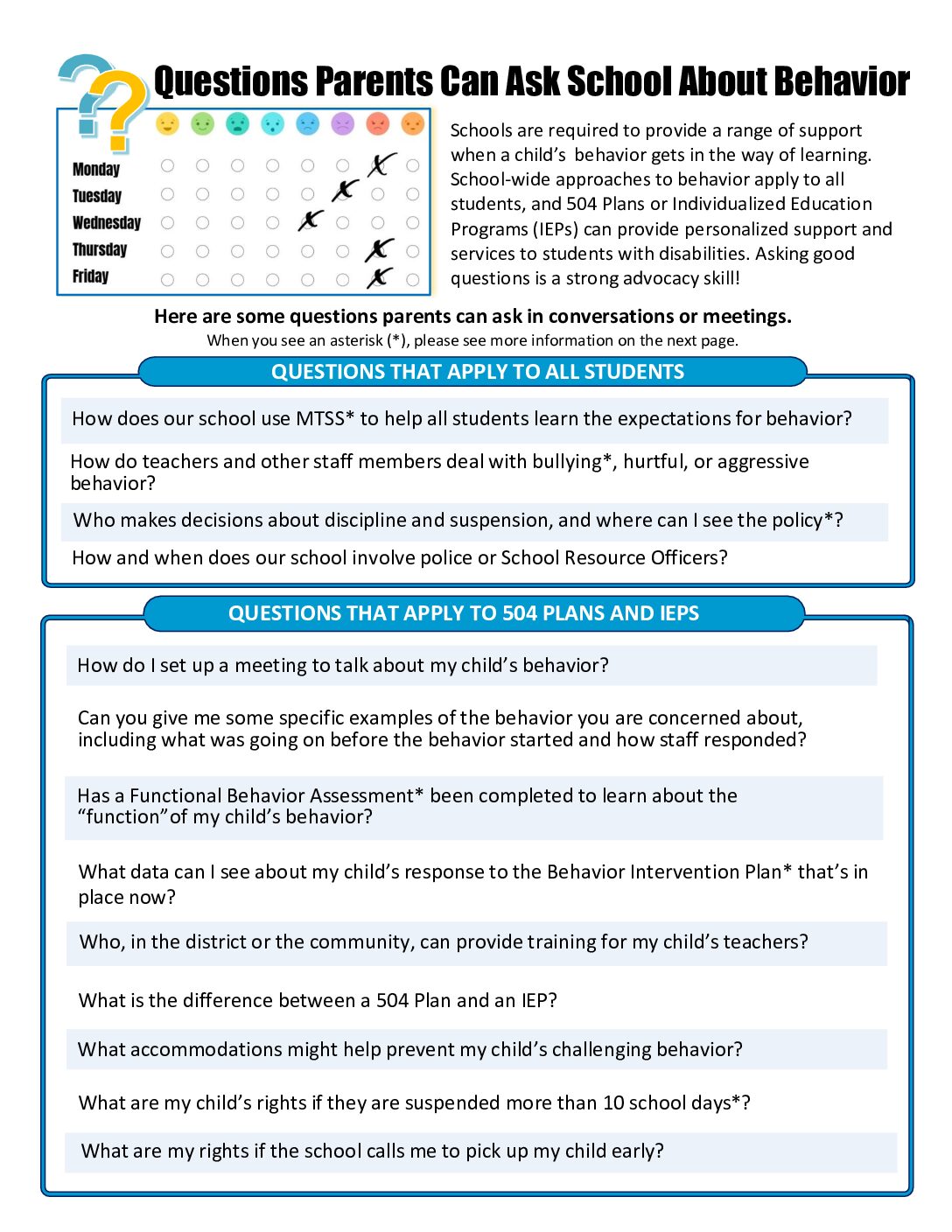
Questions Parents Can Ask School About Behavior
Schools are required to provide a range of support when a child’s behavior gets in the way of learning. School-wide approaches to behavior apply to all students, and 504 Plans or Individualized Education Programs (IEPs) can provide personalized support and services to students with disabilities. Asking good questions is a strong advocacy skill!
Categories: Behavior, Communication, Special Education

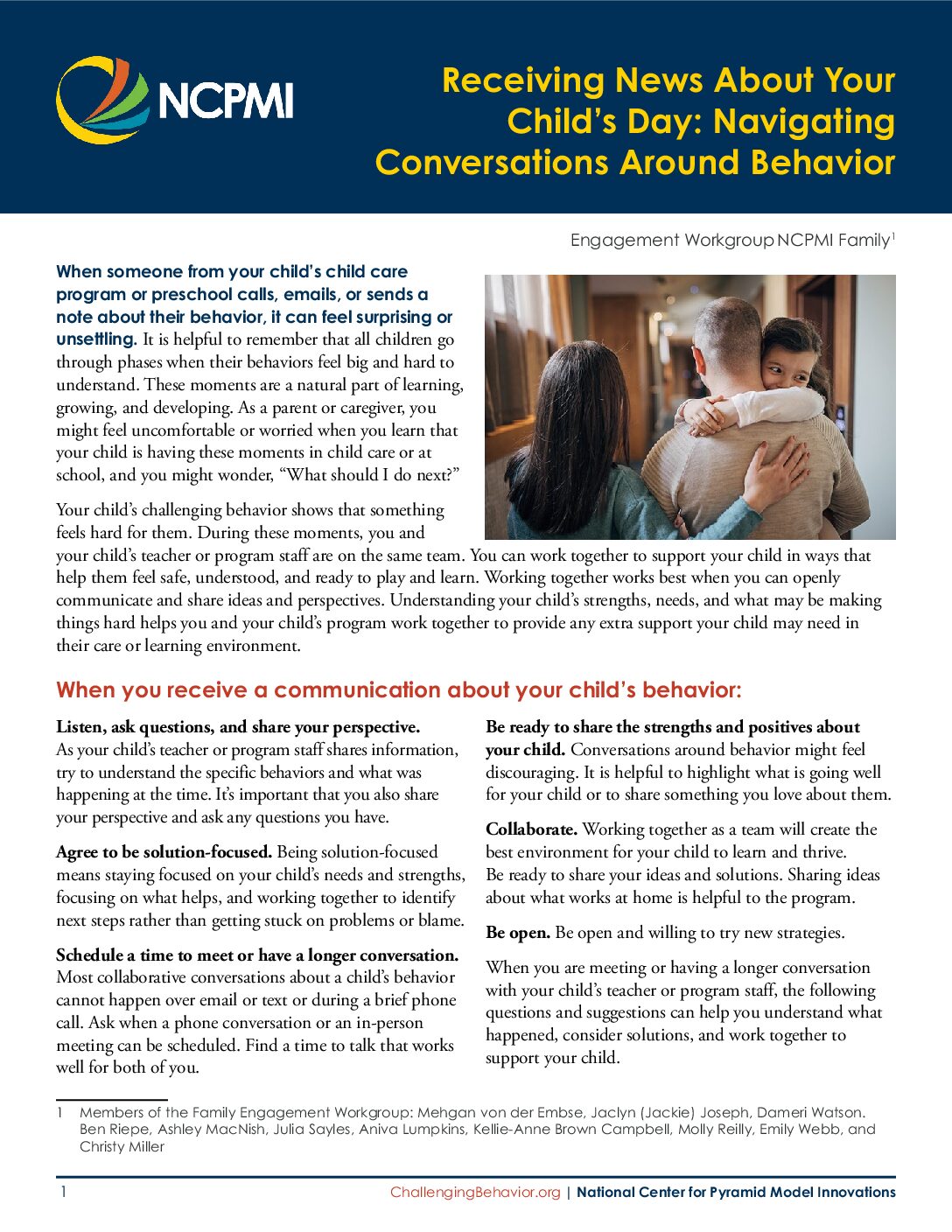
Receiving News About Your Child's Day: Navigating Conversations Around Behaviors
This family handout provides guidance on navigating conversations when receiving news about their child’s behavior. Families can use this resource to find ideas and tips for collaborating with their child’s program and teachers, including specific questions to ask and prompts to start collaborative conversations.
Categorías: Comportamiento

Section 504 Discipline Guidance
Supporting Students with Disabilities and Avoiding the Discriminatory Use of Student Discipline under Section 504 of the Rehabilitation Act of 1973, U.S. Department of Education Office for Civil Rights, July 2022
Categories: 504, Behavior

Supporting Behavior Through Connection
Supporting behavior through connection is a practical resource for families and early childhood practitioners that shifts the focus from compliance to connection. It offers simple, relationship-centered strategies for responding to challenging behavior that help children feel safe, valued, and supported. The resource describes three practices, including examples and prompts, that can be used in everyday routines to build trust and connection with children.
Categorías: Comportamiento

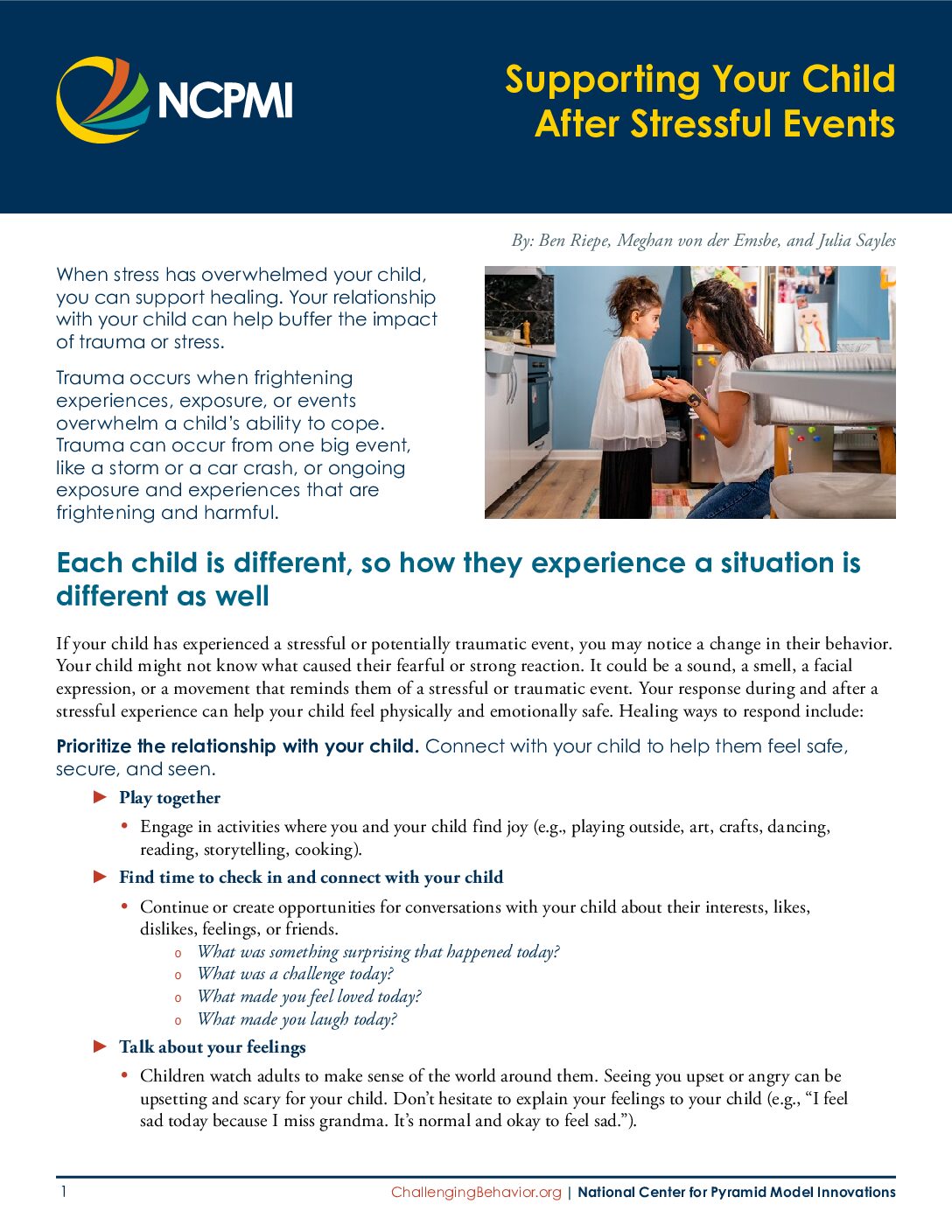
Supporting Your Child After Stressful Events
This resource offers guidance on supporting children after stressful events and includes strategies for families and caregivers to create safety and predictability through routines, clear communication, and emotional connection.
Categorías: Comportamiento

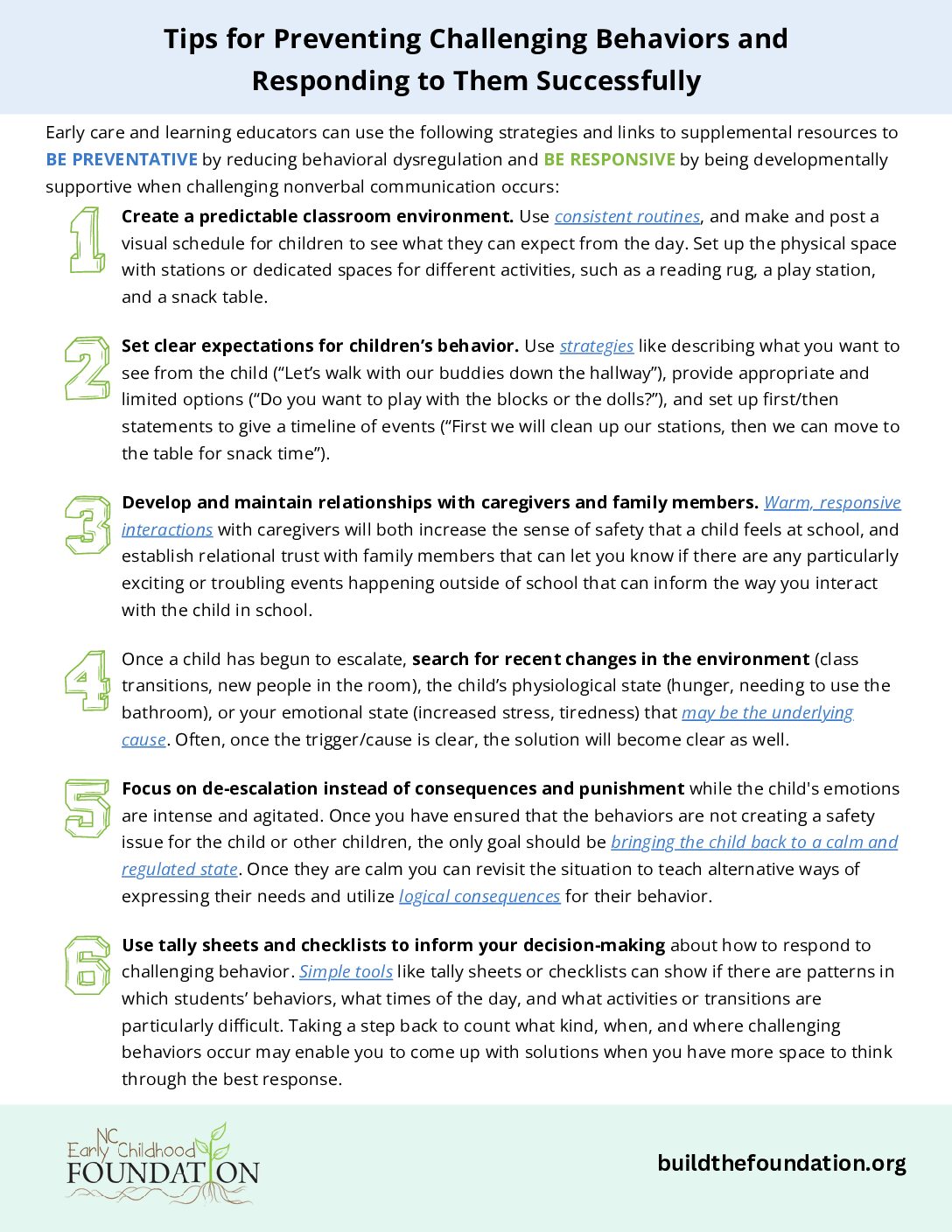
Consejos para prevenir conductas desafiantes y responder a ellas con éxito
Los educadores de atención y aprendizaje tempranos pueden utilizar las siguientes estrategias y enlaces a recursos complementarios para SER PREVENTIVOS reduciendo la desregulación del comportamiento y SER RESPONSIVOS apoyando el desarrollo cuando se produce una comunicación no verbal desafiante.
Categorías: Comportamiento, Primera infancia

Using Functional Behavioral Assessments to Create Supportive Learning Environments
From the U.S. Department of Education - Using Functional Behavioral Assessments to Create Supportive Learning Environments, guidance to help schools and early childhood programs better support students’ behavioral needs. This guidance focuses on evidence-based practices to support students, with or without disabilities, whose behavior interferes with learning, and is part of the Department’s effort to reduce exclusionary discipline.
Categories: Behavior, Special Education

¿Qué son las intervenciones (o instrucciones) y apoyos de comportamiento positivo (PBIS)?
El PBIS es un enfoque del comportamiento centrado en la persona y basado en la investigación, que se centra en la enseñanza de los comportamientos que queremos ver en la escuela, en el hogar y en la comunidad...
Categorías: Comportamiento

Comportamiento de ayer vs. comportamiento de hoy
Comparación del manejo de la conducta tradicional de ayer y el apoyo de la conducta positiva de hoy...
Categorías: Comportamiento