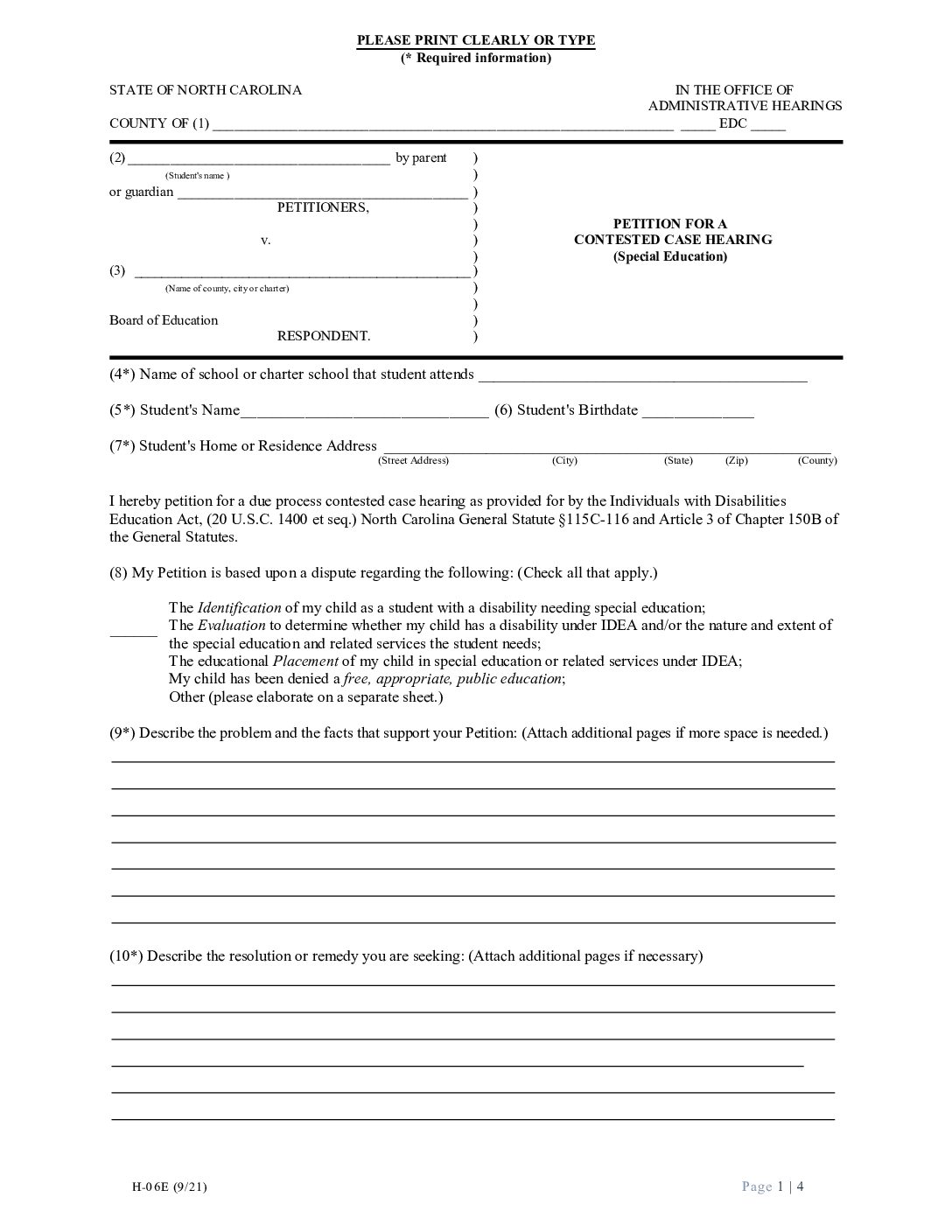
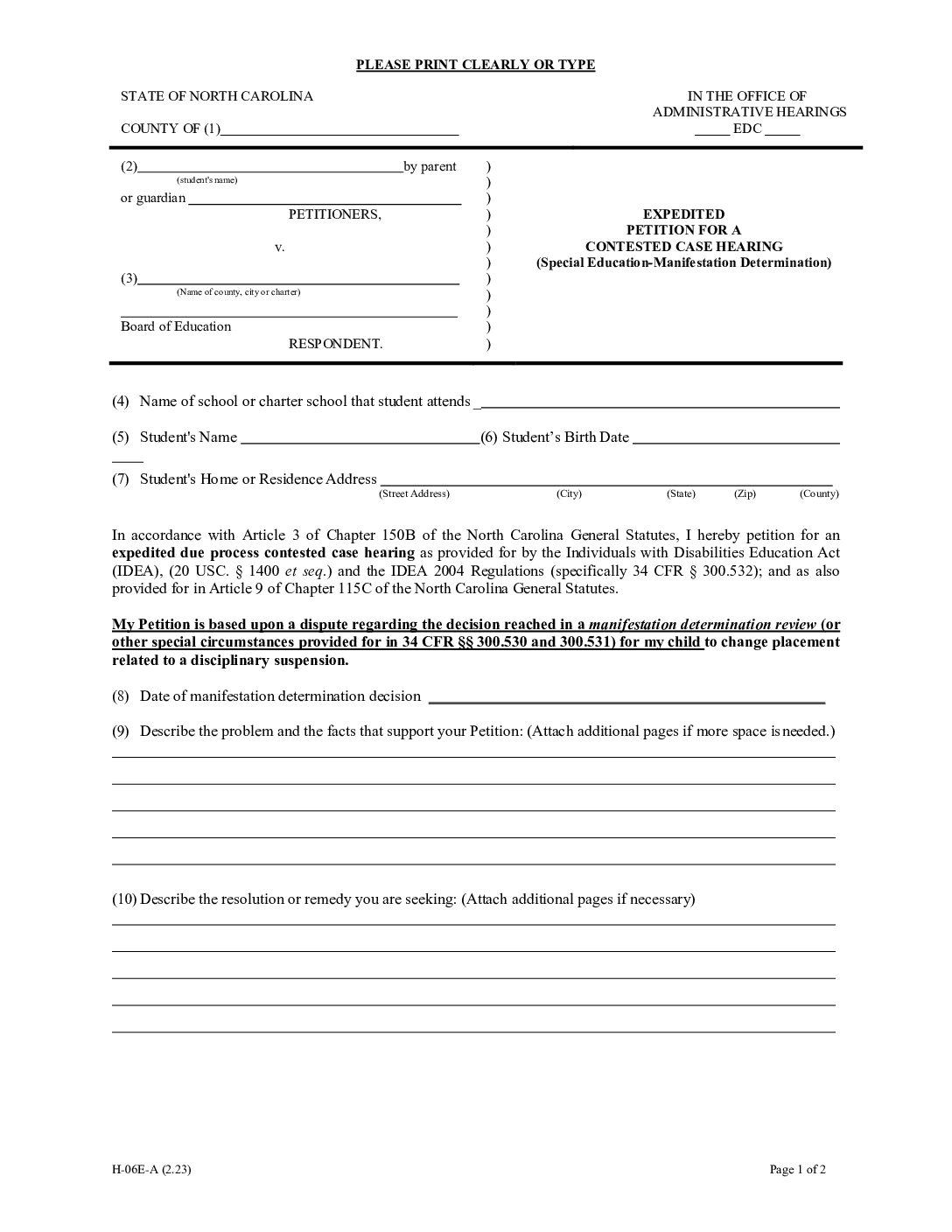
Expedited Petition for a Contested Case Hearing (Special Education - Manifestation Determination)
الفئات: السلوك

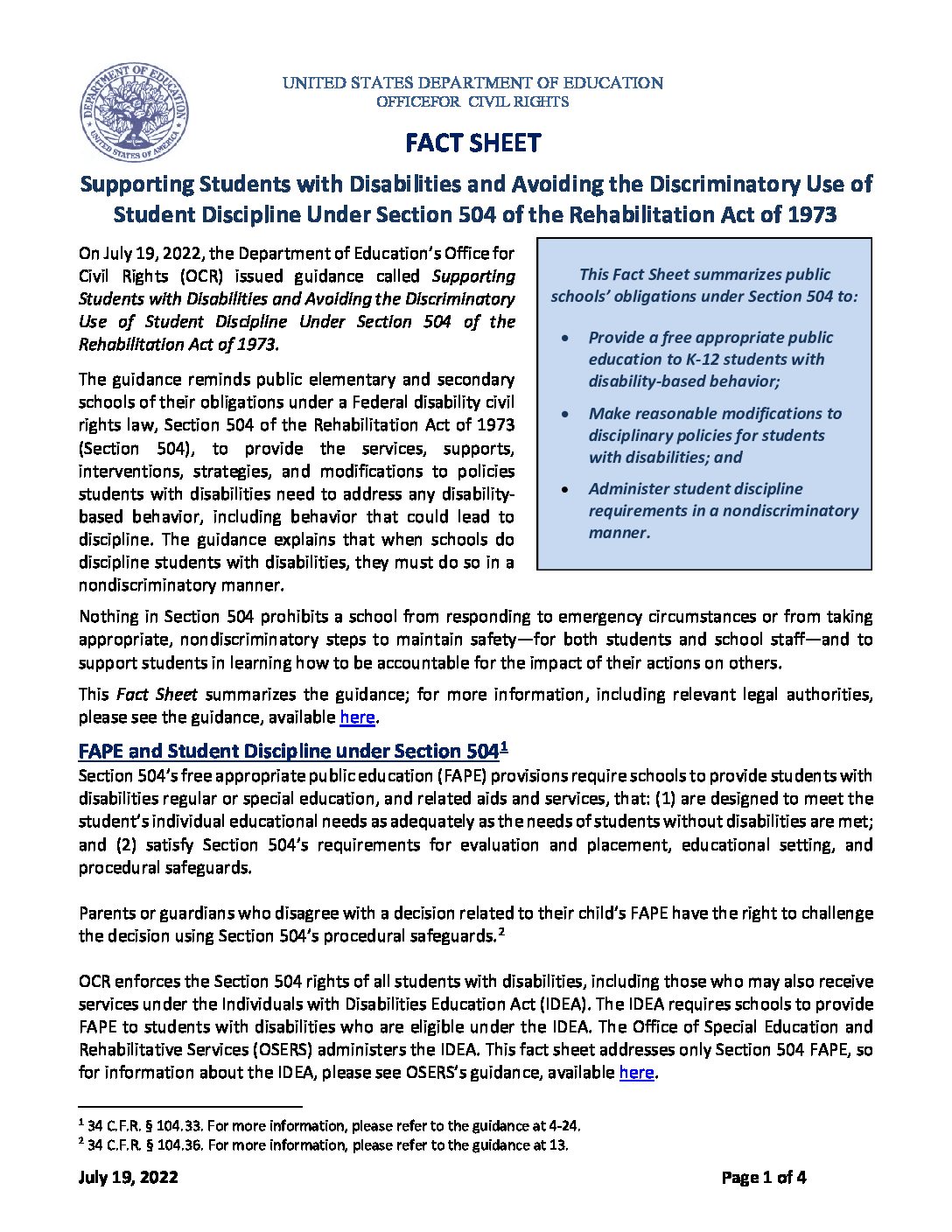
صحيفة وقائع - دعم الطلاب ذوي الإعاقة وتجنب الاستخدام التمييزي لانضباط الطلاب بموجب المادة 504 من قانون إعادة التأهيل لعام 1973
إرشادات جديدة من وزارة التعليم الأمريكية بشأن الانضباط للطلاب ذوي الإعاقة.
Categories: 504, Behavior, IDEA

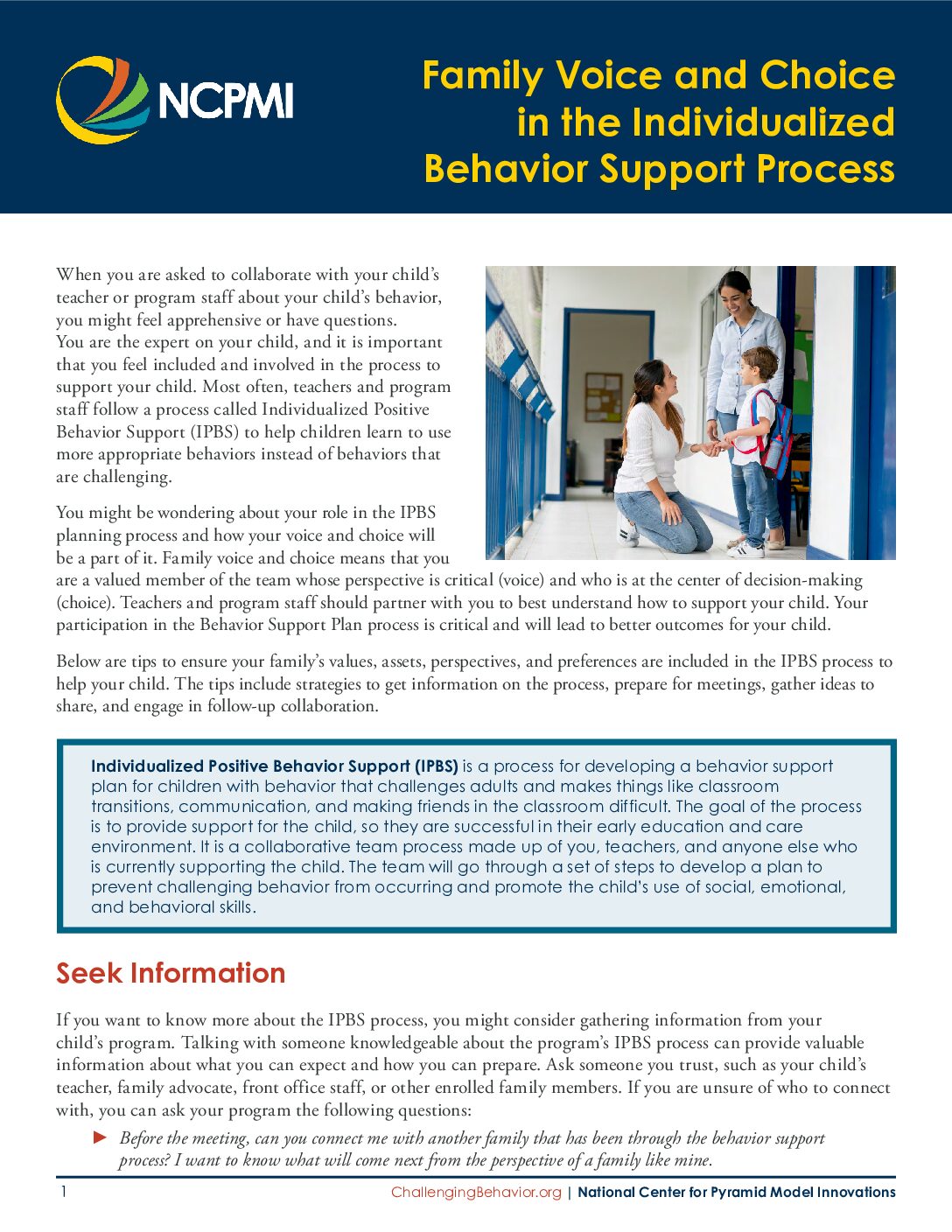
Family Voice and Choice in the Individualized Behavior Support Process
Empowering families to be active and valued participants in the Individualized Positive Behavior Support Plan (IPBS) is foundational to the Pyramid Model. This set of tips and strategies helps families ensure their values, assets, perspectives, and preferences are included in individualized support for their children.
الفئات: السلوك

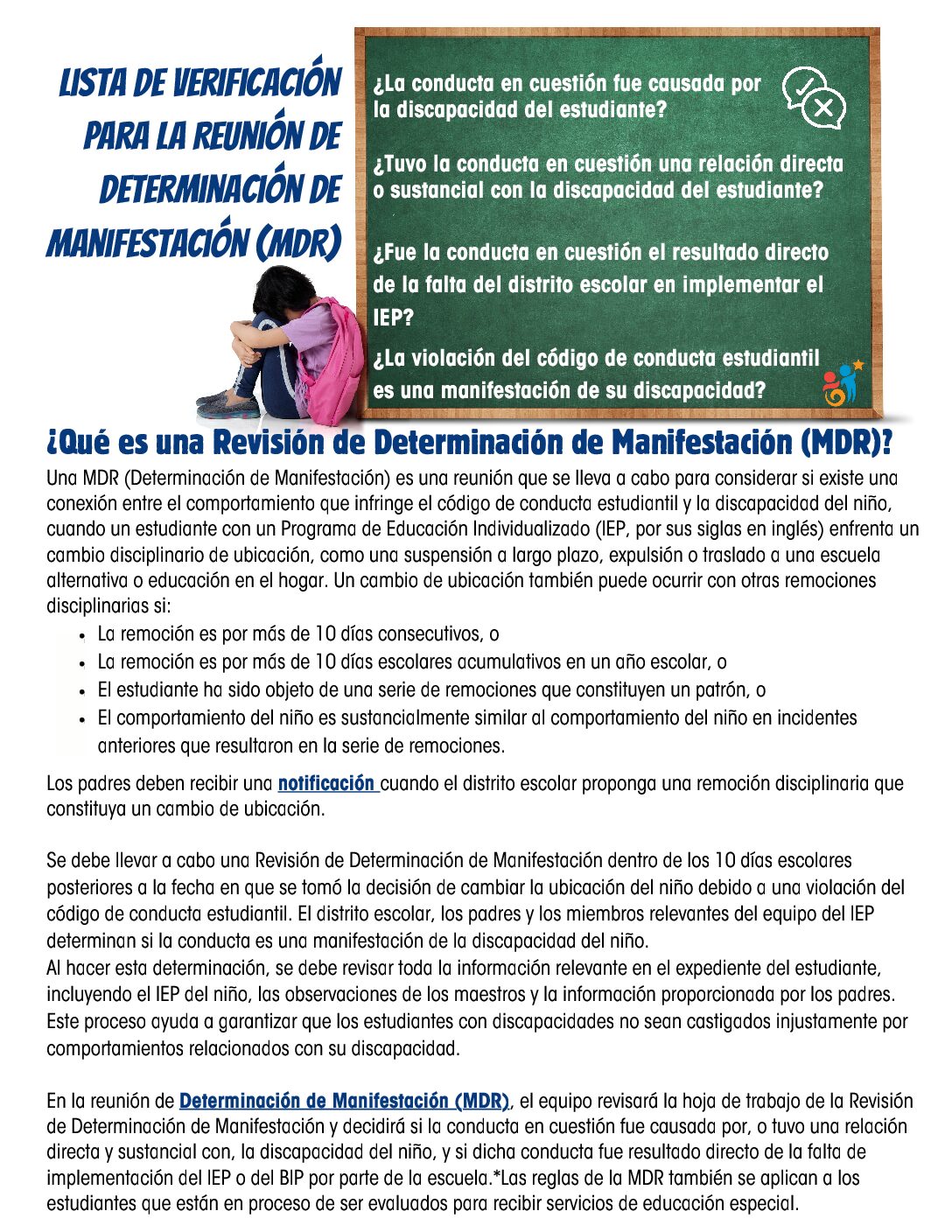
Lista de Verificación para la Reunión de Determinación de Manifestación (MDR)
Una MDR (Determinación de Manifestación) es una reunión que se lleva a cabo para considerar si existe una conexión entre el comportamiento que infringe el código de conducta estudiantil y la discapacidad del niño, cuando un estudiante con un Programa de Educación Individualizado (IEP, por sus siglas en inglés) enfrenta un cambio disciplinario de ubicación, como una suspensión a largo plazo, expulsión o traslado a una escuela alternativa o educación en el hogar.
Categories: Behavior, Spanish

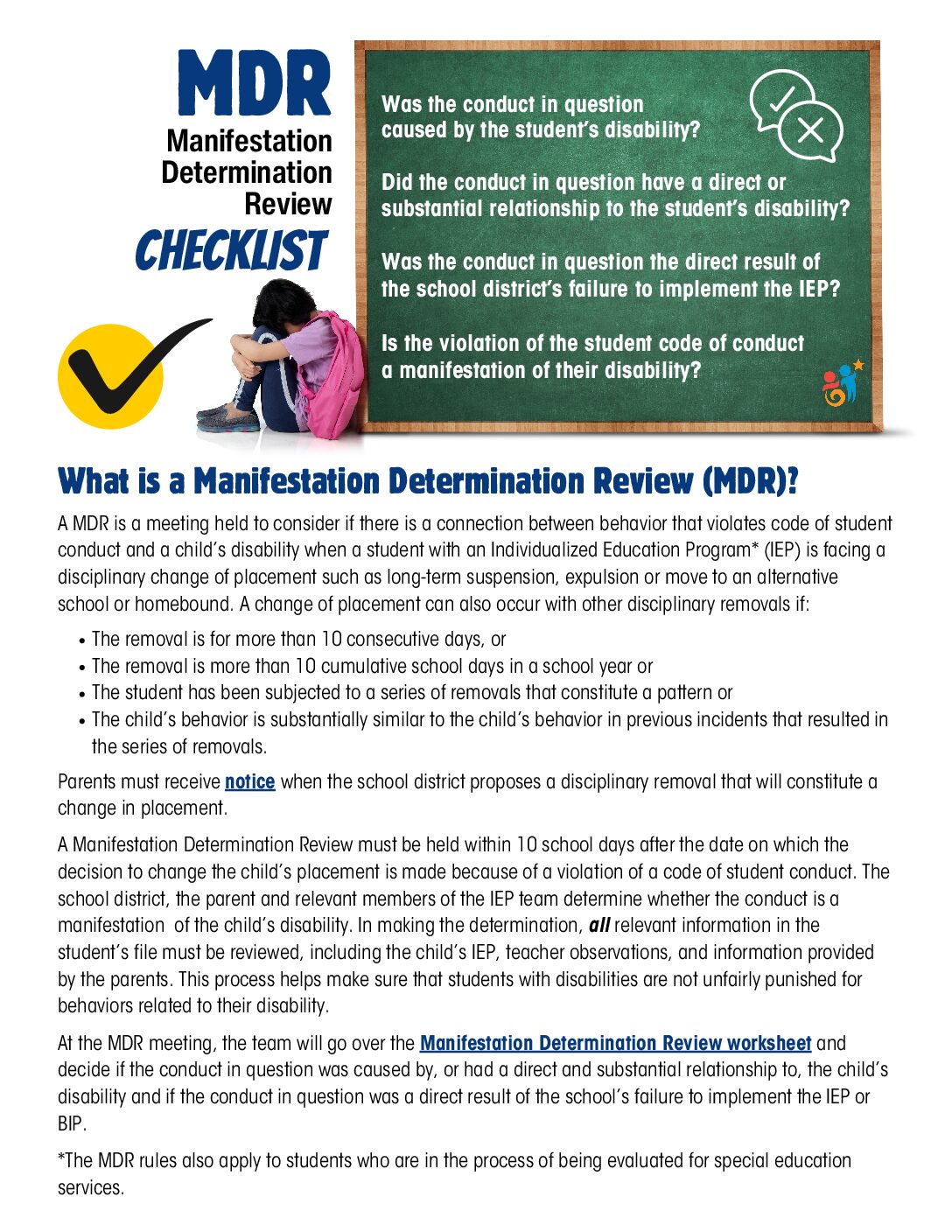
Manifestation Determination Review (MDR) Checklist
A MDR is a meeting held to consider if there is a connection between behavior that violates code of student conduct and a child’s disability when a student with an Individualized Education Program* (IEP) is facing a disciplinary change of placement such as long-term suspension, expulsion or move to an alternative school or homebound.
Categories: Behavior, IEP, Parent Rights, Special Education

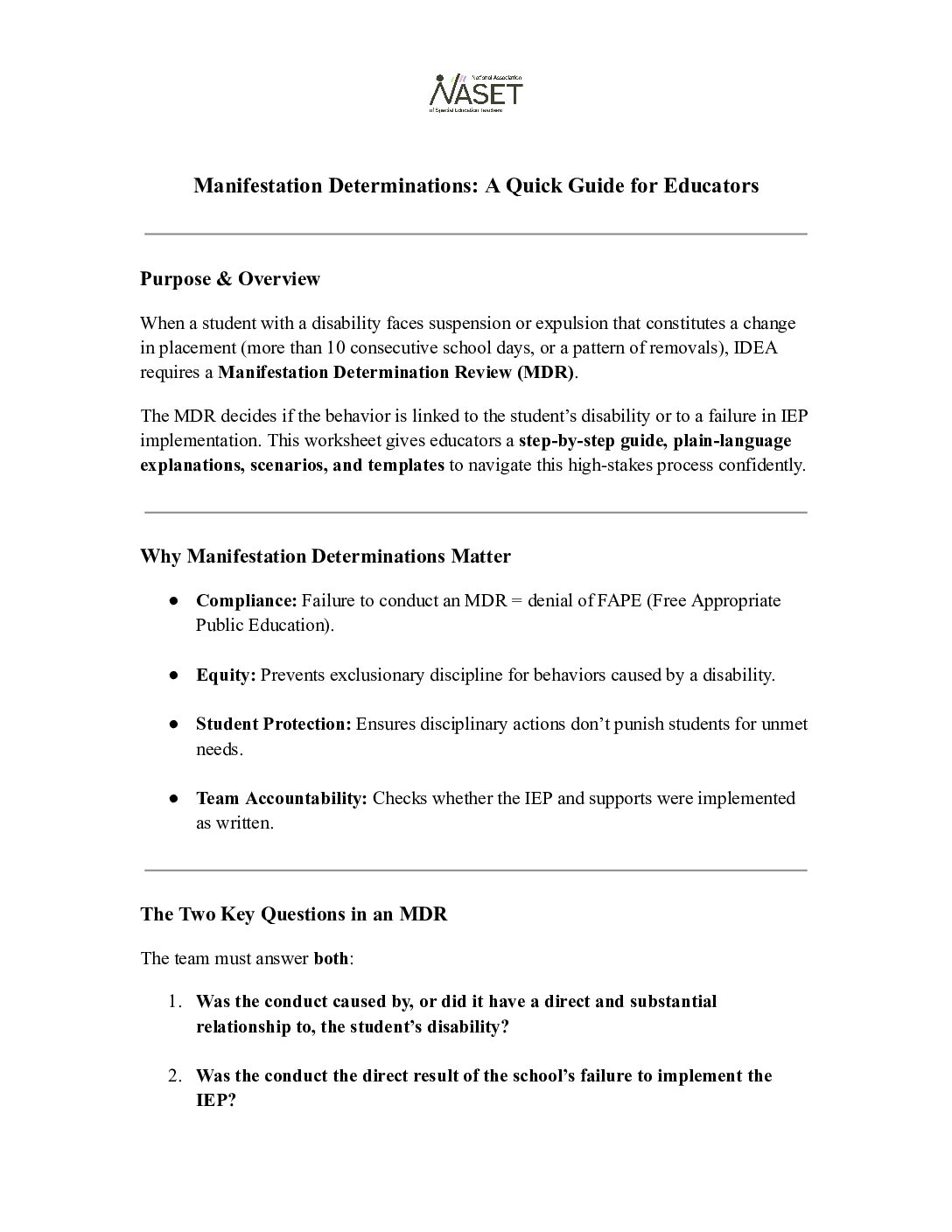
Manifestation Determinations: A Quick Guide for Educators
When a student with a disability faces suspension or expulsion that constitutes a change in placement (more than 10 consecutive school days, or a pattern of removals), IDEA requires a Manifestation Determination Review (MDR). The MDR decides if the behavior is linked to the student’s disability or to a failure in IEP implementation. This worksheet gives educators a step-by-step guide, plain-language explanations, scenarios, and templates to navigate this high-stakes process confidently.
الفئات: السلوك

NC START
The NC START (Systemic Therapeutic Assessment Resources Treatment) program helps people with intellectual/developmental disabilities and complex behavioral needs through crisis response, training, and education. The aim is to build a support system that can address crises within the community. Keeping people in their homes or communities is the focus, with personalized support being a top priority.
Categories: Behavior, Residential Treatment/Crisis Intervention Services

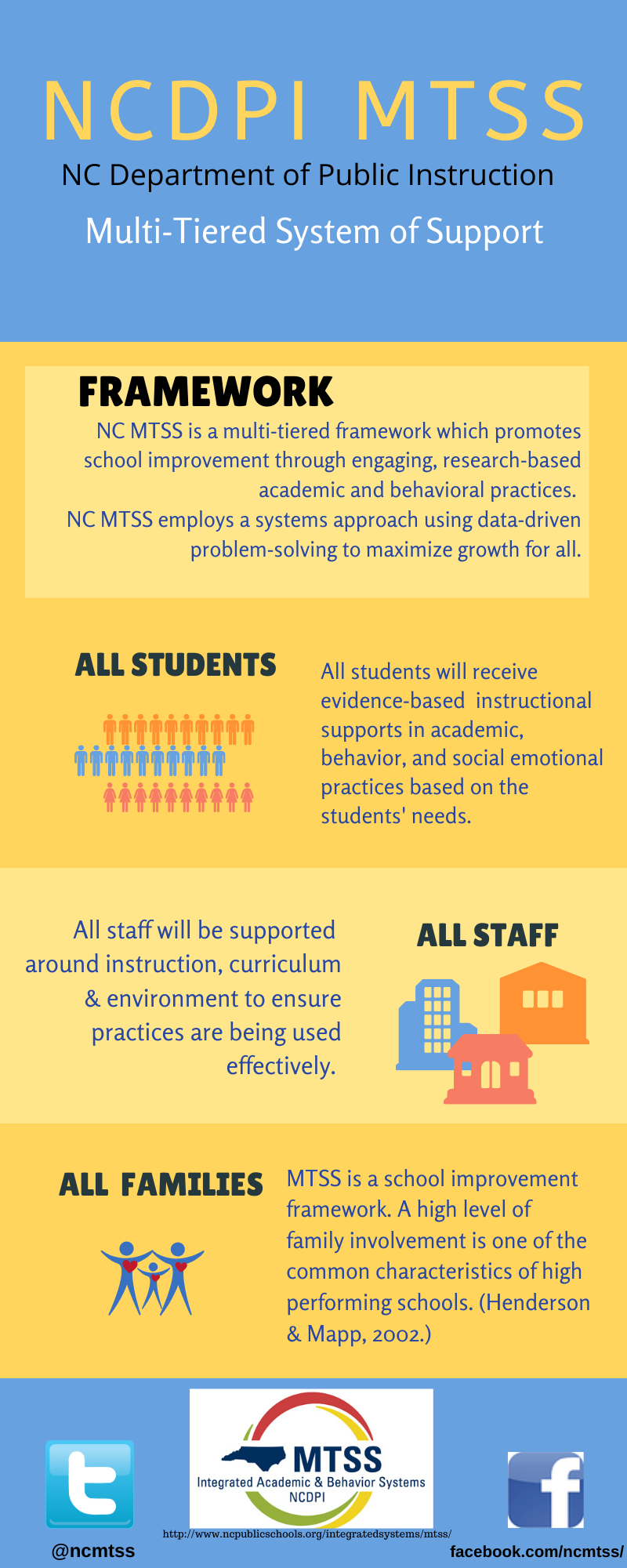
نظام الدعم متعدد المستويات (MTSS) الإنفوجرافيك لـ (NCDPI) للعائلات
NC MTSS هو إطار متعدد المستويات الذي يعزز تحسين المدارس من خلال إشراك، والممارسات الأكاديمية والسلوكية القائمة على البحوث، فضلا عن التعلم العاطفي الاجتماعي (SEL). يستخدم NC MTSS نهج الأنظمة باستخدام حل المشاكل القائم على البيانات لتحقيق أقصى قدر من النمو للجميع.
فئات: السلوك, MTSS


Positive, Proactive Approaches to Supporting Children with Disabilities: A Guide for Stakeholders
U.S. Department of Education, Office of Special Education and Rehabilitative Services
الفئات: السلوك

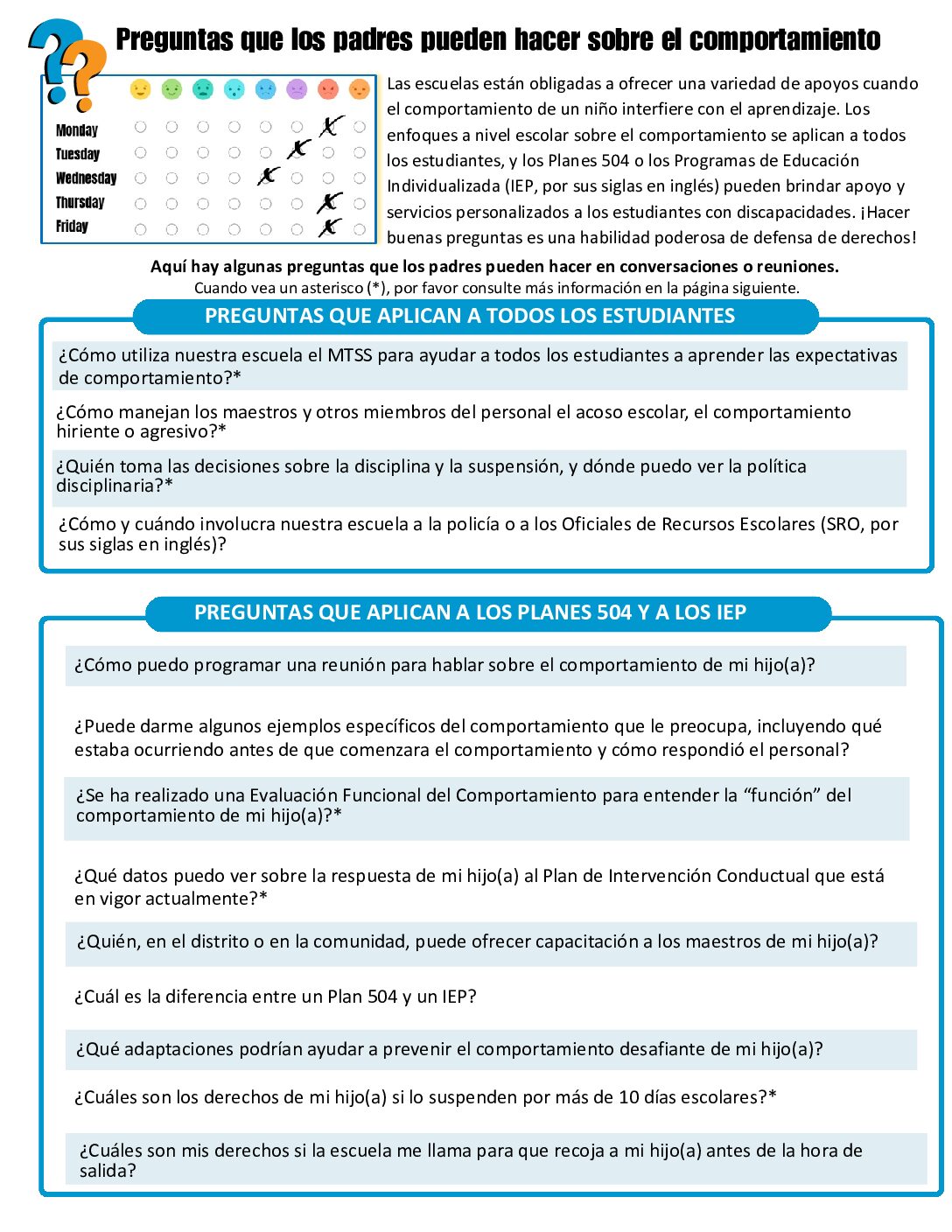
Preguntas que los padres pueden hacer sobre el comportamiento (Questions Parents Can Ask About Behavior)
Aquí hay algunas preguntas que los padres pueden hacer en conversaciones o reuniones.
Categories: Behavior, IEP, Spanish

Questions and Answers: Addressing the Needs of Children with Disabilities and IDEA's Discipline Provisions
From the U.S. Department of Education, Office of Special Education and Rehabilitative Servies
فئات: سلوك, IDEA

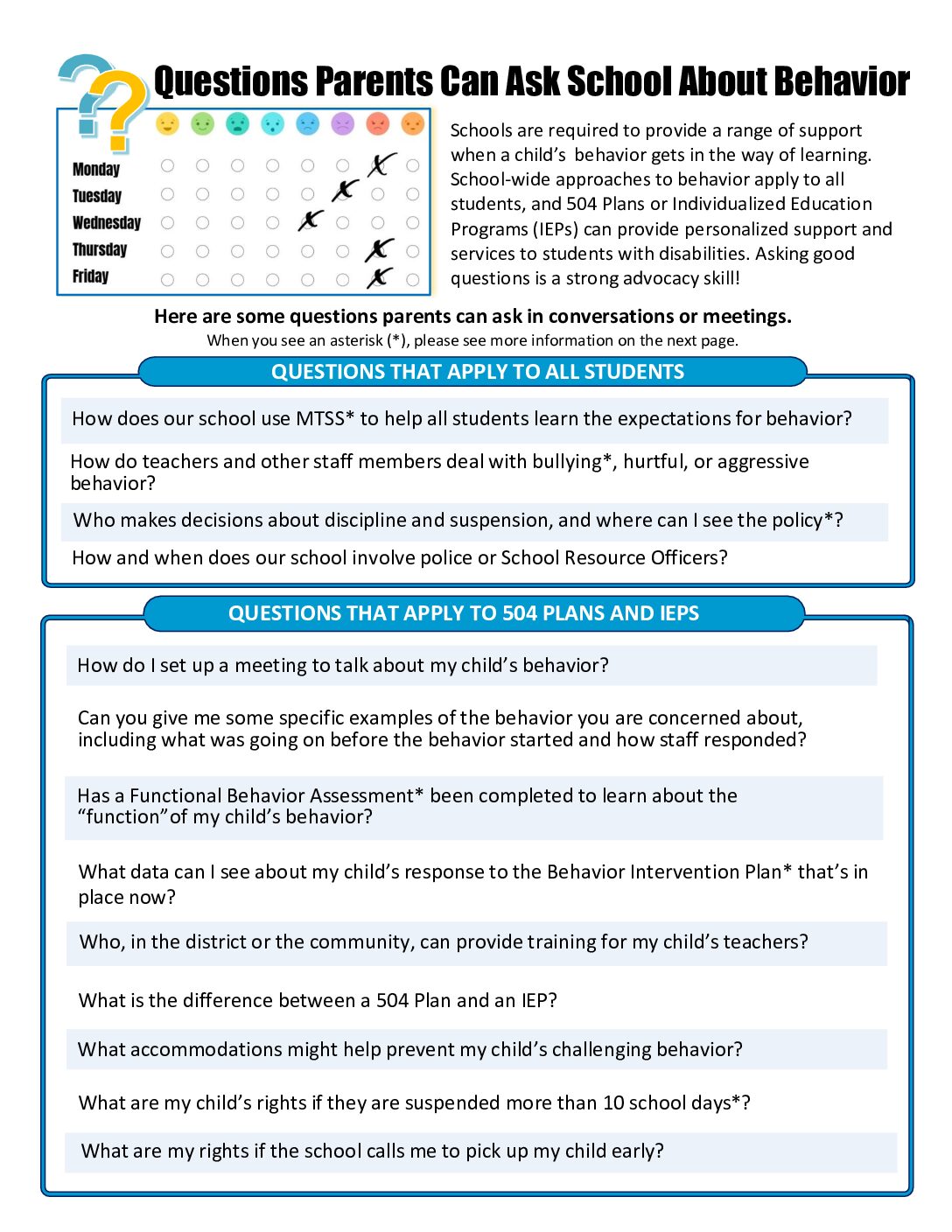
Questions Parents Can Ask School About Behavior
Schools are required to provide a range of support when a child’s behavior gets in the way of learning. School-wide approaches to behavior apply to all students, and 504 Plans or Individualized Education Programs (IEPs) can provide personalized support and services to students with disabilities. Asking good questions is a strong advocacy skill!
Categories: Behavior, Communication, Special Education

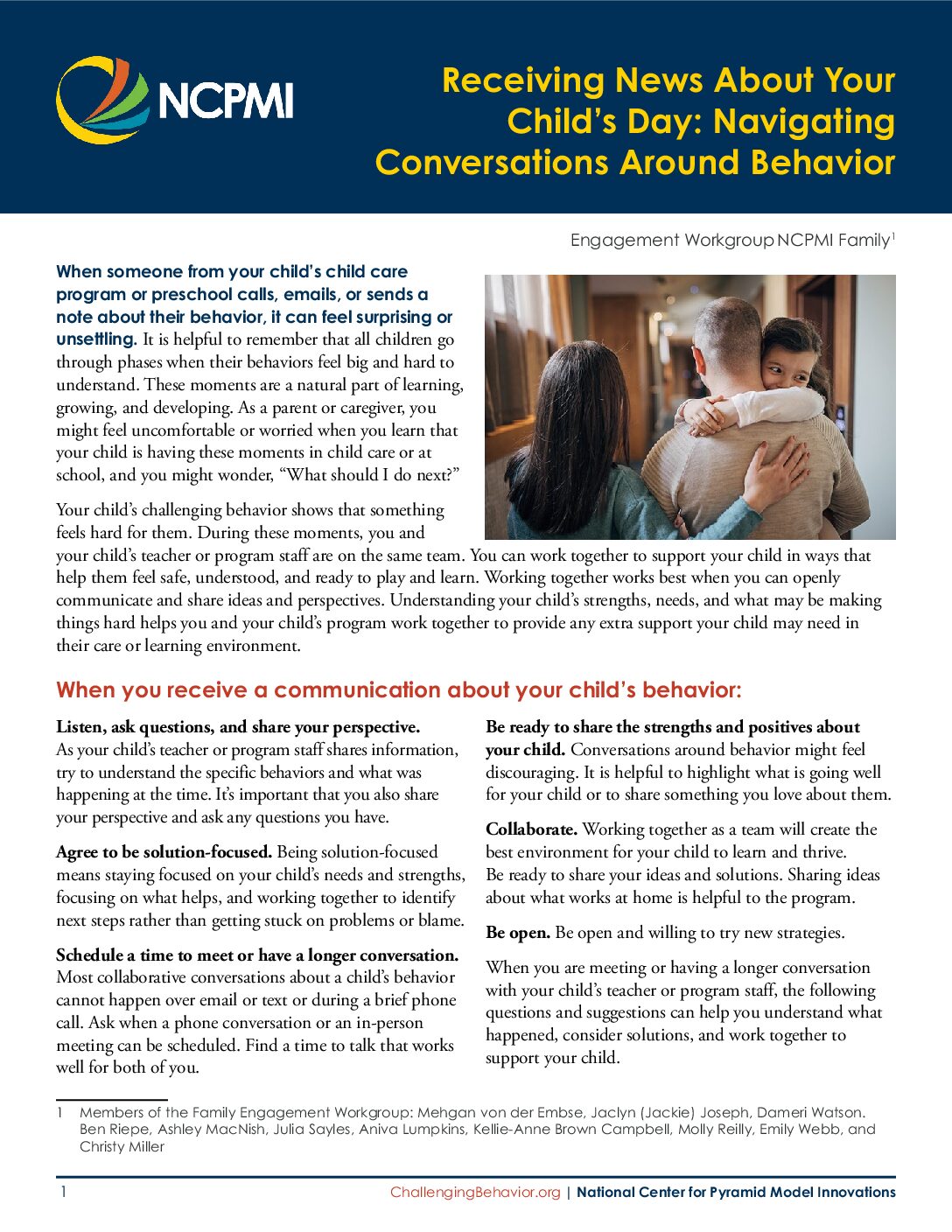
Receiving News About Your Child's Day: Navigating Conversations Around Behaviors
This family handout provides guidance on navigating conversations when receiving news about their child’s behavior. Families can use this resource to find ideas and tips for collaborating with their child’s program and teachers, including specific questions to ask and prompts to start collaborative conversations.
الفئات: السلوك

Section 504 Discipline Guidance
Supporting Students with Disabilities and Avoiding the Discriminatory Use of Student Discipline under Section 504 of the Rehabilitation Act of 1973, U.S. Department of Education Office for Civil Rights, July 2022
Categories: 504, Behavior

Supporting Behavior Through Connection
Supporting behavior through connection is a practical resource for families and early childhood practitioners that shifts the focus from compliance to connection. It offers simple, relationship-centered strategies for responding to challenging behavior that help children feel safe, valued, and supported. The resource describes three practices, including examples and prompts, that can be used in everyday routines to build trust and connection with children.
الفئات: السلوك

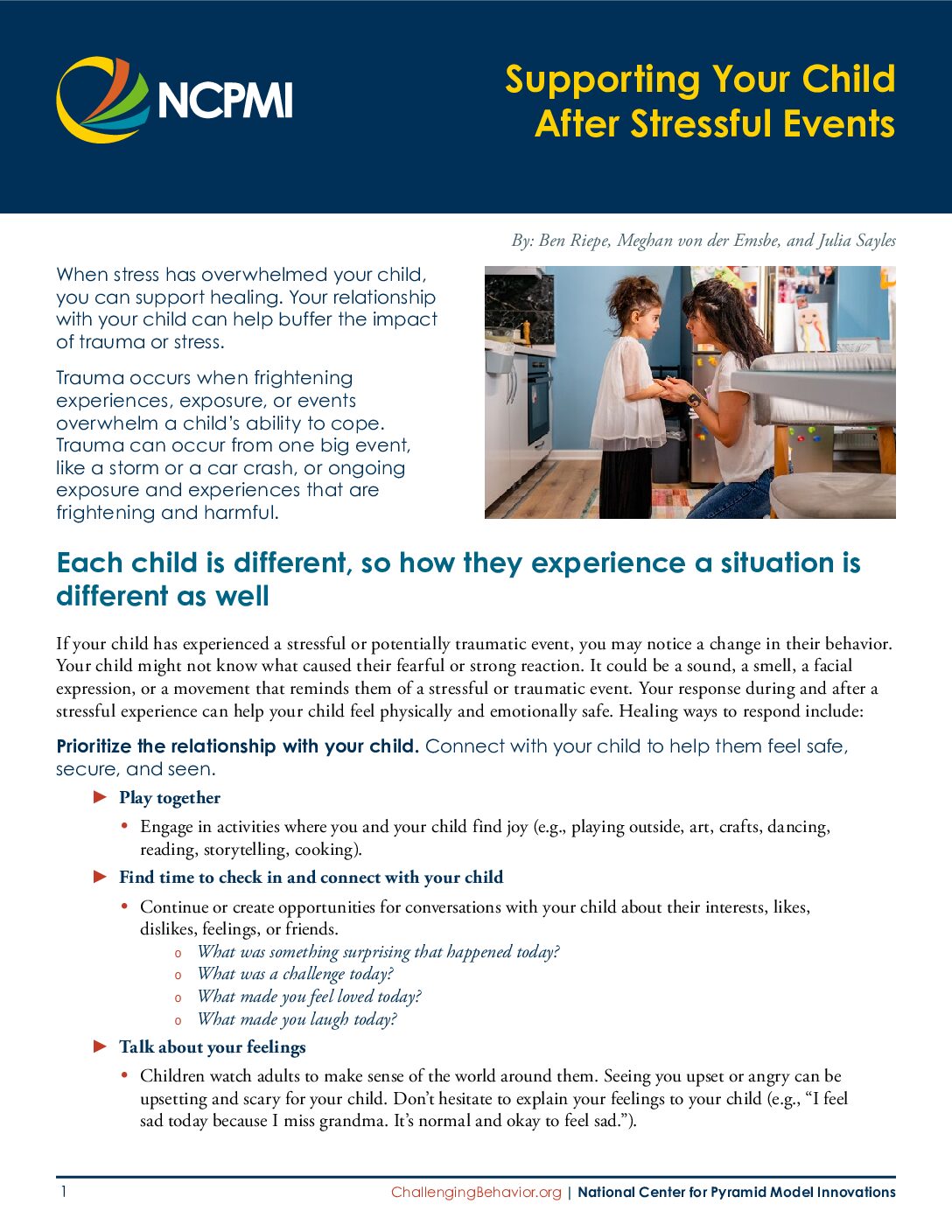
Supporting Your Child After Stressful Events
This resource offers guidance on supporting children after stressful events and includes strategies for families and caregivers to create safety and predictability through routines, clear communication, and emotional connection.
الفئات: السلوك

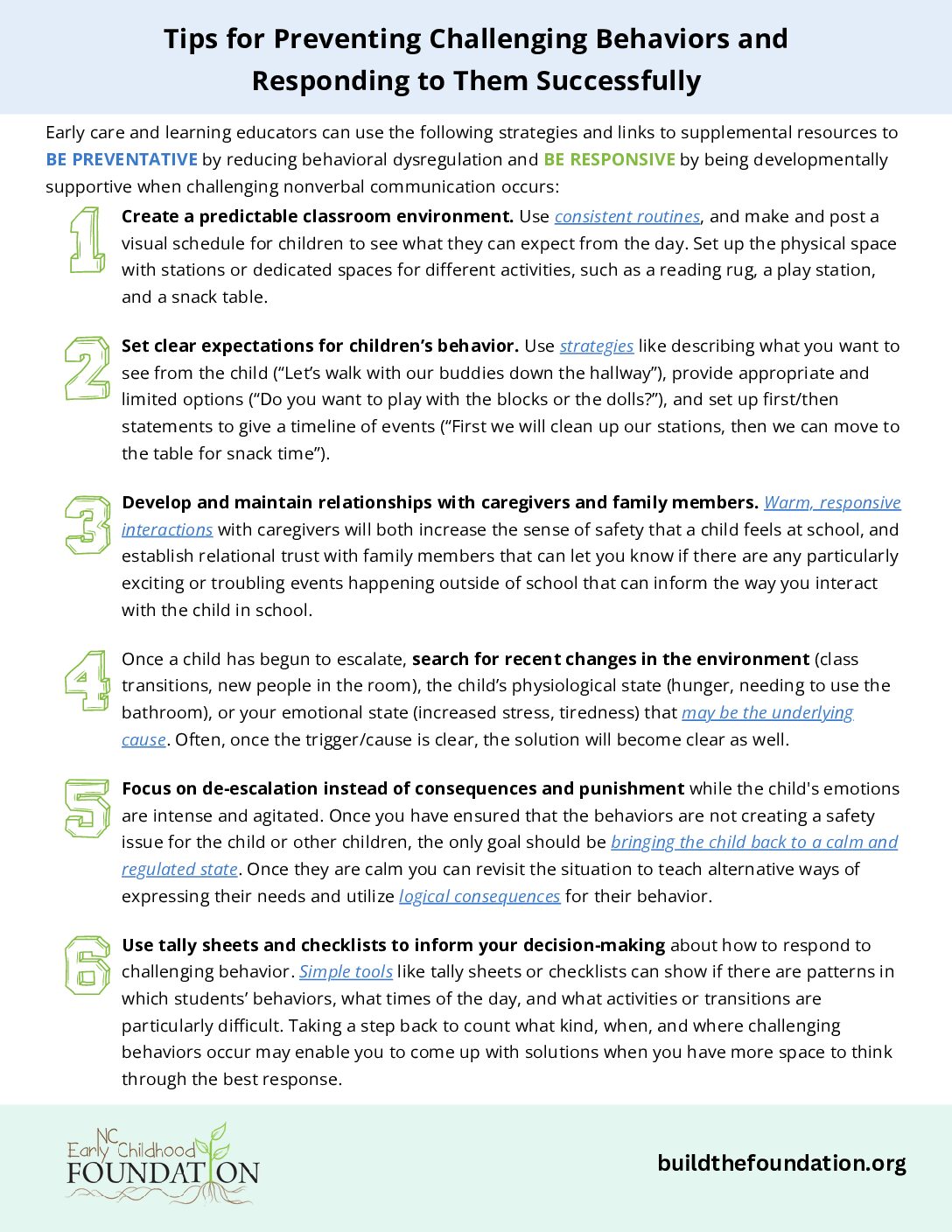
نصائح لمنع السلوكيات الصعبة والاستجابة لها بنجاح
يمكن لمعلمي الرعاية والتعلم المبكر استخدام الاستراتيجيات والروابط التالية للموارد التكميلية لتكون وقائية عن طريق الحد من عدم التنظيم السلوكي والاستجابة من خلال كونها داعمة من الناحية التنموية عند حدوث التواصل غير اللفظي الصعب.
فئات: السلوك, الطفولة المبكرة

Using Functional Behavioral Assessments to Create Supportive Learning Environments
From the U.S. Department of Education - Using Functional Behavioral Assessments to Create Supportive Learning Environments, guidance to help schools and early childhood programs better support students’ behavioral needs. This guidance focuses on evidence-based practices to support students, with or without disabilities, whose behavior interferes with learning, and is part of the Department’s effort to reduce exclusionary discipline.
Categories: Behavior, Special Education