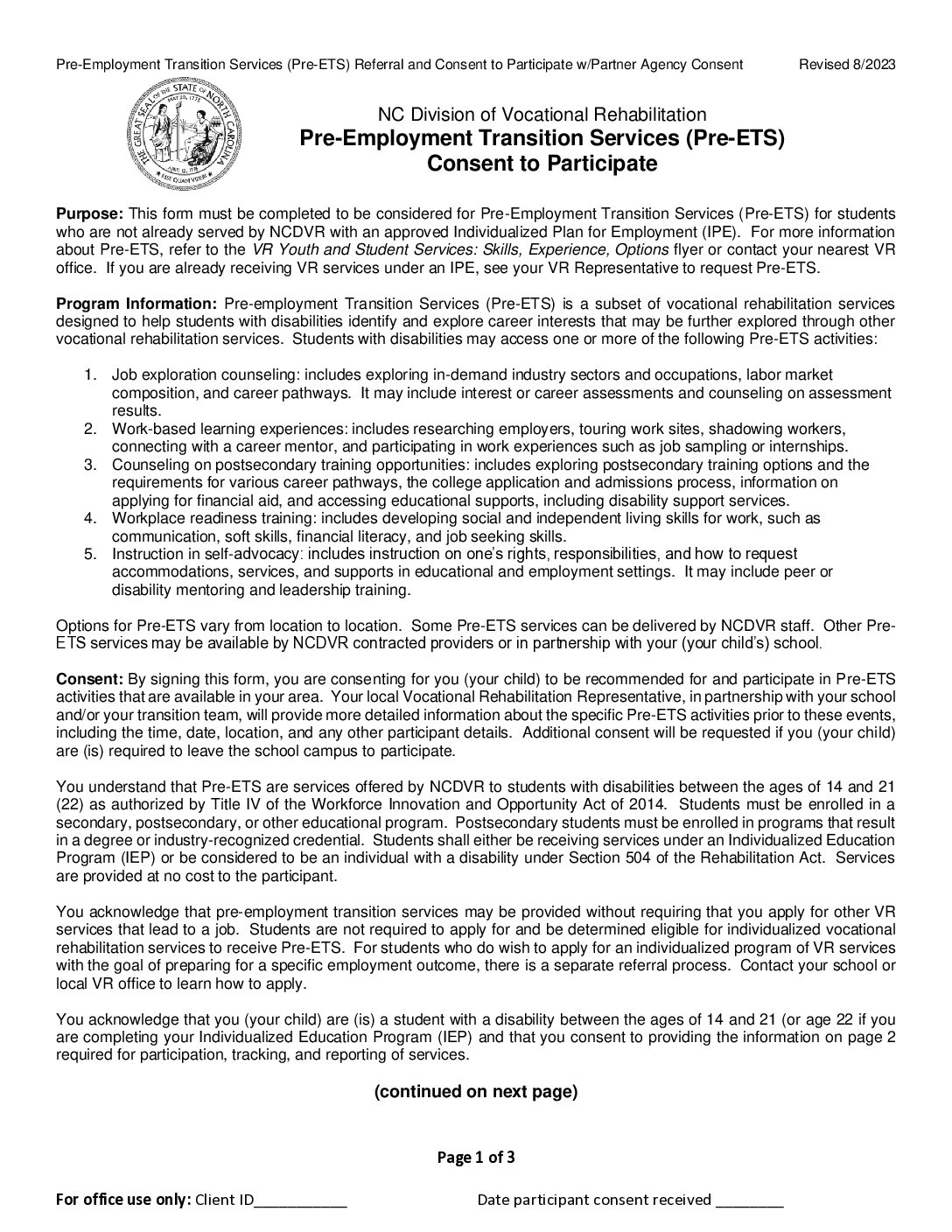
ACHIEVE -Pre-ETS Consent to Participate Form - for parents
Este formulario debe ser completado para ser considerado para los Servicios de Transición Pre-Empleo (Pre-ETS) para los estudiantes que aún no son atendidos por NCDVR con un Plan Individualizado de Empleo (IPE) aprobado.
Categories: Transition to Adulthood - Employment and Postsecondary Education, Transitions

ACHIEVE-Pre-ETS Program Flyer
ACHIEVE is a statewide, virtual Pre-ETS program designed for students with disabilities, ages 14 to 21. This program is available to those enrolled in an educational program who are eligible or potentially eligible for EIPD services and have a recognized need for Pre-Employment Transition Services. ACHIEVE is accessible to students in various educational settings, including those who are homeschooled, or enrolled in traditional public schools, charter schools, virtual schools, private schools, early college programs, vocational schools, college courses, or training programs. The ACHIEVE Transition Program offers a comprehensive curriculum designed to equip students with the skills and knowledge they need for successful transitions from school to work and into adult life.
Categories: Transition to Adulthood - Employment and Postsecondary Education, Transition-age Youth
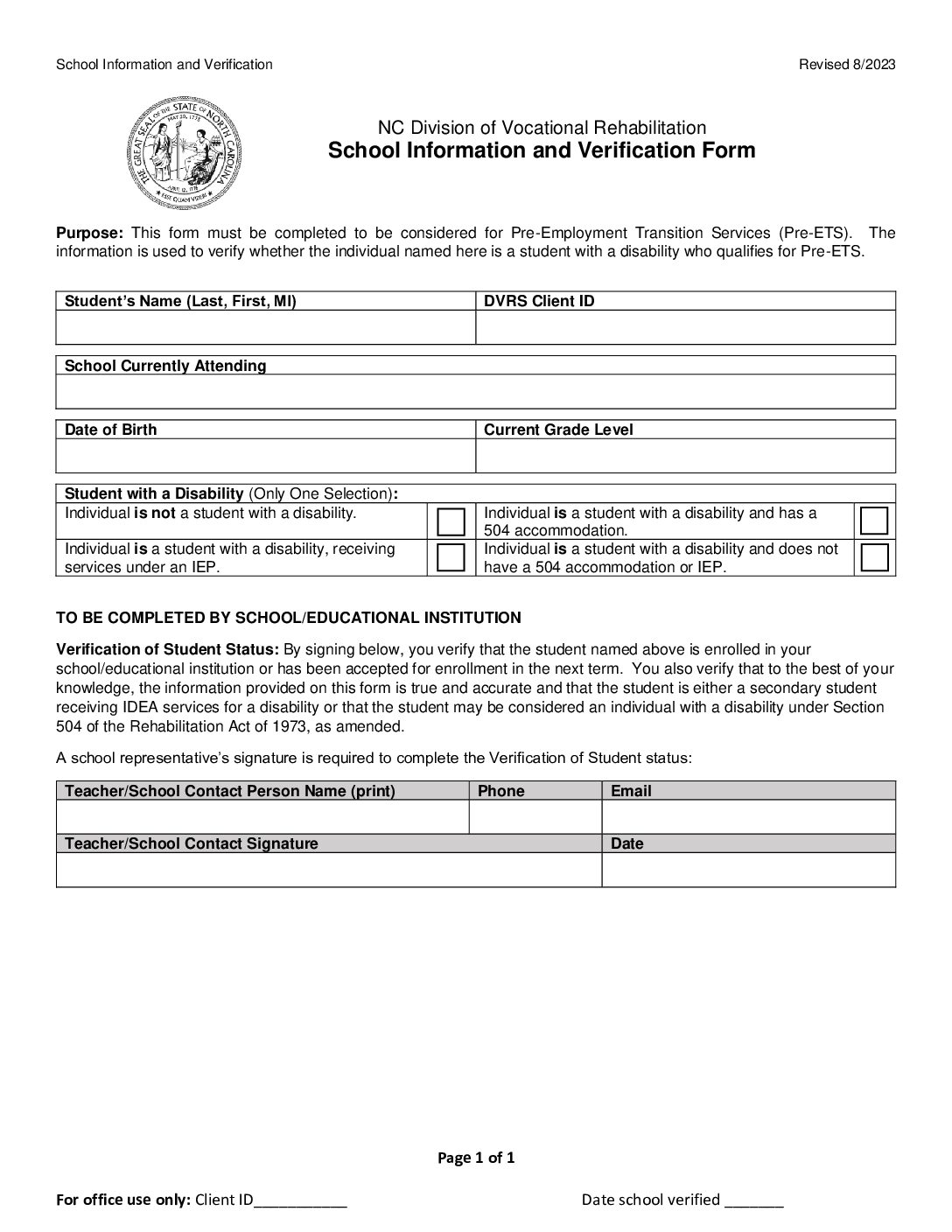
ACHIEVE-Pre-ETS School Information & Verification Form
Este formulario debe ser completado para ser considerado para los Servicios de Transición Pre-Empleo (Pre-ETS). La información se utiliza para verificar si el individuo nombrado aquí es un estudiante con una discapacidad que califica para Pre-ETS.
Categories: Transition to Adulthood - Employment and Postsecondary Education

Being Involved in Person-Centered Planning for Students & Young Adults with Disabilities in Foster, Kinship, or Adoptive Families
Creating a vision for the future helps provide a plan for youth with disabilities who are unclear and/or anxious about becoming an adult. Person-centered planning (PCP) is directed by the youth to help them plan their life and supports.
Categories: Transition to Adulthood - Employment and Postsecondary Education, Transition to Adulthood - Health Care, Transition to Adulthood - Independent Living
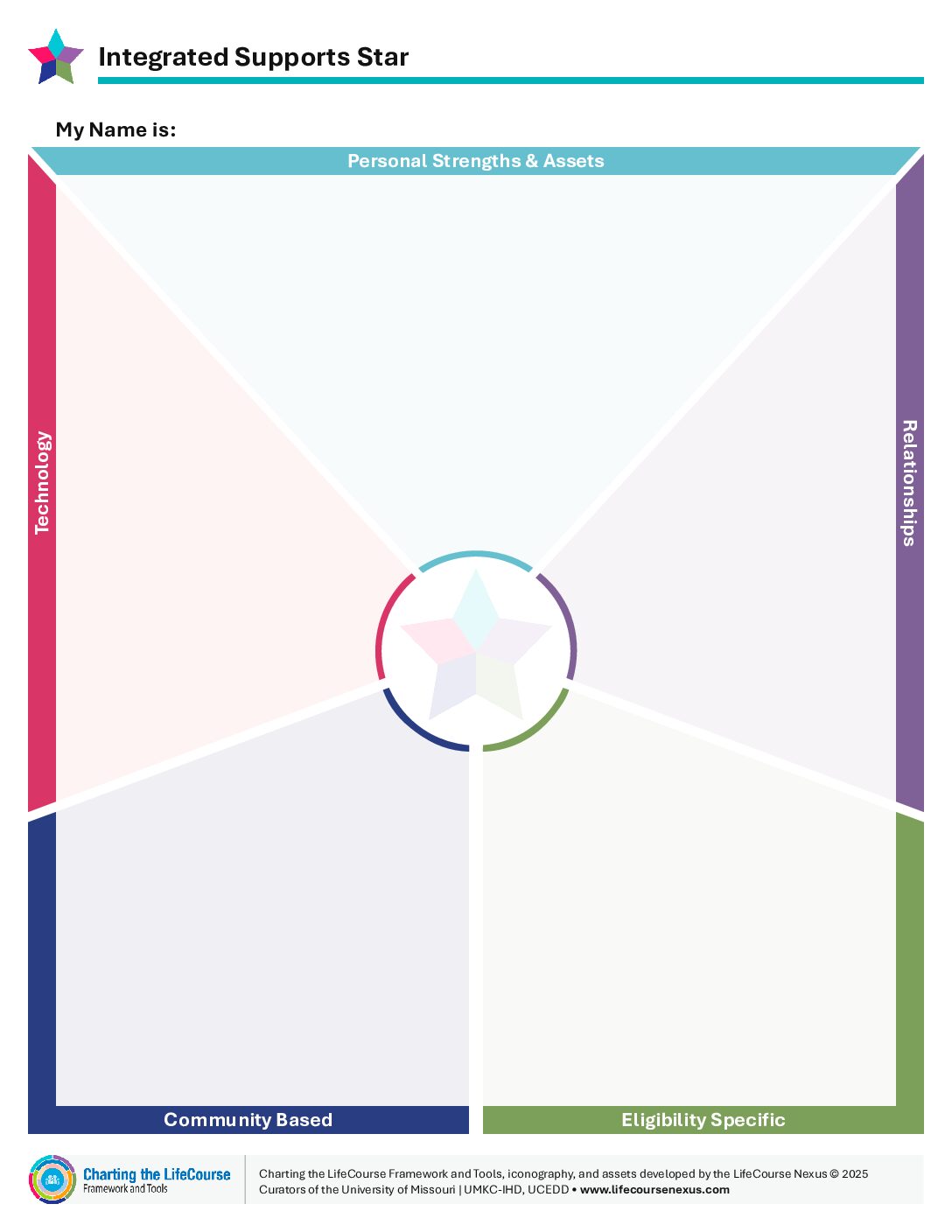
Charting the LifeCourse: Integrated Supports Star
This document is part of the Charting the LifeCourse set of tools. Visit https://www.lifecoursetools.com/ for examples on how to use this tool, and explore other tools.
Categories: Transition to Adulthood - Employment and Postsecondary Education, Transition to Adulthood - Health Care, Transition to Adulthood - Independent Living
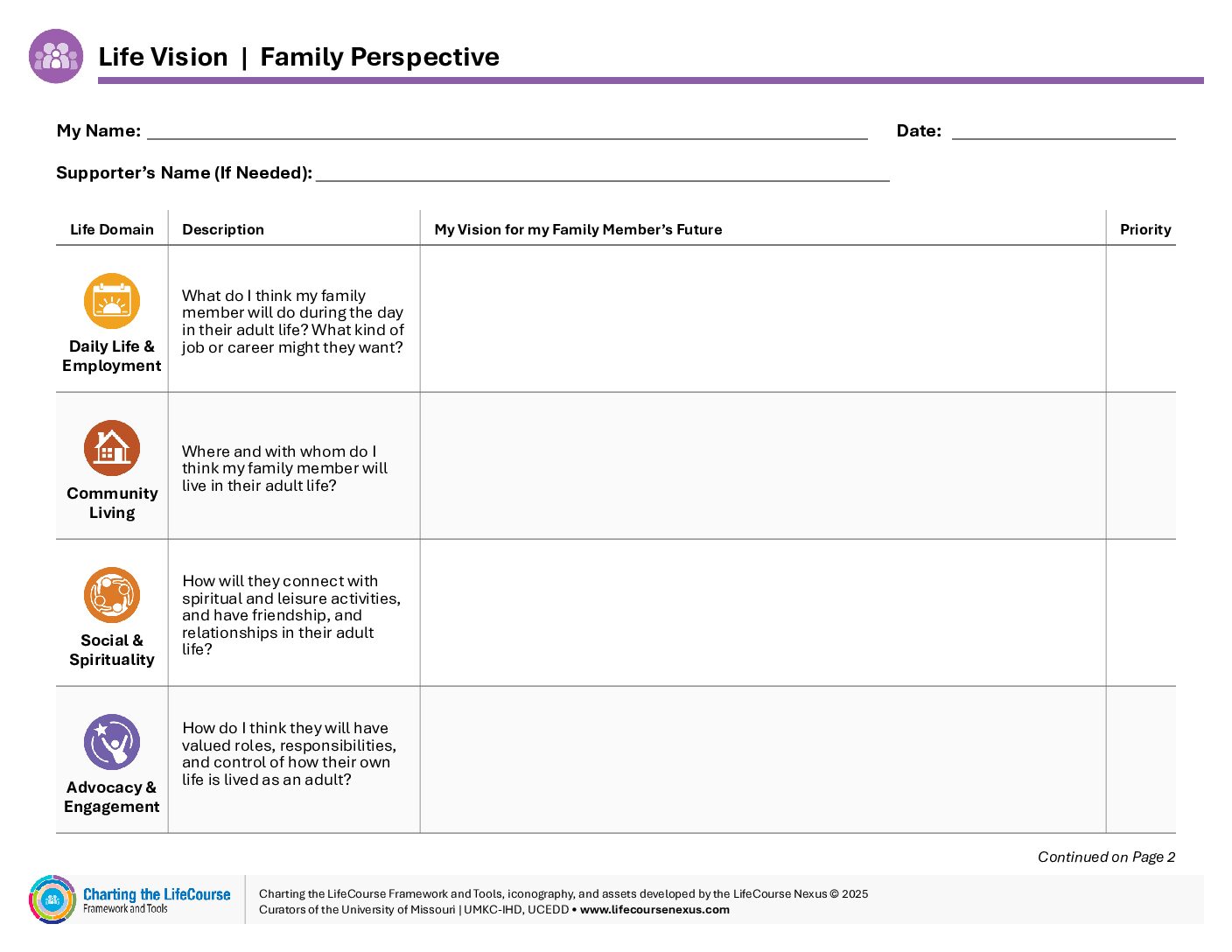
Charting the LifeCourse: Life Domain Vision Tool - Family Perspective
This document is part of the Charting the Life Course set of tools. Visit https://www.lifecoursetools.com/ for examples on how to use this tool, and explore other tools.
Categories: Transition to Adulthood - Employment and Postsecondary Education, Transition to Adulthood - Health Care, Transition to Adulthood - Independent Living
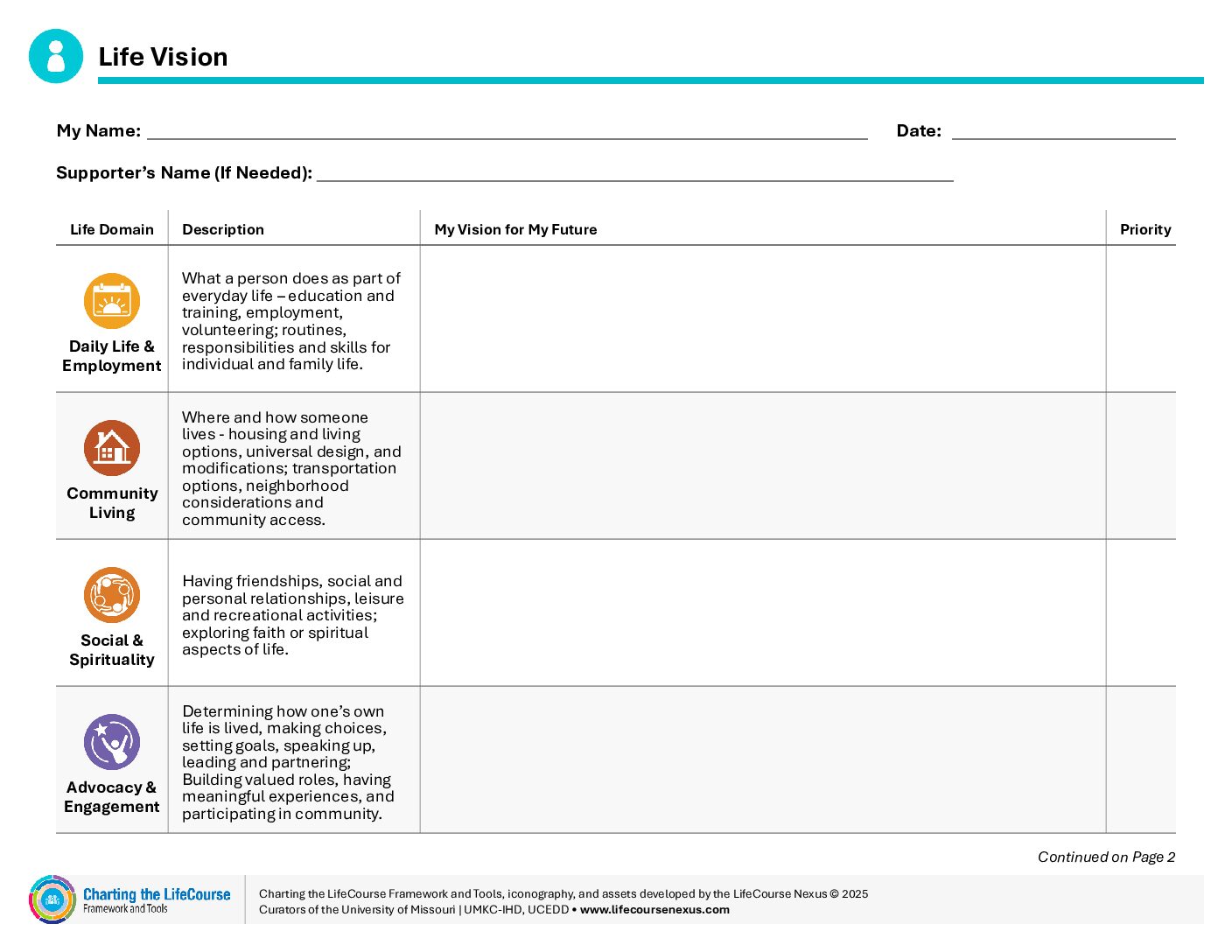
Charting the LifeCourse: Person Centered - Life Vision
This document is part of the Charting the LifeCourse set of tools. Visit https://www.lifecoursetools.com/ for examples on how to use this tool, and explore other tools.
Categories: Transition to Adulthood - Employment and Postsecondary Education, Transition to Adulthood - Health Care, Transition to Adulthood - Independent Living
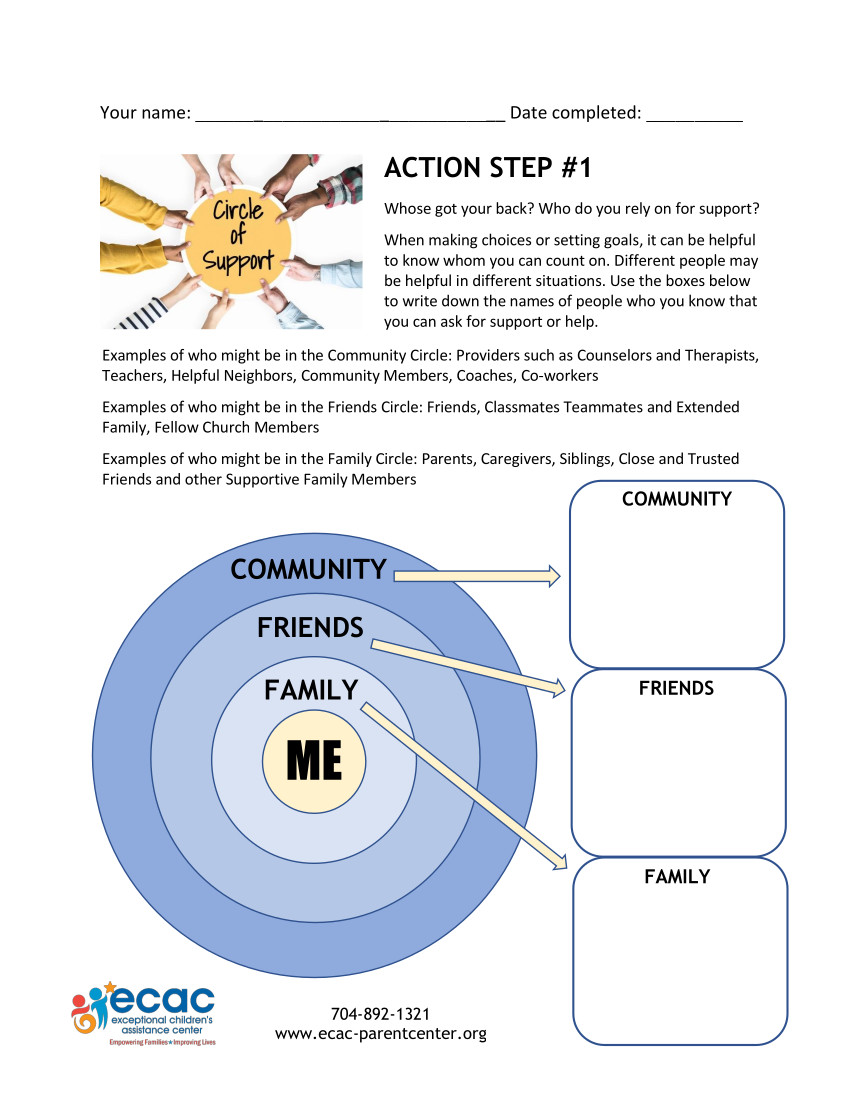
Círculo de apoyo - Paso de acción 1
A la hora de tomar decisiones o establecer objetivos, puede ser útil saber con quién se puede contar. Diferentes personas pueden ser útiles en diferentes situaciones. Utiliza esta hoja de trabajo para anotar los nombres de las personas que conoces a las que puedes pedir apoyo o ayuda.
Categories: Advocacy, Transition to Adulthood - Employment and Postsecondary Education, Transition to Adulthood - Health Care, Transition-age Youth, Transition to Adulthood - Independent Living
Coordinating Transition Services and Postsecondary Access
Guidance on requirements under the IDEA and the Rehabilitation Act - U.S. Department of Education, Office of Special Education and Rehabilitative Services
Categories: Special Education, Transition to Adulthood - Employment and Postsecondary Education

Debunking the 3 Biggest Myths About Disability Benefits and Work
There are several common myths about how working will affect disability benefits and Healthcare coverage. Here are the three most common and why they are wrong.
Categories: Medicaid and Medicaid Waivers, Special Needs Financial Planning and Financial Resources, SSI and SSDI, Transition to Adulthood - Employment and Postsecondary Education
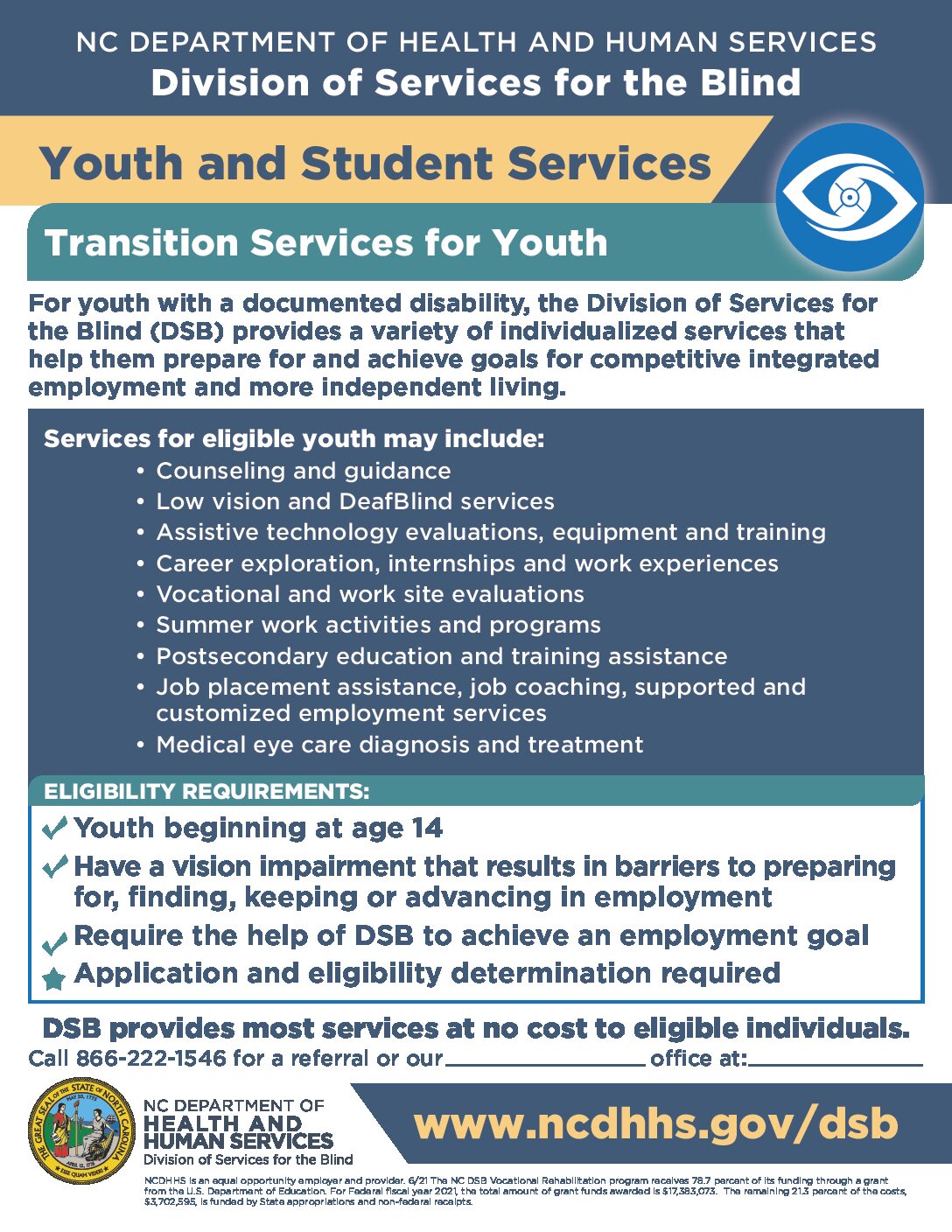
División de Servicios para Ciegos - Servicios de transición para jóvenes
A los jóvenes con una discapacidad documentada, la División de Servicios para Ciegos (DSB) les ofrece una serie de servicios individualizados que les ayudan a prepararse y a alcanzar los objetivos de un empleo integrado competitivo y una vida más independiente.
Categories: NC Deaf-Blind Project, Transition to Adulthood - Employment and Postsecondary Education, Transition to Adulthood - Independent Living
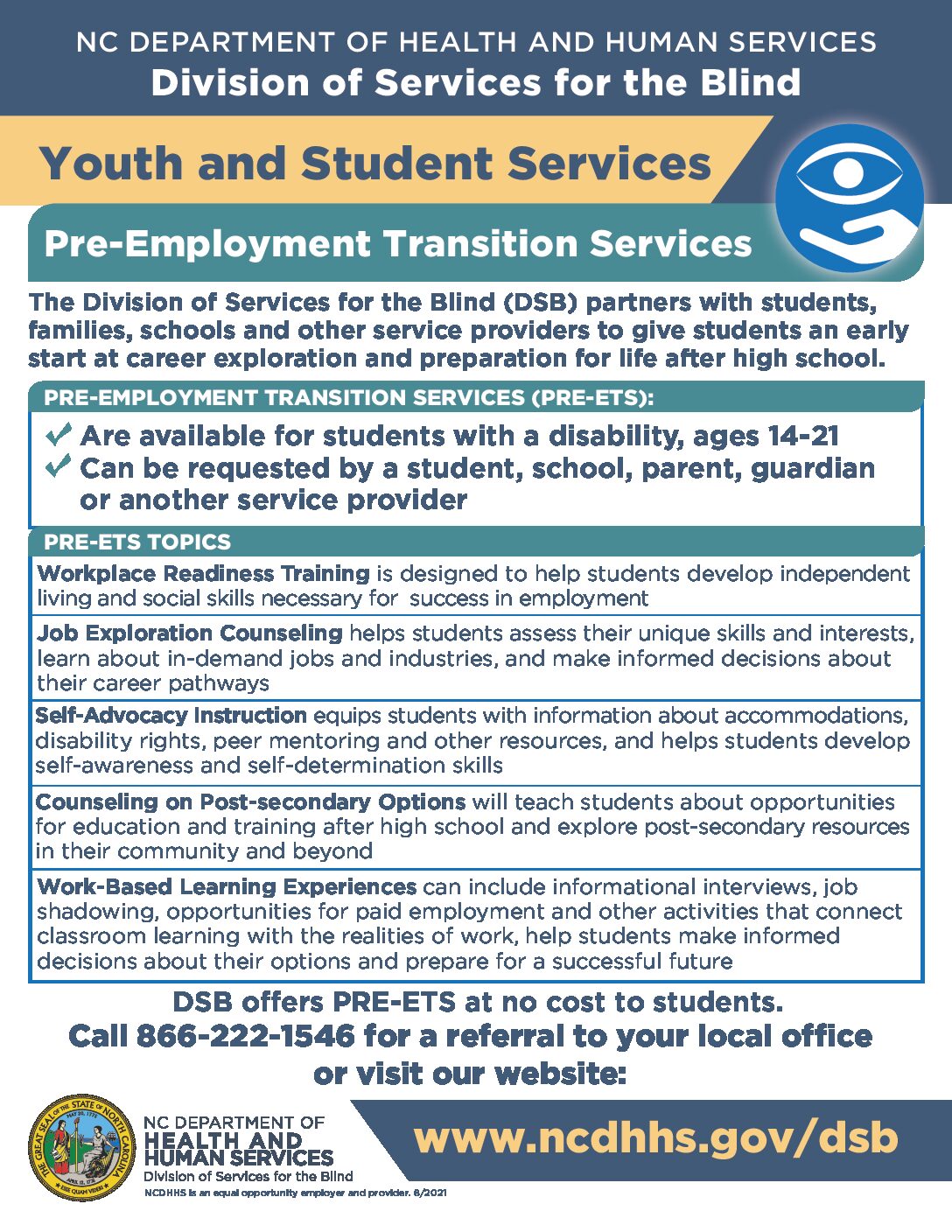
División de Servicios para Ciegos: Servicios de transición previa al empleo
La División de Servicios para Ciegos (DSB) colabora con estudiantes, familias, escuelas y otros proveedores de servicios para ofrecer a los estudiantes un comienzo temprano en la exploración de carreras y la preparación para la vida después de la escuela secundaria.
Categories: NC Deaf-Blind Project, Transition to Adulthood - Employment and Postsecondary Education

Employment Checklist for Students (Ages 14-22) with Disabilities
Getting a job is an exciting experience that takes planning. There are important documents you may need before you can get a job. There are skills you will need to prepare you for employment, and actions that you may need to take to be successful. This checklist can help you prepare for employment. This list below does not include every item needed and some of these may not apply to you since your employment goals are unique to you.
Categories: Transition to Adulthood - Employment and Postsecondary Education

Employment Soft Skills - Youth
Having good “soft” skills is important when you have a job. Your soft skills can be the reason you get a job or it can be the reason you lose your job. Employers will teach you the “hard” skills of a job (the skills you need to do your job properly) but the soft skills are also very important. So what are soft skills? Here are some soft skills to think about.
Categories: Transition to Adulthood - Employment and Postsecondary Education

Fact Sheet - Impairment-Related Work Expenses
Social Security Work Incentives can help eligible people with disabilities transition to the workplace. Whether you’re looking for a job for the first time or returning to work after an injury or illness, Work Incentives can help you through the transition to work and towards financial independence.
Categories: Special Needs Financial Planning and Financial Resources, SSI and SSDI, Transition to Adulthood - Employment and Postsecondary Education

Fact Sheet - Medicare and Medicaid Employment Supports
Many people believe that they will automatically lose their Medicare or Medicaid as soon as they start working. But working does not necessarily mean losing access to federal or state health care benefits because there are protections in place, called Work Incentives, that help people who work and receive disability benefits keep those important benefits. Here we examine your health care “safety nets” according to the type of Social Security disability benefit you receive.
Categories: Medicaid and Medicaid Waivers, Special Needs Financial Planning and Financial Resources, SSI and SSDI, Transition to Adulthood - Employment and Postsecondary Education

Fact Sheet - Plan to Achieve Self-Support (PASS)
What are Work Incentives? Social Security Work Incentives can help eligible people with disabilities transition to the workplace. Whether you’re looking for a job for the first time or returning to work after an injury or illness, Work Incentives can help you through the transition to work and towards financial independence.
Categories: Special Needs Financial Planning and Financial Resources, SSI and SSDI, Transition to Adulthood - Employment and Postsecondary Education
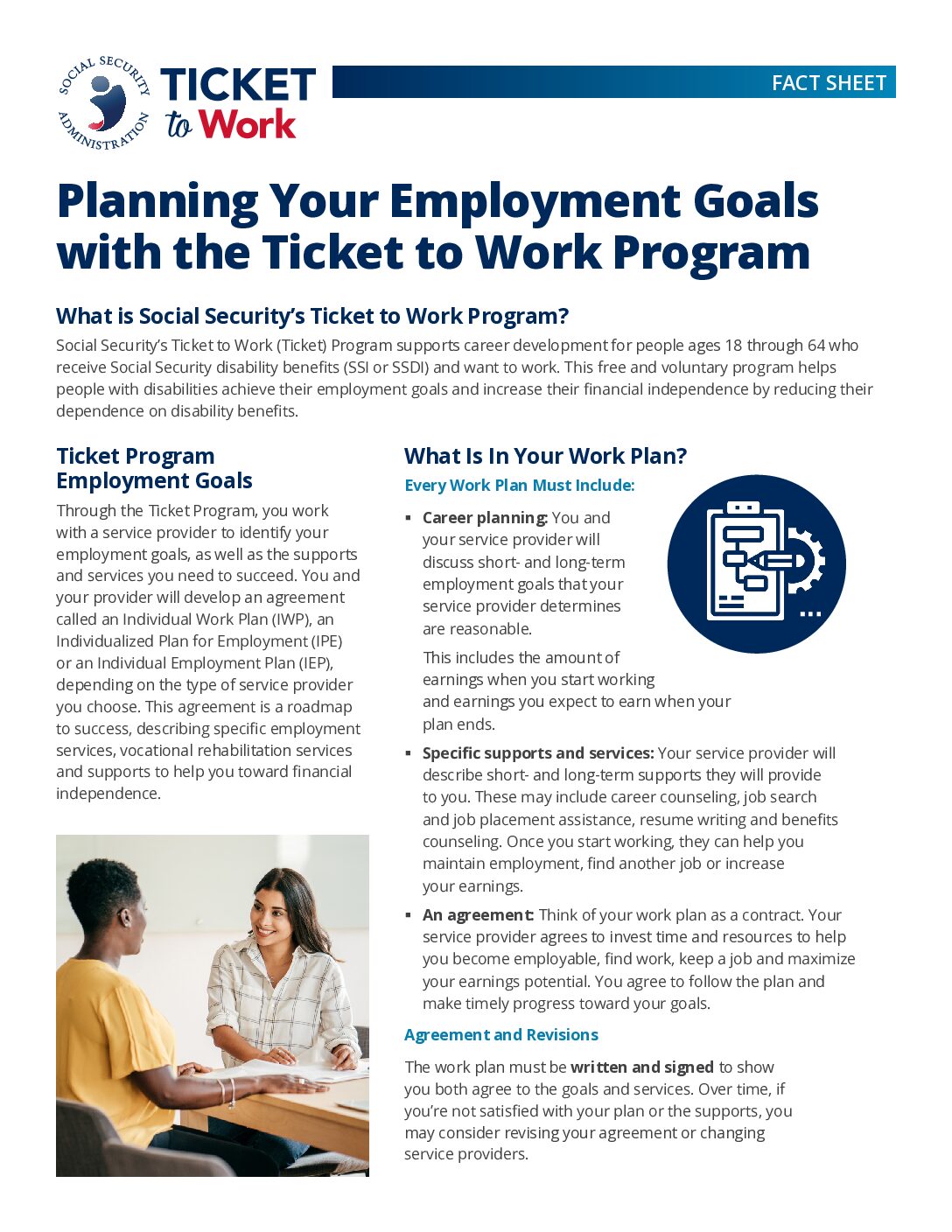
Fact Sheet - Planning Your Employment Goals
Social Security’s Ticket to Work (Ticket) Program supports career development for people ages 18 through 64 who receive Social Security disability benefits (SSI or SSDI) and want to work. This free and voluntary program helps people with disabilities achieve their employment goals and increase their financial independence by reducing their dependence on disability benefits.
Categories: Special Needs Financial Planning and Financial Resources, SSI and SSDI, Transition to Adulthood - Employment and Postsecondary Education
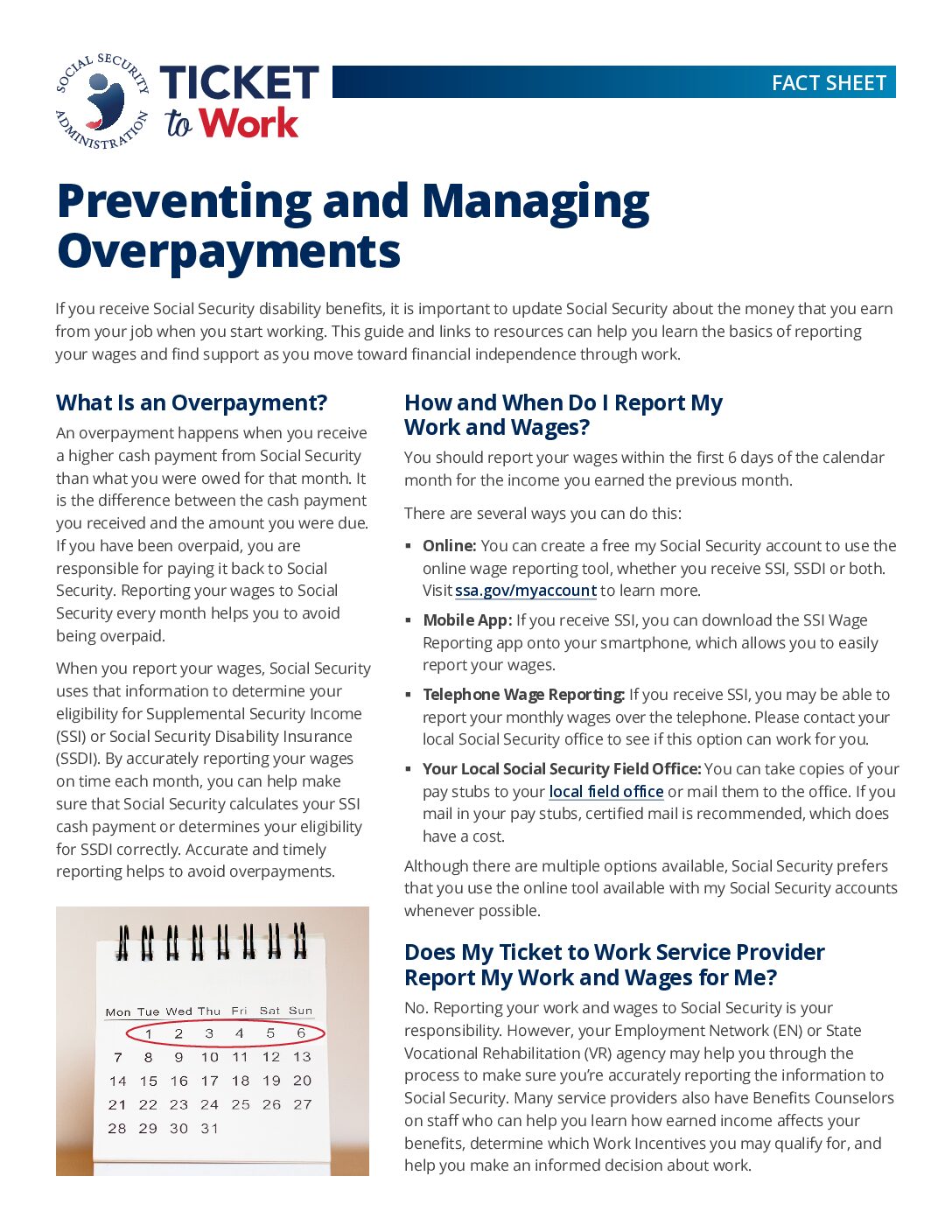
Fact Sheet - Preventing and Managing Overpayments
If you receive Social Security disability benefits, it is important to update Social Security about the money that you earn from your job when you start working. This guide and links to resources can help you learn the basics of reporting your wages and find support as you move toward financial independence through work.
Categories: Special Needs Financial Planning and Financial Resources, SSI and SSDI, Transition to Adulthood - Employment and Postsecondary Education
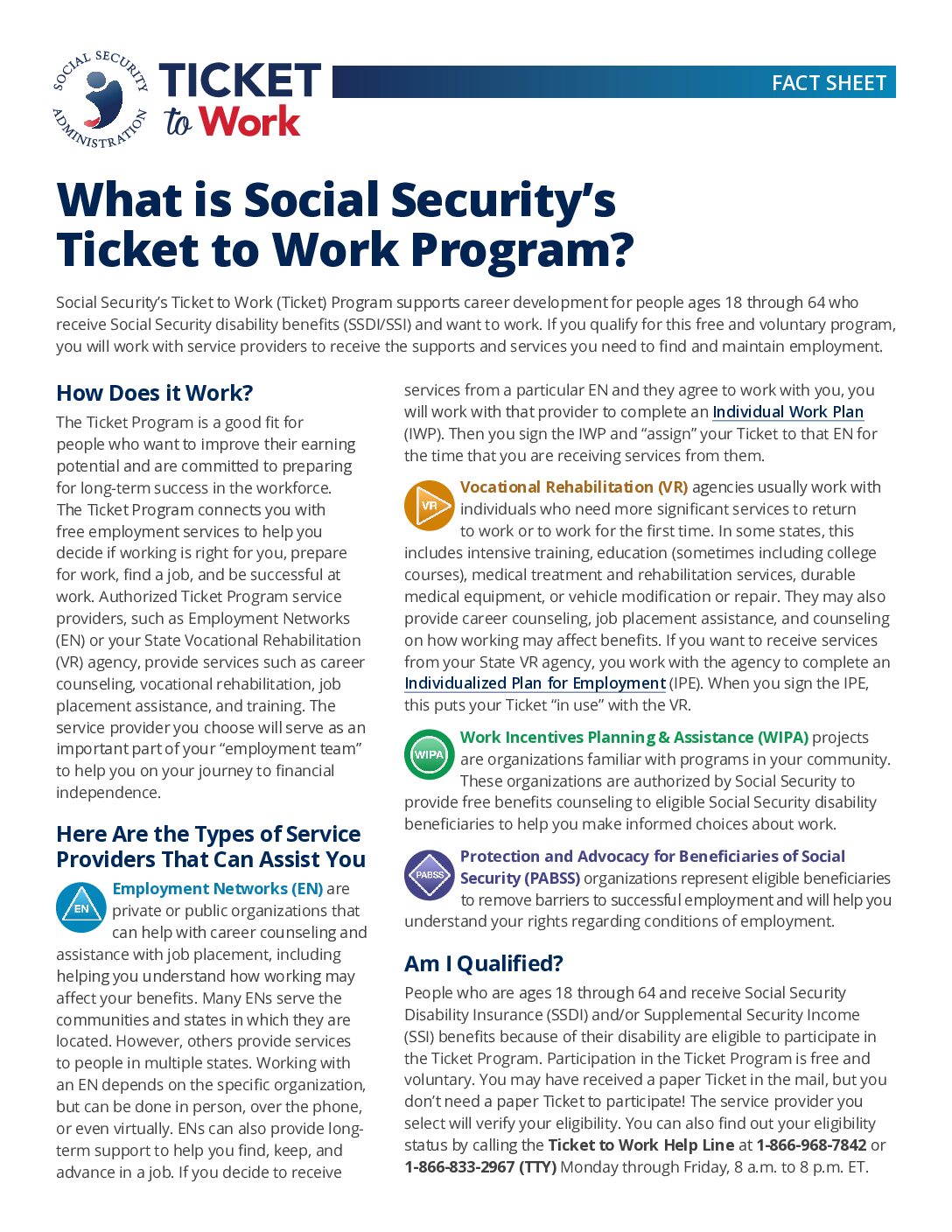
Fact Sheet - Ticket to Work
Social Security’s Ticket to Work (Ticket) Program supports career development for people ages 18 through 64 who receive Social Security disability benefits (SSDI/SSI) and want to work. If you qualify for this free and voluntary program, you will work with service providers to receive the supports and services you need to find and maintain employment.
Categories: Special Needs Financial Planning and Financial Resources, SSI and SSDI, Transition to Adulthood - Employment and Postsecondary Education
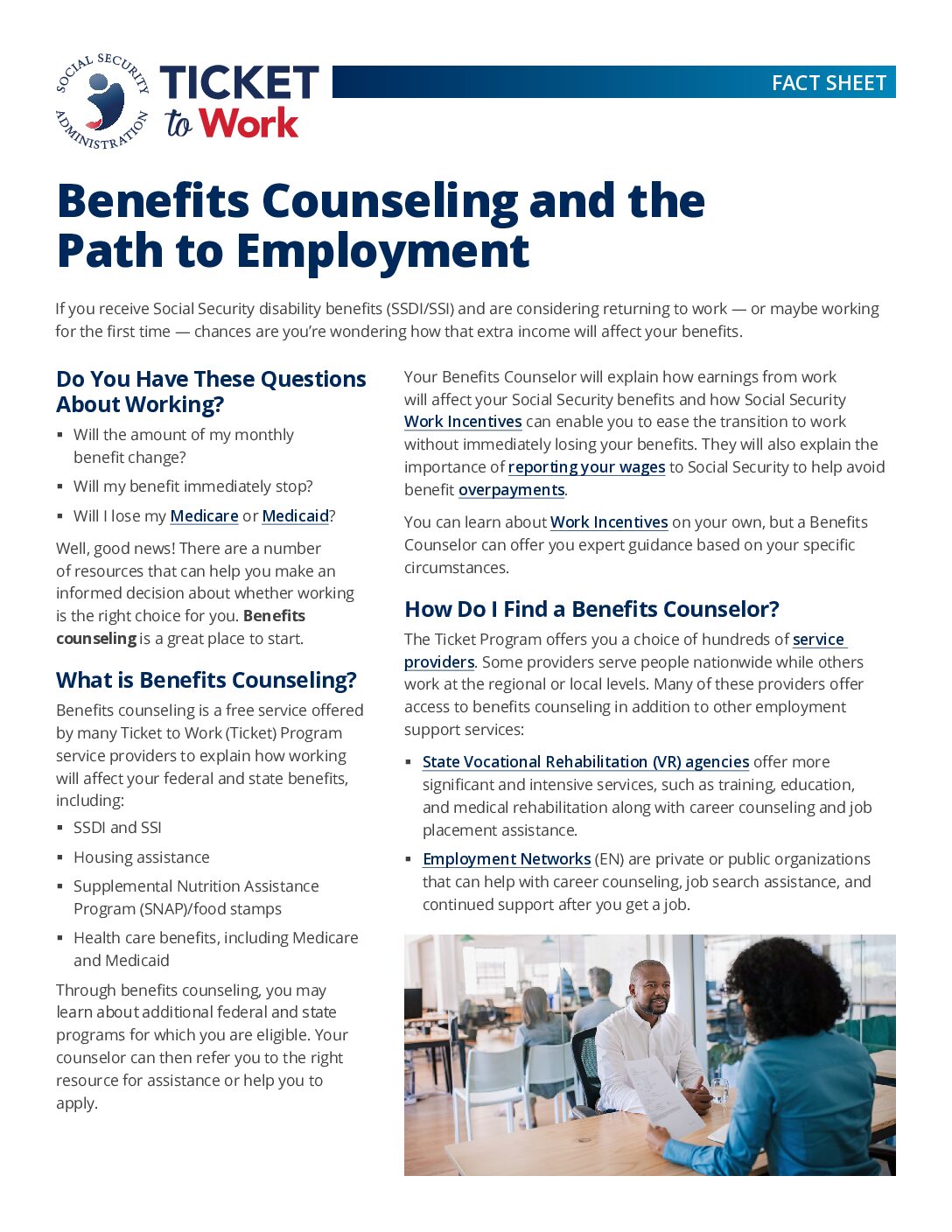
Fact Sheet: Benefits Counseling and the Path to Employment
If you receive Social Security disability benefits (SSDI/SSI) and are considering returning to work — or maybe working for the first time — chances are you’re wondering how that extra income will affect your benefits.
Categories: Special Needs Financial Planning and Financial Resources, SSI and SSDI, Transition to Adulthood - Employment and Postsecondary Education
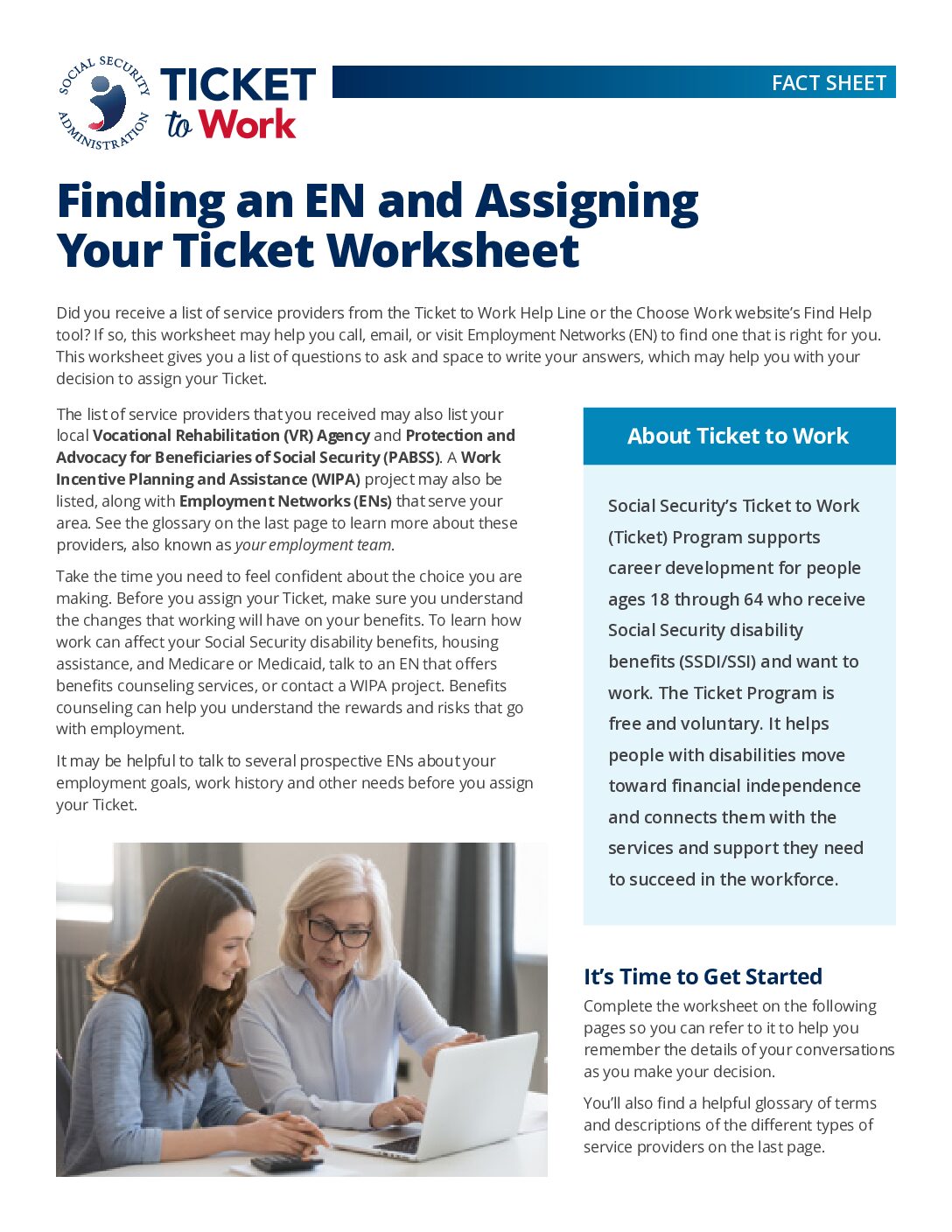
Fact Sheet: Finding an EN and Assigning Your Ticket Worksheet
Did you receive a list of service providers from the Ticket to Work Help Line or the Choose Work website’s Find Help tool? If so, this worksheet may help you call, email, or visit Employment Networks (EN) to find one that is right for you. This worksheet gives you a list of questions to ask and space to write your answers, which may help you with your decision to assign your Ticket.
Categories: Special Needs Financial Planning and Financial Resources, SSI and SSDI, Transition to Adulthood - Employment and Postsecondary Education

Health Care Transition Planning (HTP) and the IEP and IPE
In this document, we are going to review three important plans: The Individualized Education Program (IEP), the Individualized Plan for Employment (IPE), and the Healthcare Transition Plan (HTP). We will review the key parts of each and talk about how they can and should work together! The document also contains a brief description of the Individual Health Plan (IHP) which some students with disabilities may have to ensure their medical conditions are appropriately managed
Categories: Health Care in Schools, Transition to Adulthood - Employment and Postsecondary Education, Transition to Adulthood - Health Care

How to Prepare for a Job Interview - Youth Fact Sheet
After applying for a job, you may get a call, email, or text asking you to participate in a job interview. This is a great thing! You will meet with someone at the company, and they will ask you questions about yourself and will see if you would be a good person to hire for the job. Here are some do’s and don’ts for a job interview.
Categories: Transition to Adulthood - Employment and Postsecondary Education
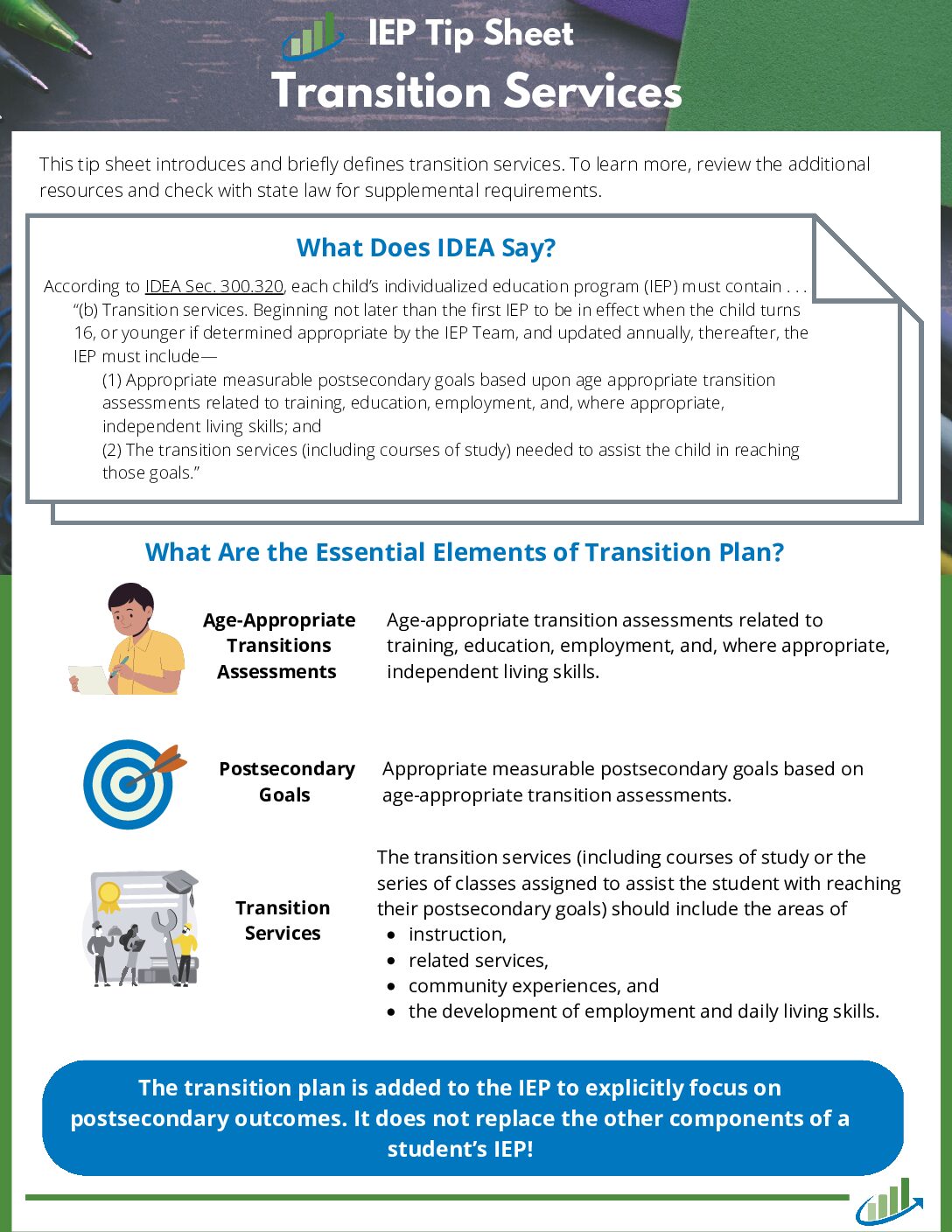
IEP Tip Sheet: Transition Services
This tip sheet introduces and briefly defines transition services. To learn more, review the additional resources and check with state law for supplemental requirements.
Categories: IEP, Special Education, Transition to Adulthood - Employment and Postsecondary Education, Transitions

JAN - Job Accomodation Network
The Job Accommodation Network (JAN) is a website that offers helpful resources and information regarding disabilities and related workplace accommodations (supports) that could be used by anyone, employee or employer. The accommodations listed on the website can help a person with a disability to succeed on the job.
Categories: Transition to Adulthood - Employment and Postsecondary Education

Requisitos de graduación de la escuela secundaria de Carolina del Norte
North Carolina High School Graduation Requirements - for students entering grade 9 for the first time in 2025-2026
Categories: General, Transition to Adulthood - Employment and Postsecondary Education, Transition-age Youth
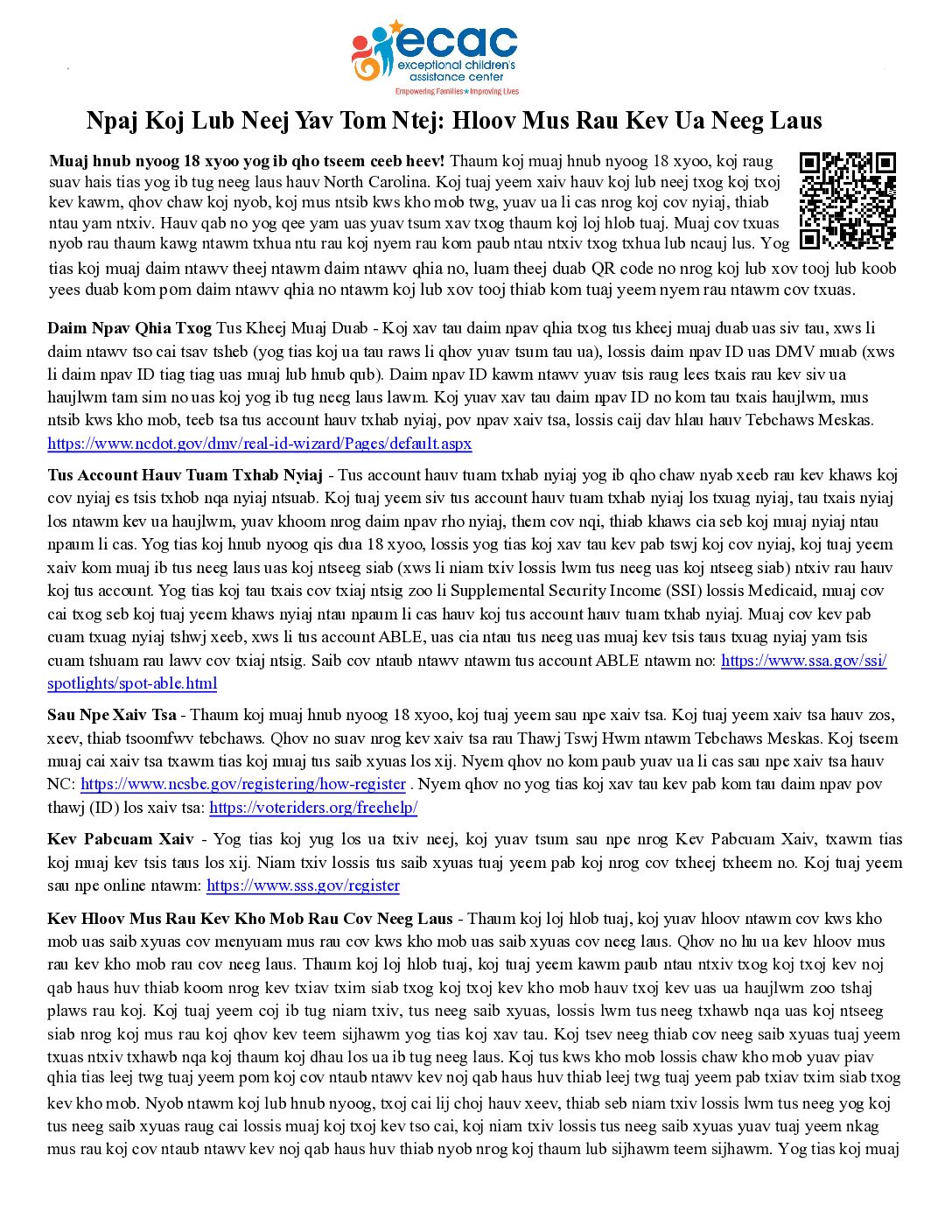
Npaj Koj Lub Neej Yav Tom Ntej: Hloov Mus Rau Kev Ua Neeg Laus (Hmong)
Categories: Transition to Adulthood - Employment and Postsecondary Education, Transition to Adulthood - Health Care, Transition to Adulthood - Independent Living
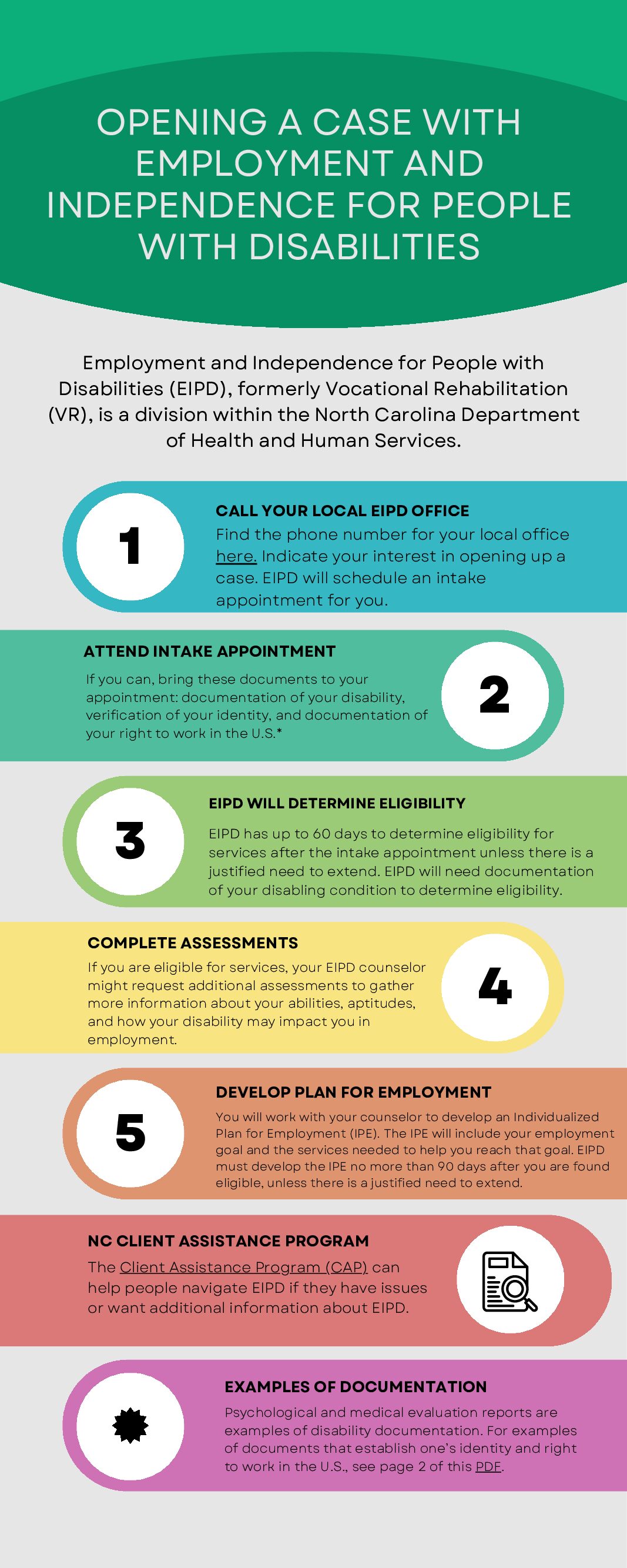
Opening a Case with Employment and Independence for People with Disabilities (EIPD)
Categories: Transition to Adulthood - Employment and Postsecondary Education

Person-Centered Planning - For Youth
Person-Centered Planning is all about YOU! YOU are focus of person-centered planning, also called PCP. That means that you get to let your family, your teachers, and others know what you want to do when you leave high school or college and how you want to live your life. People that you trust and care about can help you make those choices but you voice is the most important. PCP can help you achieve your goals and dreams for life after high school
Categories: Transition to Adulthood - Employment and Postsecondary Education, Transition to Adulthood - Health Care, Transition-age Youth, Transition to Adulthood - Independent Living

Person-Centered Planning (PCP)
Person-Centered Planning is all about YOU and YOUR plans for YOUR future!
Categories: Transition to Adulthood - Employment and Postsecondary Education, Transition to Adulthood - Health Care, Transition-age Youth, Transition to Adulthood - Independent Living

Planifye Lavni Ou: Tranzisyon pou Laj Adilt (Haitian Creole)
Categories: Transition to Adulthood - Employment and Postsecondary Education, Transition to Adulthood - Health Care, Transition to Adulthood - Independent Living

Planning for Your Future: Resume
A resume is a document that you use to tell people about you! It can say what school you go to or went to, where you have worked, volunteer work, your skills, and your interests. A resume is a picture of you! When you apply for a job, the person who is interviewing you can look at your resume and know some important things about you before they meet you.
Categories: Transition to Adulthood - Employment and Postsecondary Education
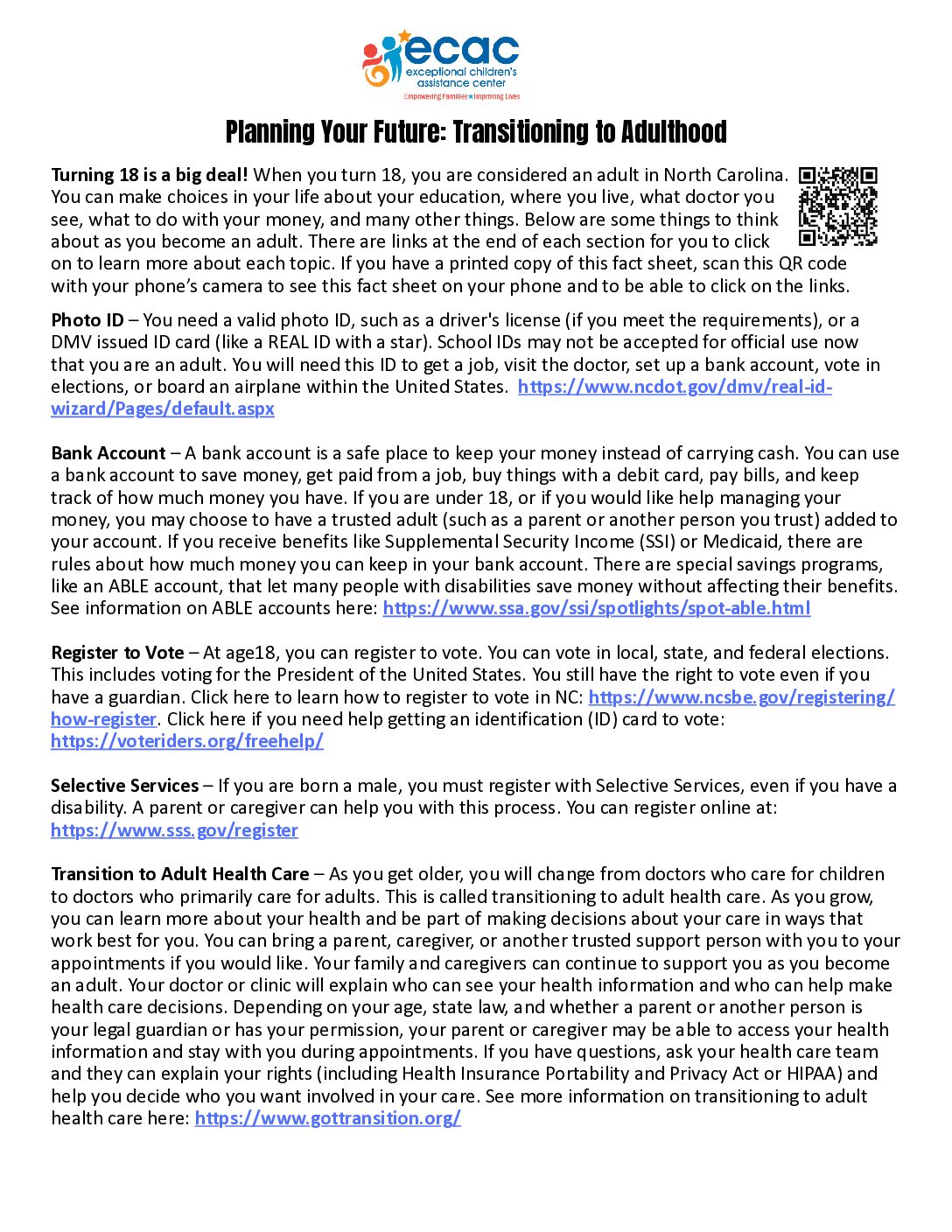
Planning For Your Future: Transitioning to Adulthood
Turning 18 is a big deal When you turn 18, you are considered an adult in North Carolina. You can make choices in your life about your education, where you live, what doctor you see, what to do with your money, and many other things. Use this document as a resource of some things to think about as you become an adult.
Categories: Transition to Adulthood - Employment and Postsecondary Education, Transition to Adulthood - Health Care, Transition to Adulthood - Independent Living
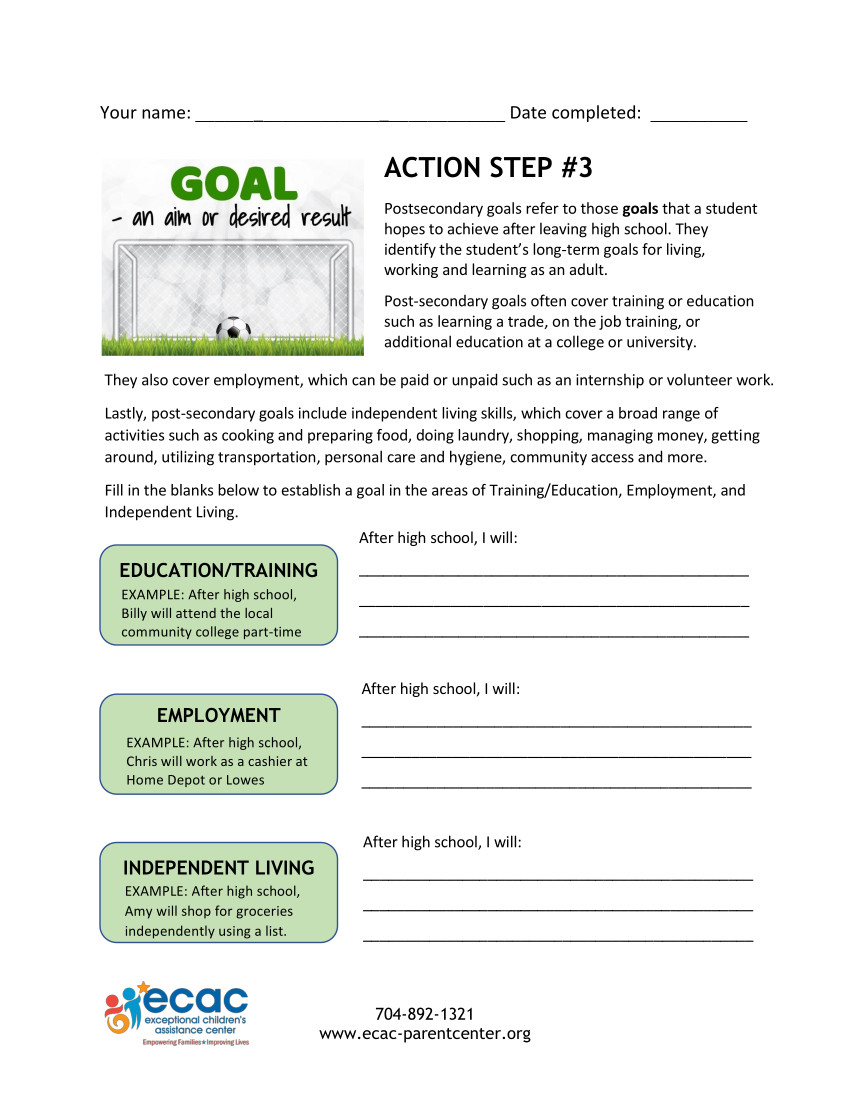
Objetivo postsecundario Paso de acción 3
Una herramienta para ayudar a los jóvenes a crear objetivos en las áreas de formación/educación, empleo y vida independiente como parte de su transición a la edad adulta.
Categories: Advocacy, Transition to Adulthood - Employment and Postsecondary Education, Transition-age Youth

Preparing for College - Youth
High school and college are very different. Things change like where you will go to class, where you will live, what you are responsible for, and so many other things. But just like in high school, it is important for you to practice your self-advocacy skills in college especially once you turn 18.
Categories: Transition to Adulthood - Employment and Postsecondary Education, Transition-age Youth

Self Directed IEPs - Parent Fact Sheet
Your child’s (young adult’s) Individualized Education Program (IEP) is like a roadmap for planning their life after high school. It shows where the student wants to be and how they are going to get there. The earlier students are involved in developing their IEP, the better. Participating in the IEP process helps develop self-advocacy skills. They also learn the importance of the IEP. Paying attention to what is in the IEP is part of how students make sure they learn skills in high school that they need to have the life they want after high school.
Categories: IEP, Transition to Adulthood - Employment and Postsecondary Education, Transition-age Youth

Self Directed IEPs - Student Fact Sheet
Your IEP (Individualized Education Program) is like a roadmap for planning your life after high school. It shows where you want to be and how you are going to get there. Paying attention to what is in your IEP is how you can make sure that you learn the skills in high school you need to live the life you want to live after high school.
Categories: IEP, Transition to Adulthood - Employment and Postsecondary Education, Transition-age Youth

Self Directed IEPs - Student Visual
Categories: IEP, Transition to Adulthood - Employment and Postsecondary Education, Transition-age Youth

Self-Advocacy - Ways to Speak Up For Yourself (Visual)
Categories: Advocacy, Transition to Adulthood - Employment and Postsecondary Education, Transition to Adulthood - Health Care, Transition to Adulthood - Independent Living
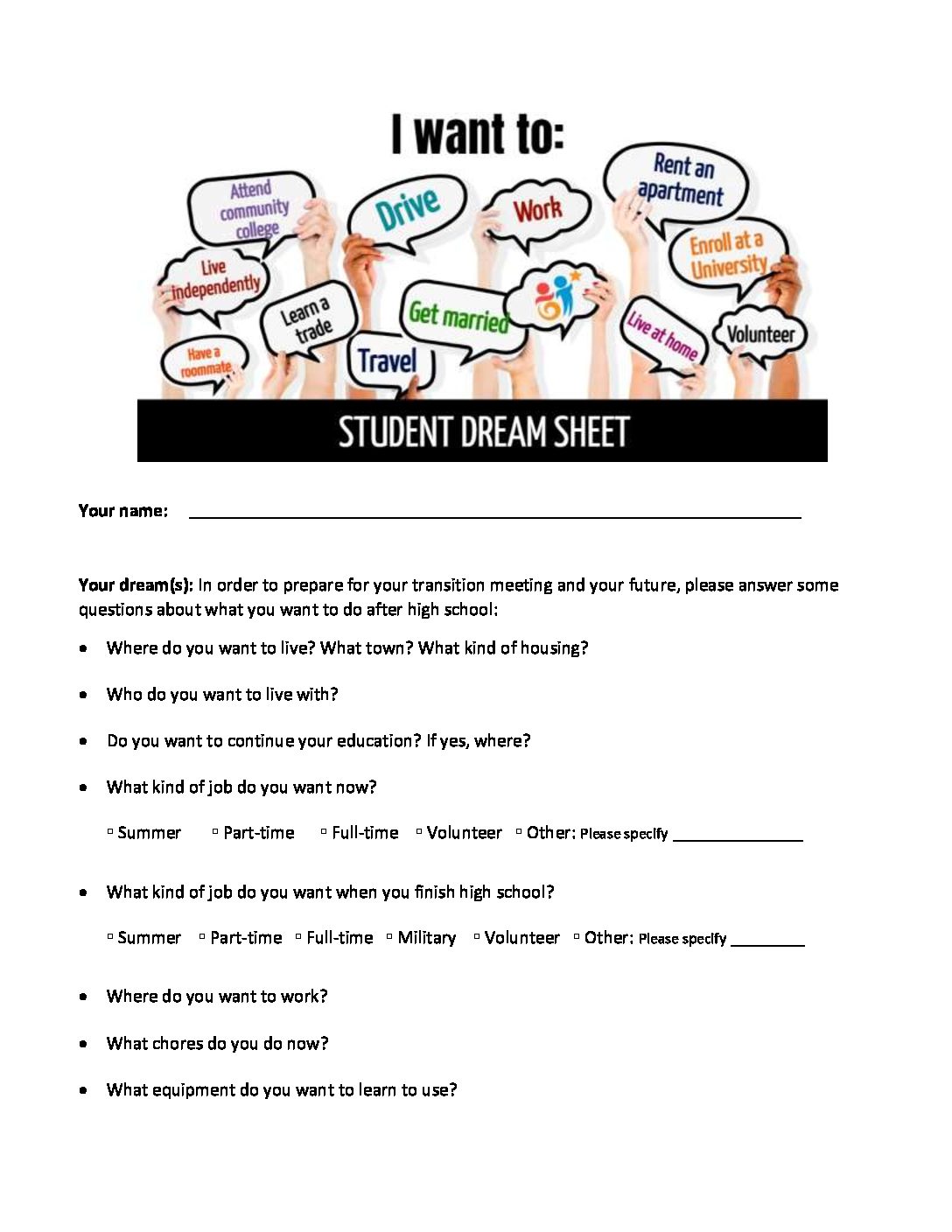
Hoja de sueños del estudiante
La transición es un viaje, comienza ahora a planear el viaje. La hoja de sueños del estudiante puede ayudar a los estudiantes a establecer metas y compartir sus intereses y preferencias.
Categories: Advocacy, IEP, Transition to Adulthood - Employment and Postsecondary Education, Transition to Adulthood - Health Care, Transition-age Youth, Transition to Adulthood - Independent Living

Supported Decision-Making - When Do I Need Support?
Everyone needs support making some of their decisions. Some people may need support at the doctor’s office. Some people may need help with their taxes. Some people may need help with money. When you receive help with decisions, that is called Supported-Decision-Making. This document can help you decide what you are able to do on your own and what you may need help with.
Categories: Transition to Adulthood - Employment and Postsecondary Education, Transition to Adulthood - Health Care, Transition to Adulthood - Independent Living
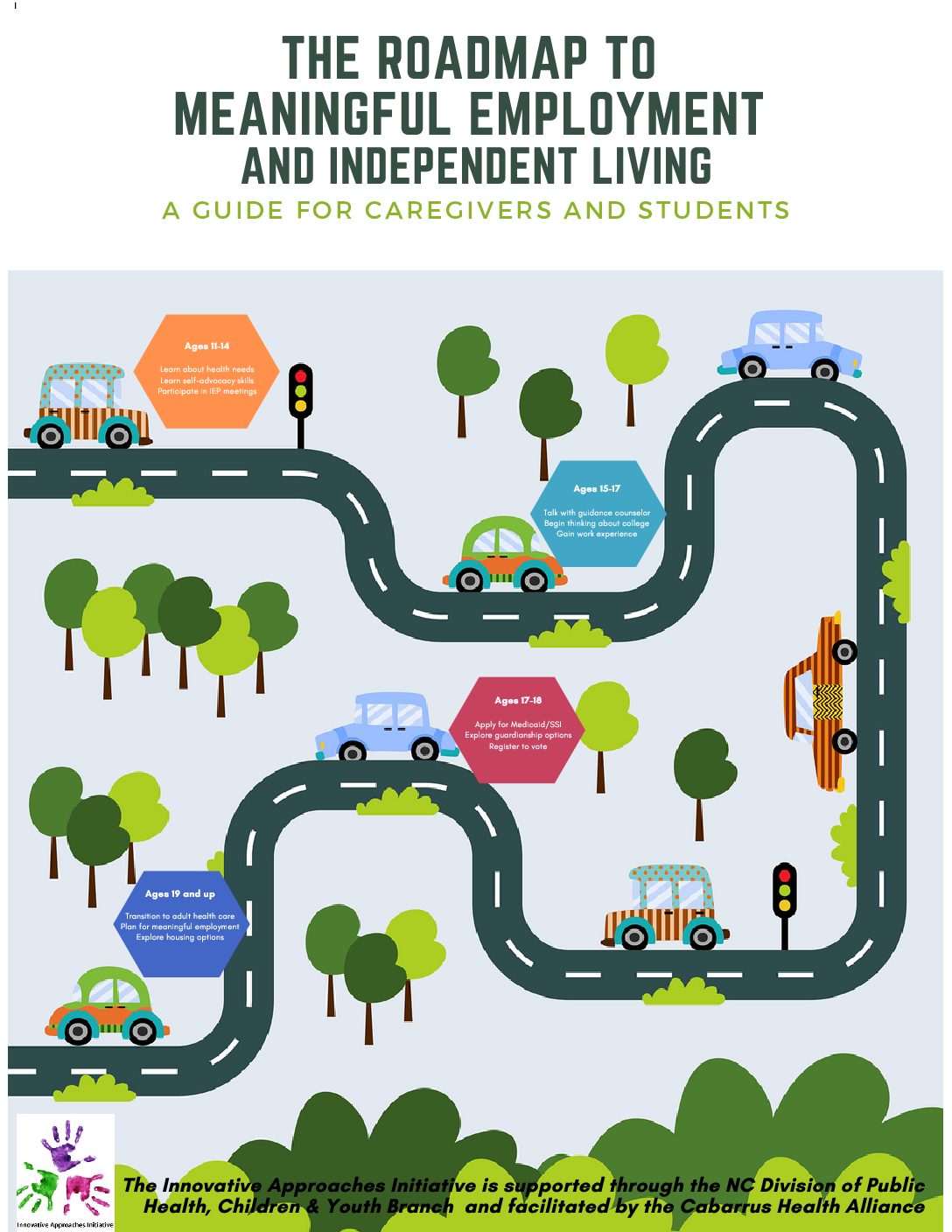
La hoja de ruta hacia el empleo significativo y la vida independiente
Guía para cuidadores y estudiantes sobre la transición a la edad adulta
Categories: Transition to Adulthood - Employment and Postsecondary Education, Transition-age Youth, Transition to Adulthood - Independent Living

The Transition IEP - For Parents
Under the Individuals with Disabilities Education Act (IDEA), students with disabilities must have a Transition Plan by age 16, earlier if appropriate. The Transition plan is part of the Individualized Education Program (IEP). It is not a separate document, and it is often called the Transition IEP.
Categories: IEP, Transition to Adulthood - Employment and Postsecondary Education

Top 10 Mistakes To Avoid in Transition Planning
Categories: Transition to Adulthood - Employment and Postsecondary Education, Transition to Adulthood - Health Care

Transition Guide: Internships
Internships are a great way for your child or young adult to get work experience and help them figure out the kinds of jobs in which they are interested and/or best suited. Internships are temporary job assignments, usually for a school semester, over the summer, or sometimes a whole year. They can be paid or unpaid. The student may receive high school or college credit.
Categories: Transition to Adulthood - Employment and Postsecondary Education

Transition Guide: Person-Centered Planning - Fact Sheet for Parents
Begin with the End in Mind It’s never too soon to start planning with your child for their future. When your child is in middle school, this may seem far away and you are focused on today. But those middle and high school years will pass quickly and soon your child will be an adult. While planning is important for all students, it is even more important for students with disabilities who may face more challenges than their peers without disabilities.
Categories: Transition to Adulthood - Employment and Postsecondary Education, Transition to Adulthood - Health Care, Transition to Adulthood - Independent Living

Transition Guide: Self-Advocacy
Self-advocacy means speaking up for yourself and taking an active role in decisions that affect your life. It’s about understanding your strengths and needs, asking questions, finding information, knowing your rights, and asking for help when needed. It’s also about learning how to solve problems, communicate clearly, and build supportive relationships.
Categories: Advocacy, Transition to Adulthood - Employment and Postsecondary Education, Transition to Adulthood - Health Care, Transition to Adulthood - Independent Living

Transition IEP - Student
The Transition IEP is a plan that focuses on your future. It has your goals and includes the services and supports you need to be successful in school. Your Transition IEP also prepares you for life after school is over. When you are age 14, your team, which includes you and your parents, starts important planning for your future. This is called Transition Planning (moving from childhood to adulthood). The Transition IEP is your plan for reaching your adult goals.
Categories: IEP, Transition to Adulthood - Employment and Postsecondary Education

Transition IEP - Student (Visual)
Categories: IEP, Transition to Adulthood - Employment and Postsecondary Education

Transition IEP Activities
Transition activities should relate to the planned postsecondary outcomes and annual transition goals in the IEP. These services and activities should occur while your child is still in high school and can occur on or off school grounds
Categories: IEP, Transition to Adulthood - Employment and Postsecondary Education

Transition IEP Case Examples
In this document, you will find a range of case scenarios suitable for high school students. Each case example describes a student with different strengths, abilities, needs, and desires. All these students are required to have a transition component in their IEP that includes measurable postsecondary and annual goals. Check out each example for ideas on how to write goals in education, employment, and independent living, and to learn about framing the transition services, activities, and coursework that each student needs to meet their post-school goals and desires.
Categories: IEP, Transition to Adulthood - Employment and Postsecondary Education

Transition IEP Checklist
The following is a checklist for parents to review when developing their child’s Transition IEP
Categories: IEP, Transition to Adulthood - Employment and Postsecondary Education
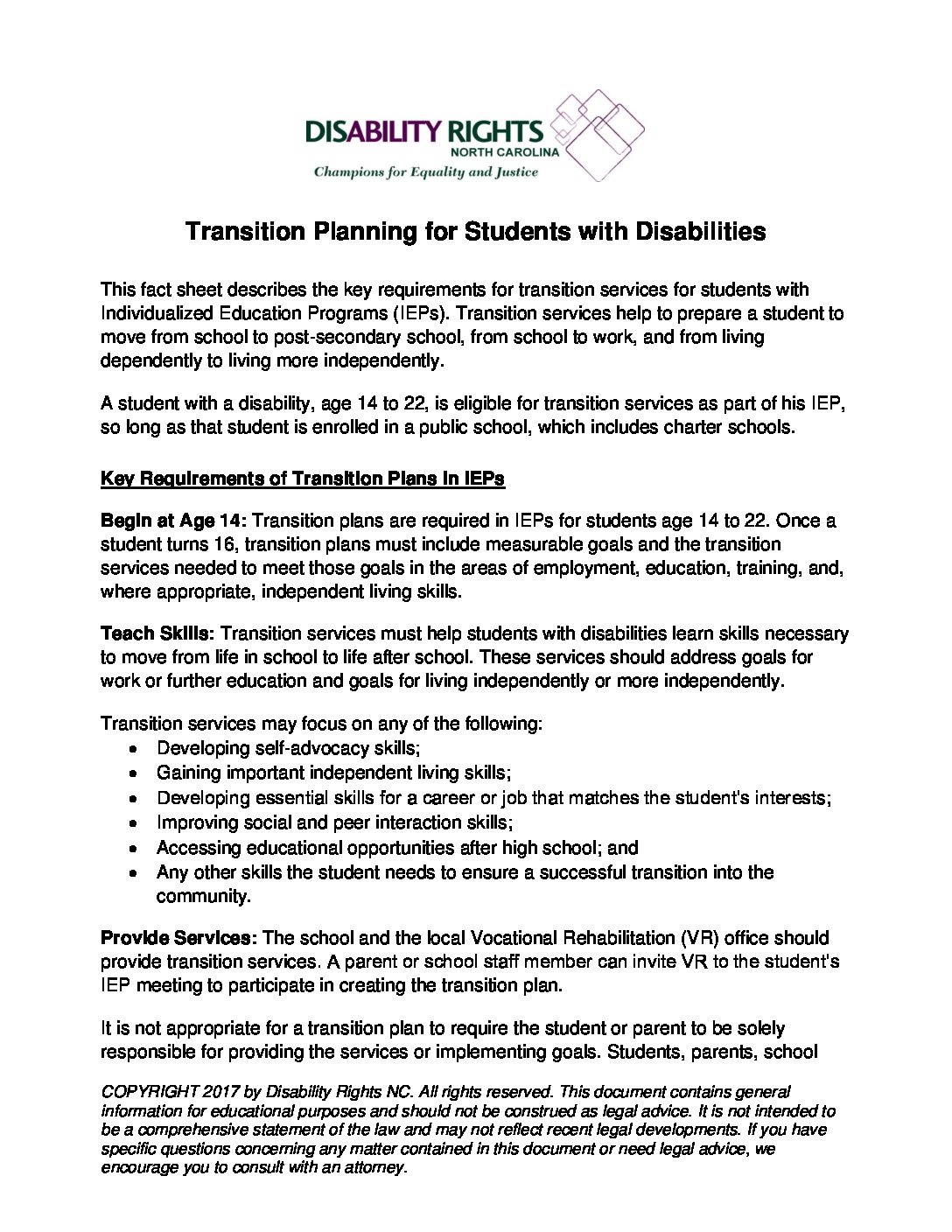
Planificación de la transición para estudiantes con discapacidades - Disability Rights North Carolina
Categories: IEP, Transition to Adulthood - Employment and Postsecondary Education, Transition-age Youth

Transition Planning for Youth in Foster Care
An Individualized Educational Program (IEP) and Foster Care Transition Plan can help you set goals that will let you achieve your dreams. You have the right to be actively involved and make decisions in both your school Transition IEP and Foster Care Transition Plan. This is your future so be sure you are a part of it.
Categories: IEP, Transition to Adulthood - Employment and Postsecondary Education
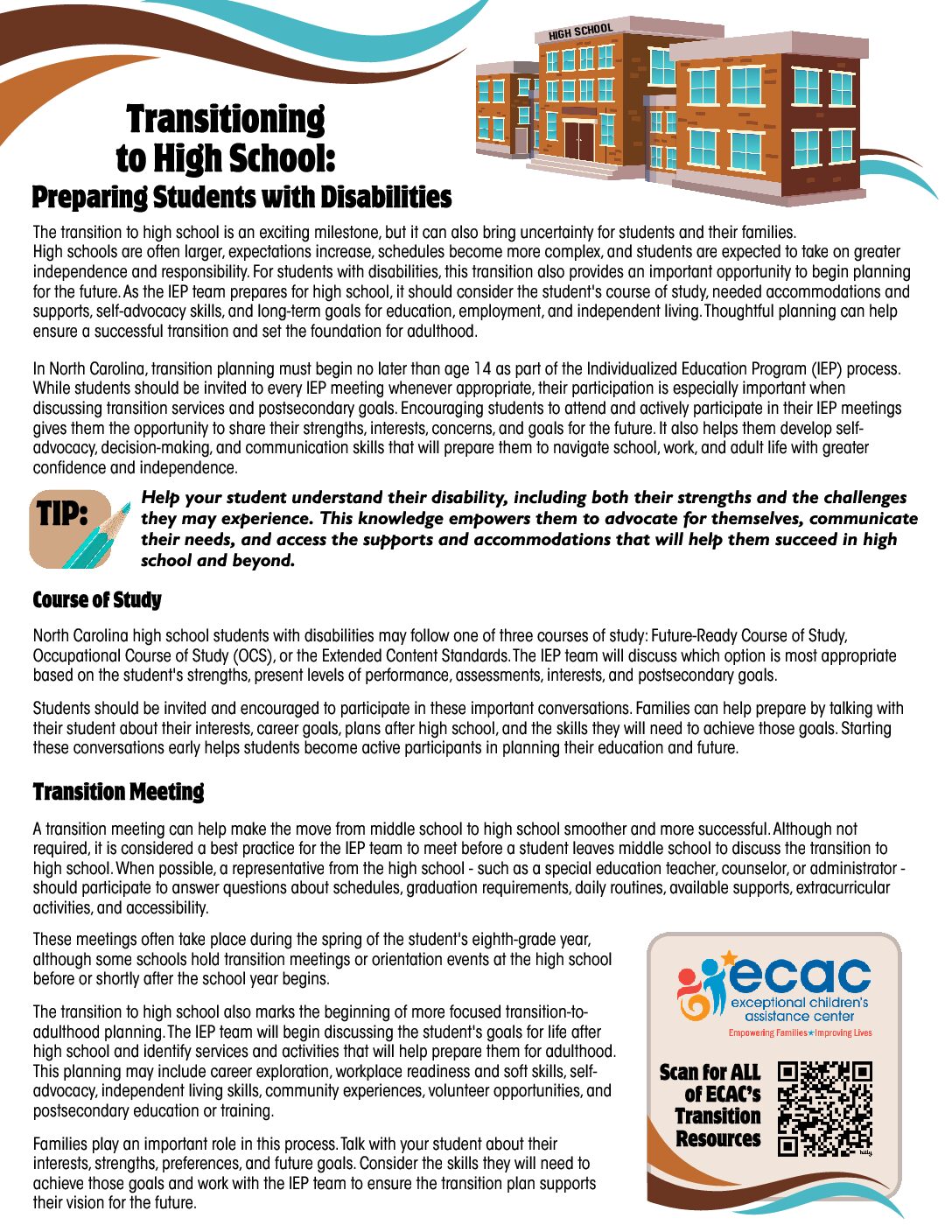
Transition to High School
The transition to high school is an exciting milestone, but it can also bring uncertainty for students and their families. High schools are often larger, expectations increase, schedules become more complex, and students are expected to take on greater independence and responsibility. For students with disabilities, this transition also provides an important opportunity to begin planning for the future.
Categories: General, School Choice, Special Education, Transition to Adulthood - Employment and Postsecondary Education
Transitioning from School to Adulthood: A Guide for Families and Caregivers
The intention of this guide is to provide direction, advice, and information, and to present a collection of resources that you can use to help navigate your transition to adulthood as smoothly as possible. Our goal is to point you in some useful directions, but it is ultimately up to you to decide what will be helpful for you in your transition journey. In the sections that follow, you will find guidance on transition planning, person-centered planning, building a transition IEP, and exploring pre-employment services.
Categories: Transition to Adulthood - Employment and Postsecondary Education, Transition to Adulthood - Health Care, Transition to Adulthood - Independent Living

Turning 18 in North Carolina
Turning 18 is a big deal! When you turn 18, you are an adult in most states. This means you can make choices in your life about your education, where you live, what doctor you see, what to do with your money, and many other things. Here are some things you should think about as you become an adult.
Categories: Transition to Adulthood - Employment and Postsecondary Education, Transition to Adulthood - Health Care, Transition to Adulthood - Independent Living
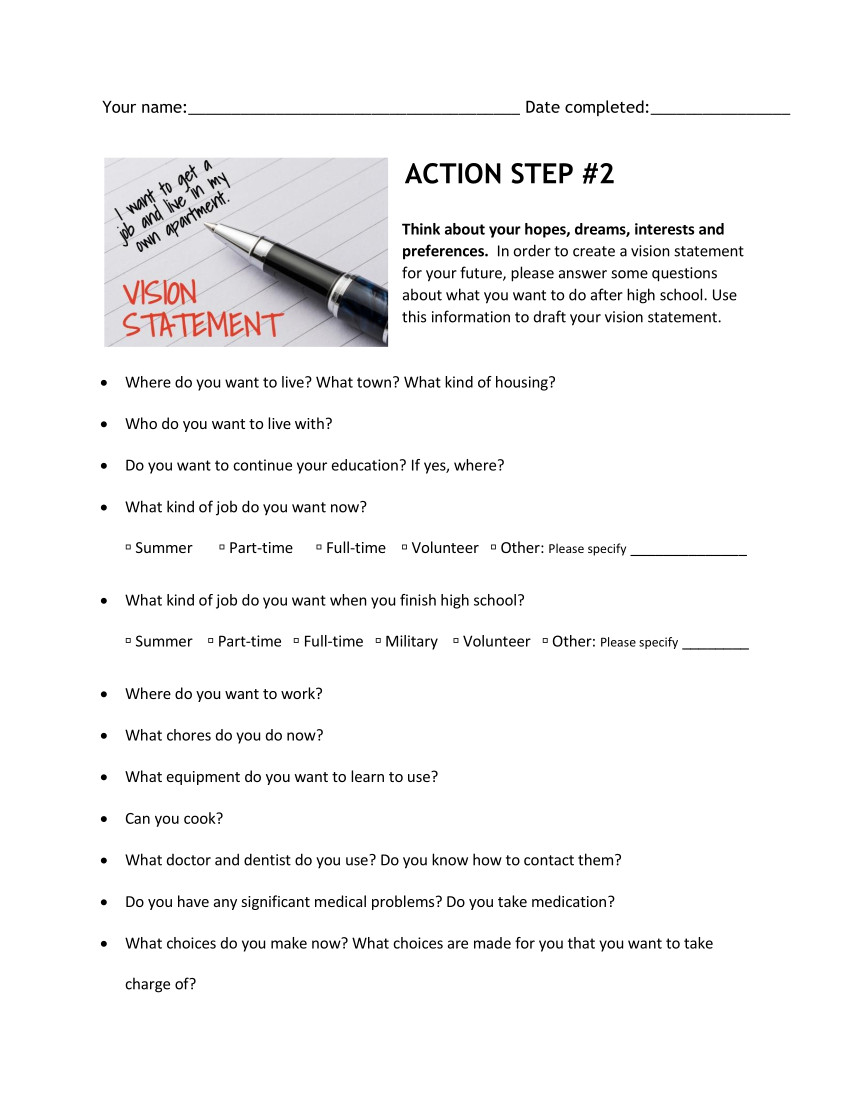
Hoja de trabajo de la declaración de la visión Paso de acción nº 2
Esta hoja de trabajo ayudará a los jóvenes a elaborar una declaración de visión sobre lo que quieren para su vida después de la escuela secundaria.
Categories: Advocacy, Transition to Adulthood - Employment and Postsecondary Education, Transition to Adulthood - Health Care, Transition-age Youth, Transition to Adulthood - Independent Living
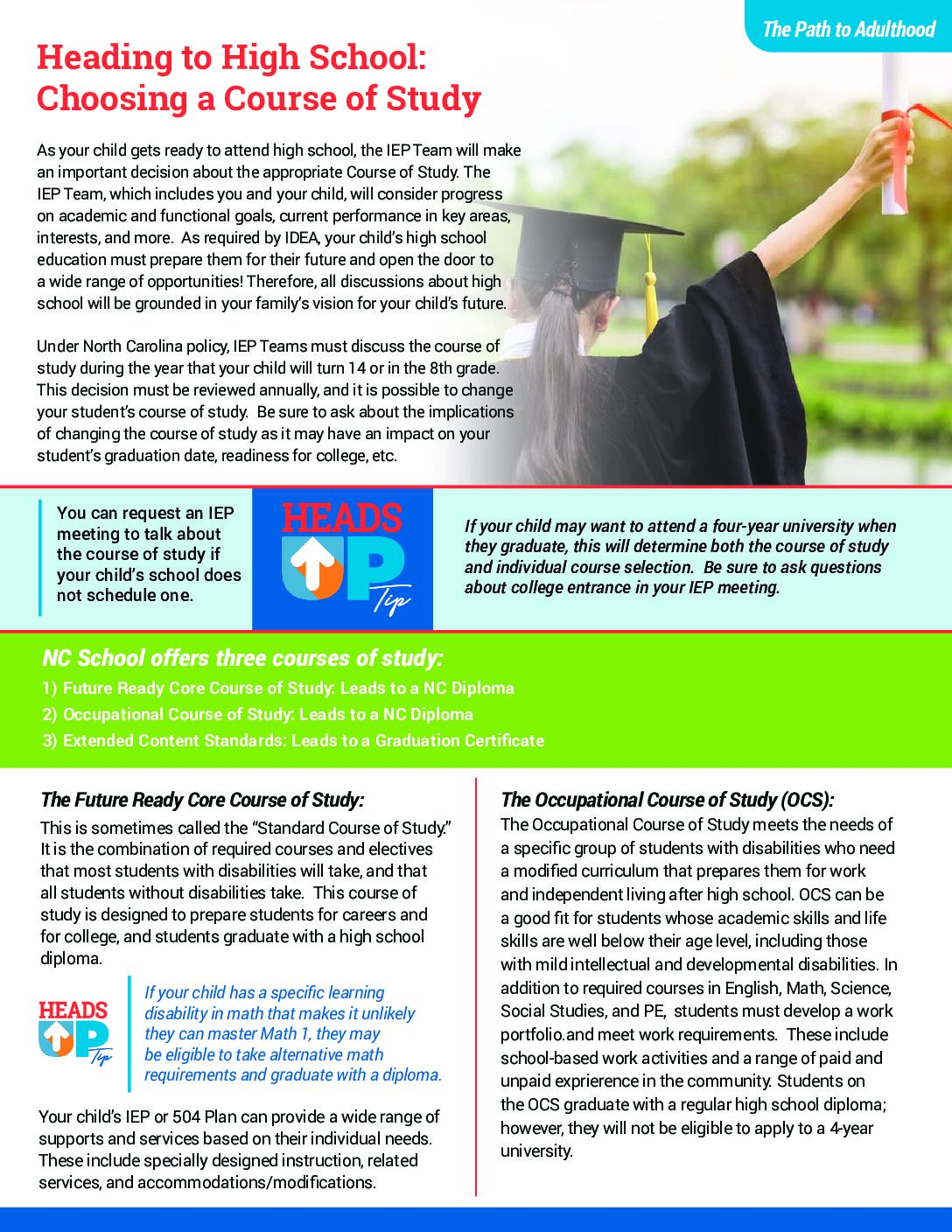
WAZE to Adulthood - Heading to High School: Choosing a Course of Study
Infórmate sobre cómo elegir un curso de estudios de secundaria.
Categories: IEP, Special Education, Transition to Adulthood - Employment and Postsecondary Education, Transition-age Youth
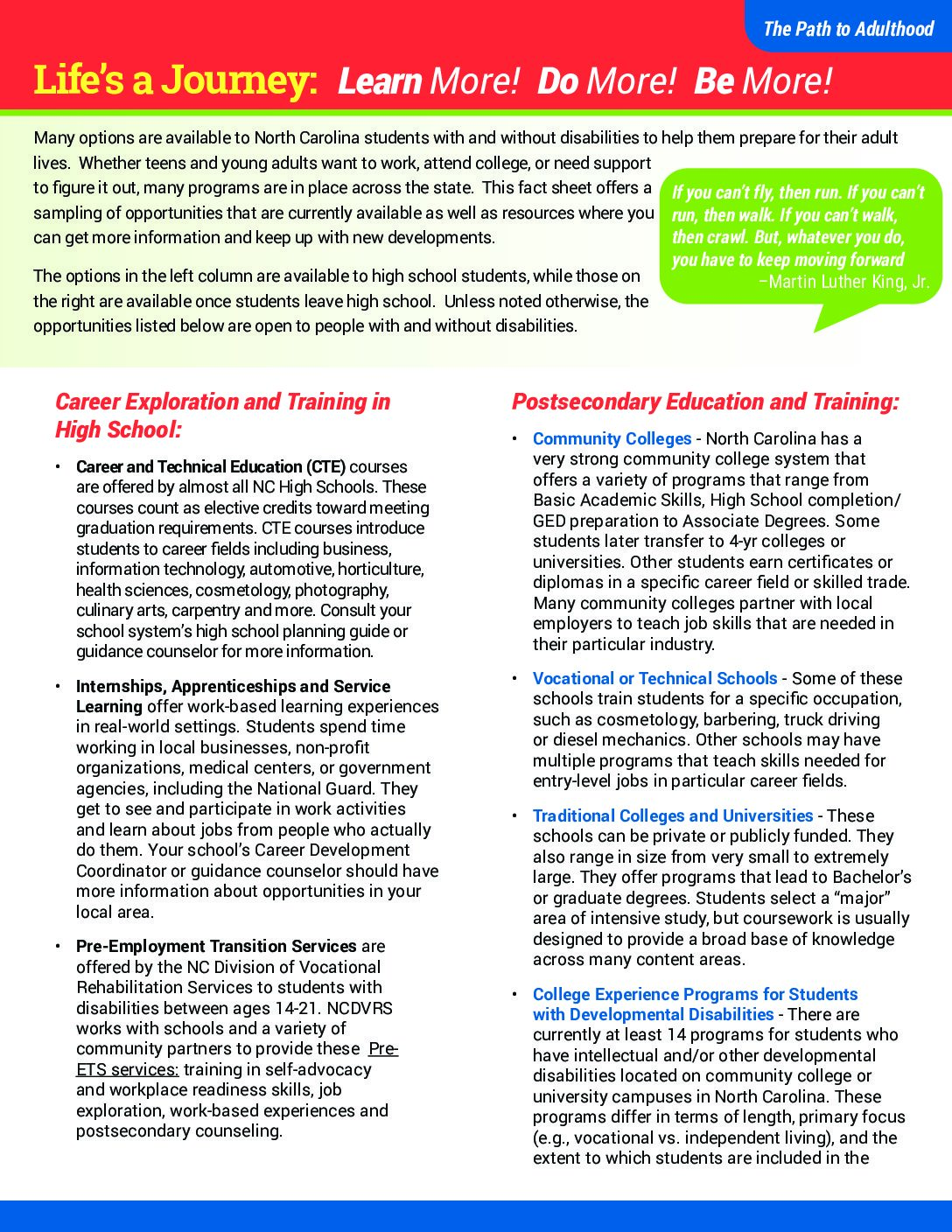
WAZE to Adulthood - Life's a Journey: Learn More! Do More! Be More!
Aprenda sobre la exploración y la formación profesional en la escuela secundaria, así como sobre la educación y la formación postsecundaria.
Categories: Transition to Adulthood - Employment and Postsecondary Education, Transition-age Youth
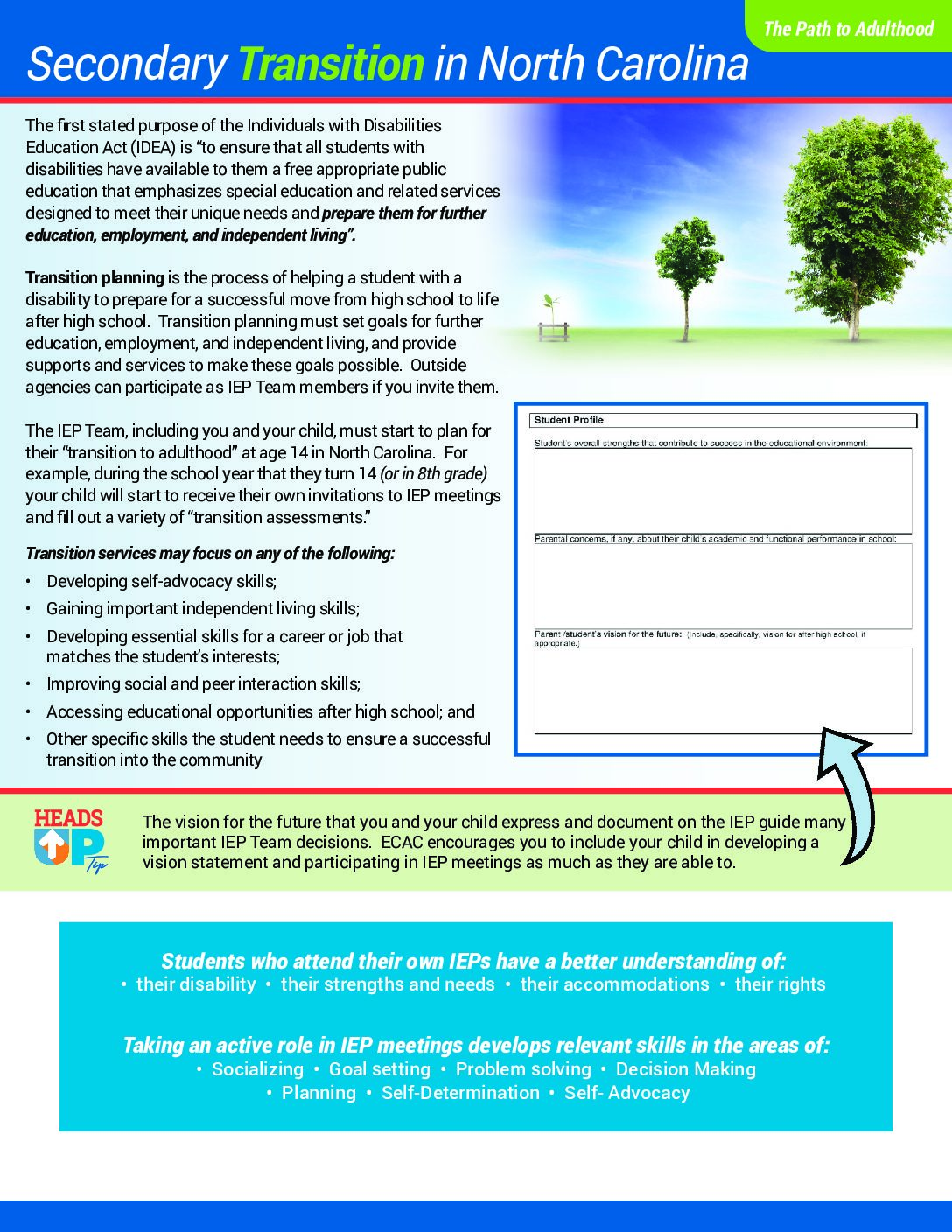
WAZE to Adulthood: Secondary Transition in North Carolina
Infórmese sobre la planificación y los servicios de transición en Carolina del Norte.
Categories: IEP, Special Education, Transition to Adulthood - Employment and Postsecondary Education, Transition-age Youth

What is Self-Advocacy? (For Youth)
Self-advocacy is an important life-long skill. It is about learning how to speak up for yourself, making your own decisions about your life, learning how to get information so that you can understand things that are of interest to you, finding out who will support you in your journey, knowing your rights and responsibilities, problem solving, learning, asking for help, and even making friends.
Categories: Advocacy, Transition to Adulthood - Employment and Postsecondary Education, Transition-age Youth

What to do on a Job: Youth Fact Sheet
Congratulations! You have a job and will be going to work soon. Before you start work, it is important that you know what good behavior in the workplace looks like and pay attention to the rules set in your workplace. If you do not, you could lose your job
Categories: Transition to Adulthood - Employment and Postsecondary Education, Transition-age Youth
¿Qué es lo siguiente? ¿La universidad? - Trabajar juntos NC
Una exploración guiada de las opciones de educación postsecundaria en Carolina del Norte para estudiantes con discapacidades
Categories: Transition to Adulthood - Employment and Postsecondary Education, Transitions, Transition-age Youth

Who Is On My IEP Team?
The Individualized Education Program (IEP) is a roadmap for a student with a disability to get from a starting point to an end goal. It changes when your needs change and is the basis for your education. There are different people who can attend your IEP meeting and help make your goals and help plan your future.
Categories: IEP, Transition to Adulthood - Employment and Postsecondary Education

Who Is On My IEP Team? (visual)
Categories: IEP, Transition to Adulthood - Employment and Postsecondary Education