
Familien stärken, Leben verbessern...jeden Tag
Verfügbare Schulungen und bevorstehende Veranstaltungen

Navigieren im IEP

Eltern-Lehrer-Treffen

Jedes Kind ist einzigartig, daher muss auch der IEP einzigartig sein

Sonderpädagogik ist ein Unterricht, der speziell auf die besonderen Bedürfnisse eines Kindes mit einer Behinderung zugeschnitten ist. Dies bedeutet, dass der Unterricht individuell entwickelt wird, um die Bedürfnisse eines bestimmten Kindes zu erfüllen, die sich aus seiner Behinderung ergeben.

Daher kann das Individualisierte Bildungsprogramm (IEP) eine der wichtigsten Komponenten für den Erfolg Ihres Kindes sein.

Auf dieser Seite finden Sie allgemeine Informationen, hilfreiche Tipps und Ressourcen zum Herunterladen, die Ihnen dabei helfen, den IEP-Prozess effektiv zu gestalten und die bestmögliche Bildungserfahrung für Ihr Kind zu gewährleisten. Wenn Sie Fragen haben, zögern Sie bitte nicht, uns zu kontaktieren.

Der Schwerpunkt und der Lehrplan variieren je nach Kind

Da jedes Kind einzigartig ist, ist es schwierig, ein allgemeines Beispiel für die Sonderpädagogik zu geben. Einige Schüler arbeiten vielleicht auf der Ebene des Vorkindergartens, andere auf der Ebene der ersten, zweiten oder dritten Klasse. 

Es kann Schüler geben, deren sonderpädagogische Förderung sich in erster Linie auf die Sprachentwicklung, die kognitive Entwicklung oder auf Bedürfnisse im Zusammenhang mit einer körperlichen oder Lernbehinderung konzentriert. Die sonderpädagogische Förderung eines jeden Schülers kann Folgendes umfassen:

Bild eines jungen asiatischen Jungen, der seine Mutter kopiert
Bild eines jungen Mädchens mit Brille, das genau auf strukturierte Tassen schaut

Was der IEP abdeckt und was nicht

Es ist auch wichtig, daran zu denken, dass die Bildung, die Dienstleistungen und die Unterstützung, die im IEP eines Kindes beschrieben sind, nicht notwendigerweise die gesamte Bildung des Kindes abdecken. Der IEP geht nur auf den Bildungsbedarf ein, der sich aus der Behinderung des Kindes ergibt. Wenn ein Kind während des gesamten Schultages und bei allen Aktivitäten sonderpädagogische Unterstützung benötigt, deckt der IEP alle diese Bedürfnisse ab. 

Wenn das Kind in einem oder mehreren Bereichen (z. B. Sport, Musik oder Naturwissenschaften) keine sonderpädagogische Unterstützung benötigt, werden diese Fächer nicht in den IEP aufgenommen. Das Kind erhält Zugang zu diesen Fächern im Rahmen des allgemeinen Lehrplans/der allgemeinen Klasse, ohne dass zusätzliche sonderpädagogische Leistungen erforderlich sind.

IEP-Ressourcen
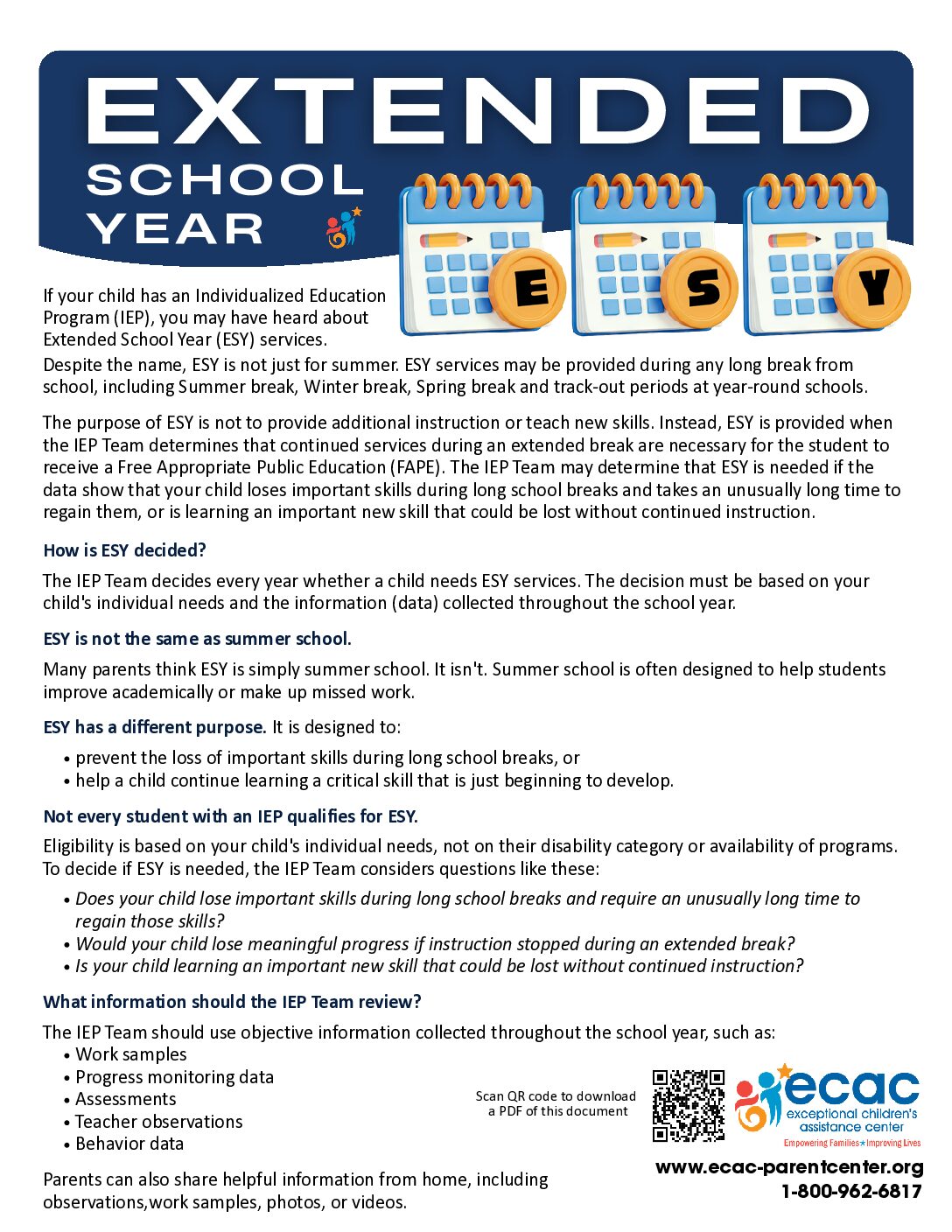
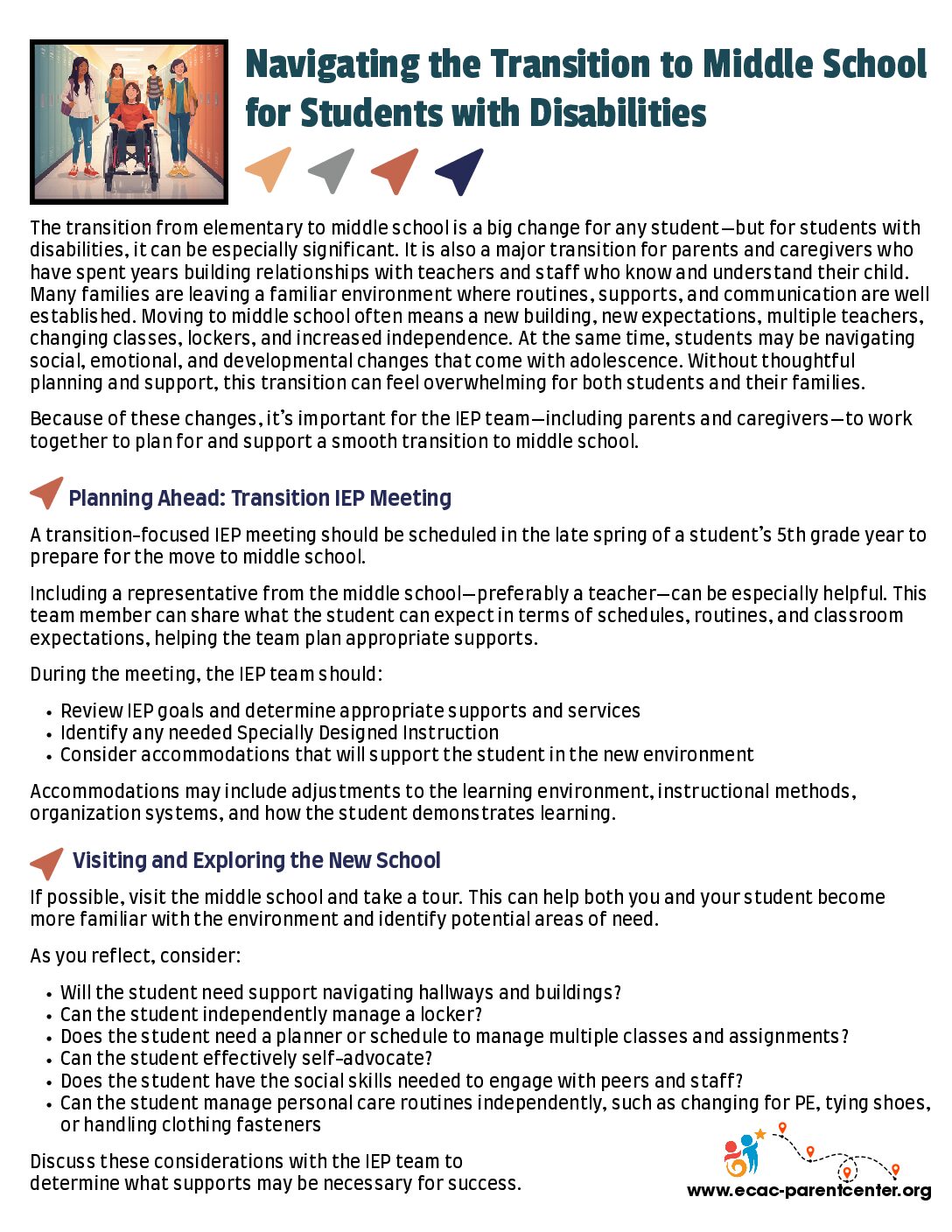
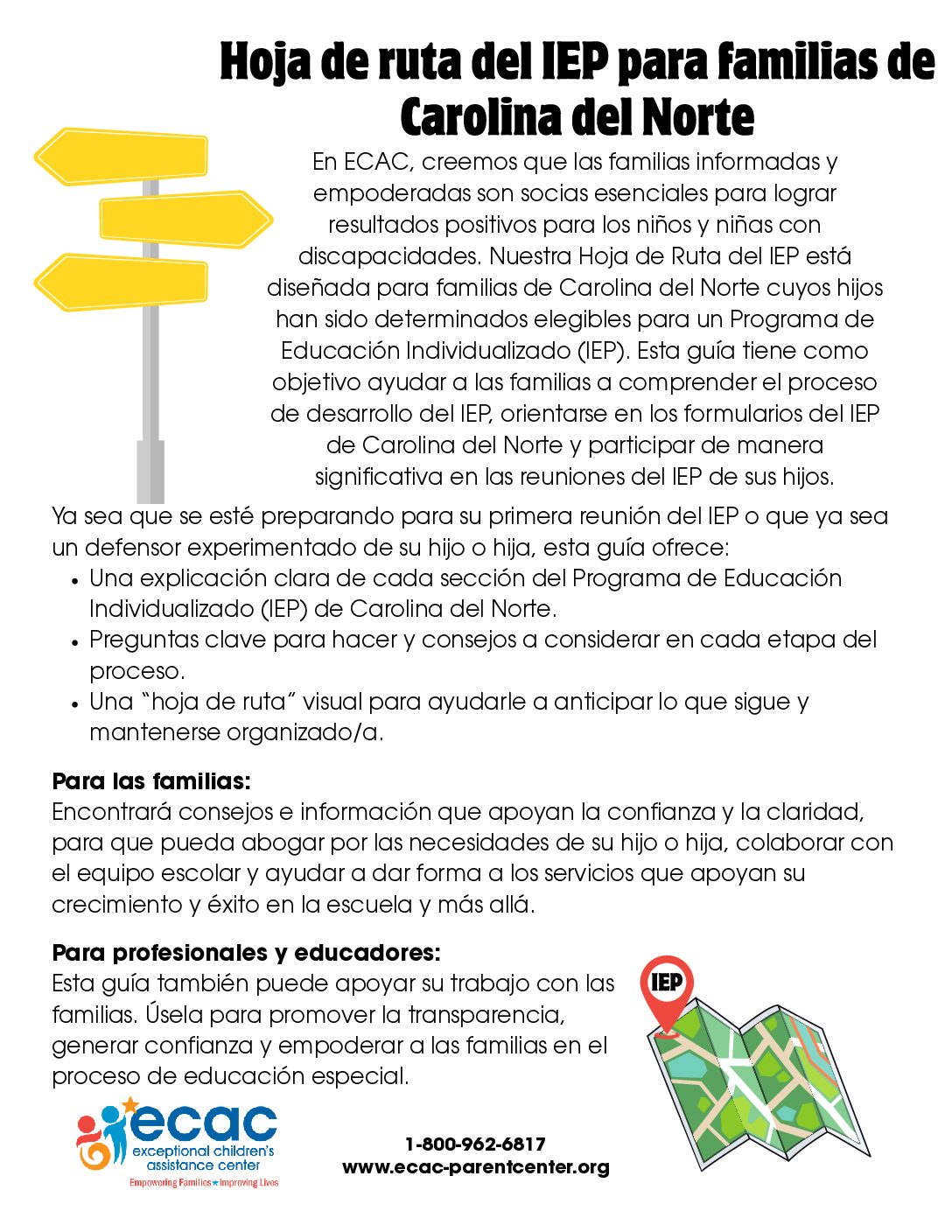
IEP Road Map 2026
IEP Road Map
At ECAC, we believe that informed and empowered families are essential partners in achieving positive outcomes for children with disabilities. Our IEP Road Map is designed for North Carolina families whose child has been found eligible for an Individualized Education Program (IEP). This guide is intended to help families understand the IEP development process, navigate the North Carolina IEP forms and meaningfully participate in their child’s IEP meetings.
Kategorien: IEP
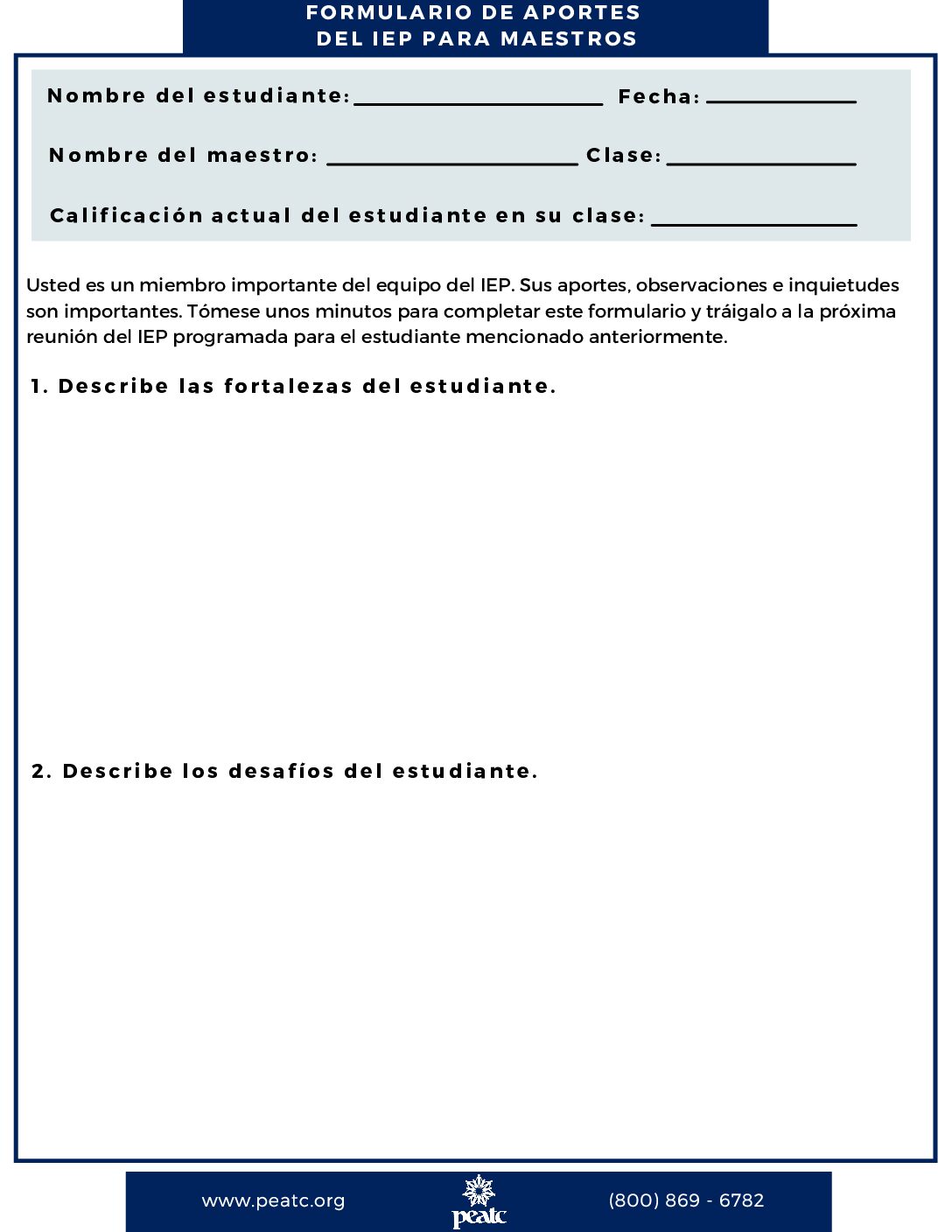
Teacher-IEP-Input-Fillable-Form-SPA
Formulario de Aportes Del IEP Para Maestros (Teacher IEP Input Form)
Kategorien: IEP, Spanisch
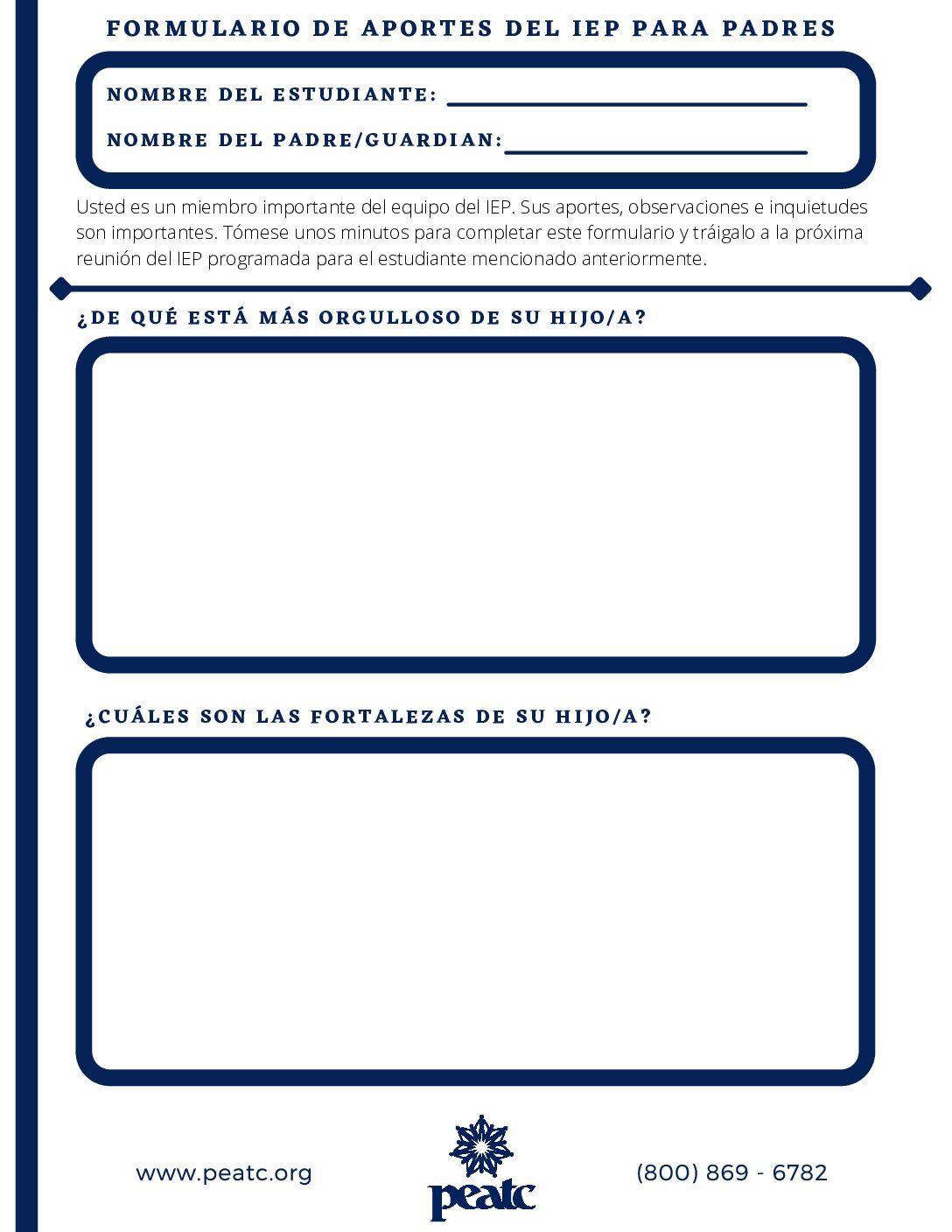
Parent-IEP-Input-Fillable-Form-SPA
Formulario de Aportes Del IEP Para Padres (Parent IEP Input Form)
Kategorien: IEP, Spanisch
Transition-IEP-Case-Examples
Transition IEP Case Examples
In this document, you will find a range of case scenarios suitable for high school students. Each case example describes a student with different strengths, abilities, needs, and desires. All these students are required to have a transition component in their IEP that includes measurable postsecondary and annual goals. Check out each example for ideas on how to write goals in education, employment, and independent living, and to learn about framing the transition services, activities, and coursework that each student needs to meet their post-school goals and desires.
Categories: IEP, Transition to Adulthood
Transition-IEP-Student-Visual
Transition IEP - Student (Visual)
Categories: IEP, Transition to Adulthood
Transition-IEP-Youth
Transition IEP - Student
The Transition IEP is a plan that focuses on your future. It has your goals and includes the services and supports you need to be successful in school. Your Transition IEP also prepares you for life after school is over. When you are age 14, your team, which includes you and your parents, starts important planning for your future. This is called Transition Planning (moving from childhood to adulthood). The Transition IEP is your plan for reaching your adult goals.
Categories: IEP, Transition to Adulthood
Transition-IEP-A-Parent-Factsheet
The Transition IEP - For Parents
Under the Individuals with Disabilities Education Act (IDEA), students with disabilities must have a Transition Plan by age 16, earlier if appropriate. The Transition plan is part of the Individualized Education Program (IEP). It is not a separate document, and it is often called the Transition IEP.
Categories: IEP, Transition to Adulthood
Transition-Activities-for-the-IEP
Transition IEP Activities
Transition activities should relate to the planned postsecondary outcomes and annual transition goals in the IEP. These services and activities should occur while your child is still in high school and can occur on or off school grounds
Categories: IEP, Transition to Adulthood
Self-Directed-IEPs-Student-Visual-
Self Directed IEPs - Student Visual
Categories: IEP, Transition to Adulthood
Self-Directed-IEPs-Student
Self Directed IEPs - Student Fact Sheet
Your IEP (Individualized Education Program) is like a roadmap for planning your life after high school. It shows where you want to be and how you are going to get there. Paying attention to what is in your IEP is how you can make sure that you learn the skills in high school you need to live the life you want to live after high school.
Categories: IEP, Transition to Adulthood
Self-Directed-IEPs-Parent-Fact-Sheet
Self Directed IEPs - Parent Fact Sheet
Your child’s (young adult’s) Individualized Education Program (IEP) is like a roadmap for planning their life after high school. It shows where the student wants to be and how they are going to get there. The earlier students are involved in developing their IEP, the better. Participating in the IEP process helps develop self-advocacy skills. They also learn the importance of the IEP. Paying attention to what is in the IEP is part of how students make sure they learn skills in high school that they need to have the life they want after high school.
Categories: IEP, Transition to Adulthood
Who-Is-On-My-IEP-Team-Student-Visual
Who Is On My IEP Team? (visual)
Categories: IEP, Transition to Adulthood
Who-Is-On-My-IEP-Team-Student
Who Is On My IEP Team?
The Individualized Education Program (IEP) is a roadmap for a student with a disability to get from a starting point to an end goal. It changes when your needs change and is the basis for your education. There are different people who can attend your IEP meeting and help make your goals and help plan your future.
Categories: IEP, Transition to Adulthood
Roles-Around-the-IEP-Parent-Fact-Sheet
Roles Around the IEP Table
The Individualized Education Program (IEP) is a roadmap for a student with a disability to get from a starting point to an end goal. It changes when the student’s needs change and is the basis for your child’s education. The parent is an equal member of the IEP team. T
Kategorien: IEP
Teacher-IEP-Input-Form-Fillable
Teacher IEP Input Form
Kategorien: IEP
Student-IEP-input-form-fillable
Student IEP Input Form
Categories: IEP, Transition to Adulthood
Parent-IEP-Input-Form-Fillable
Parent IEP Input Form
Kategorien: IEP
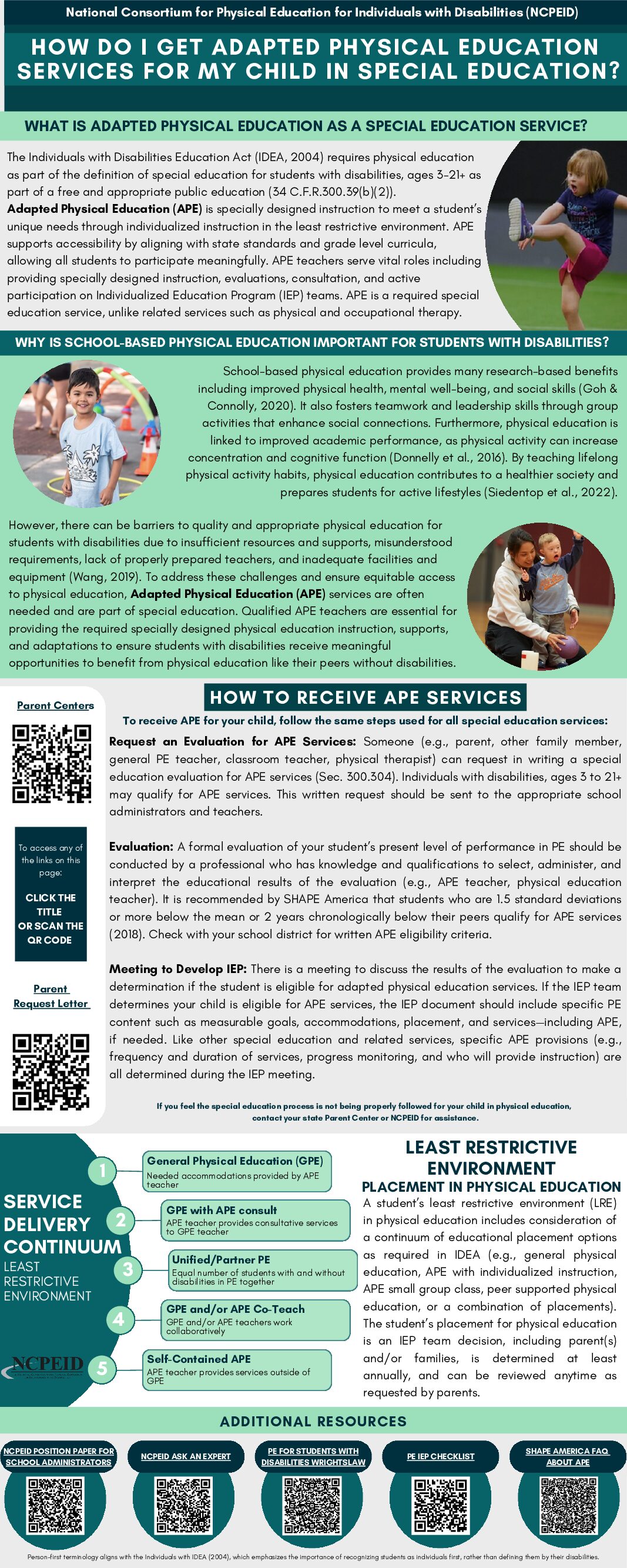
NCPEID_INFOGRAPHIC_FINAL
Adapted Physical Education
Adapted Physical Education (APE) is specially designed instruction to meet a student’s unique needs through individualized instruction in the least restrictive environment. APE supports accessibility by aligning with state standards and grade level curricula, allowing all students to participate meaningfully.
Kategorien: IEP
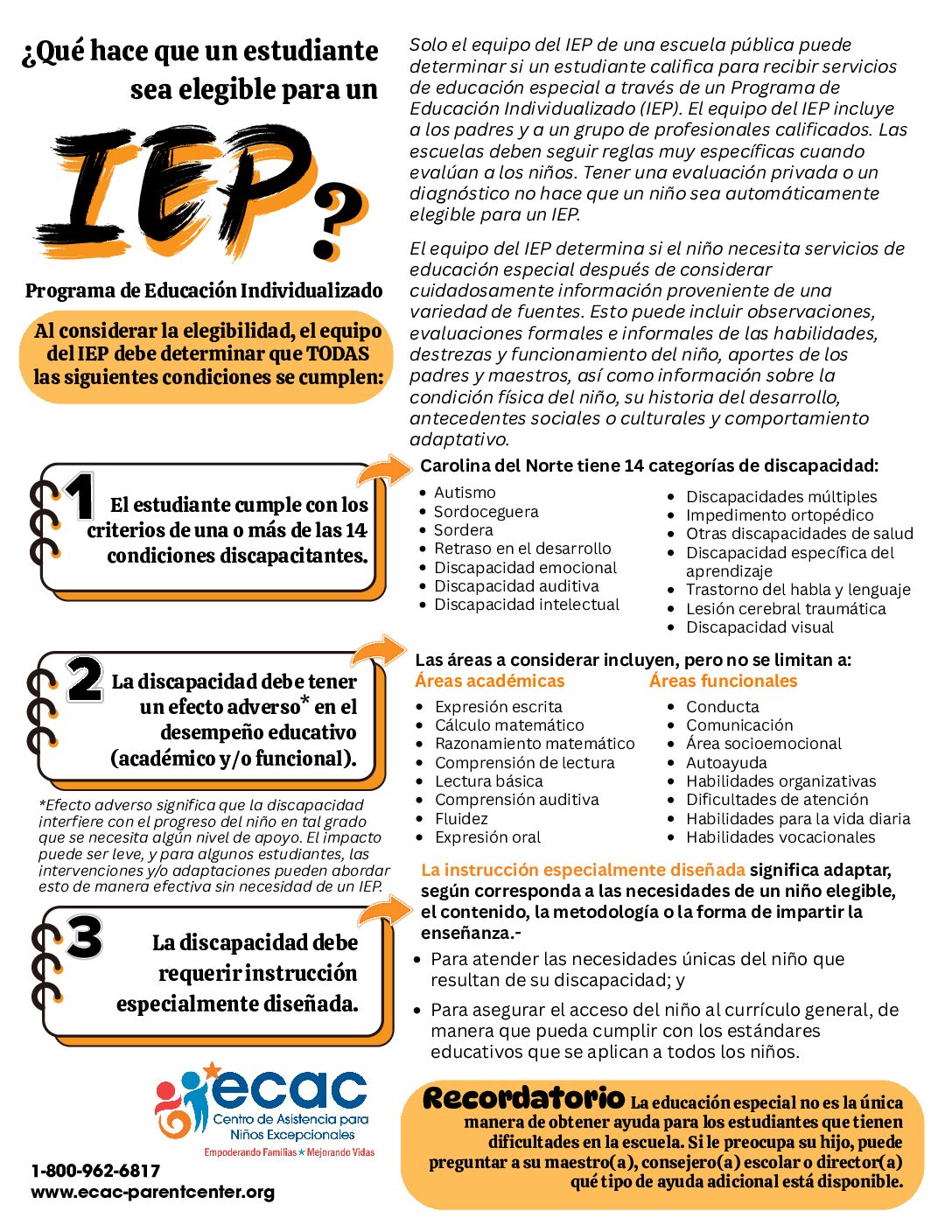
SPANISH -What makes a student eligible for an IEP
¿Qué hace que un estudiante sea elegible para un IEP? (What makes a student eligible for an IEP?)
Kategorien: IEP, Spanisch
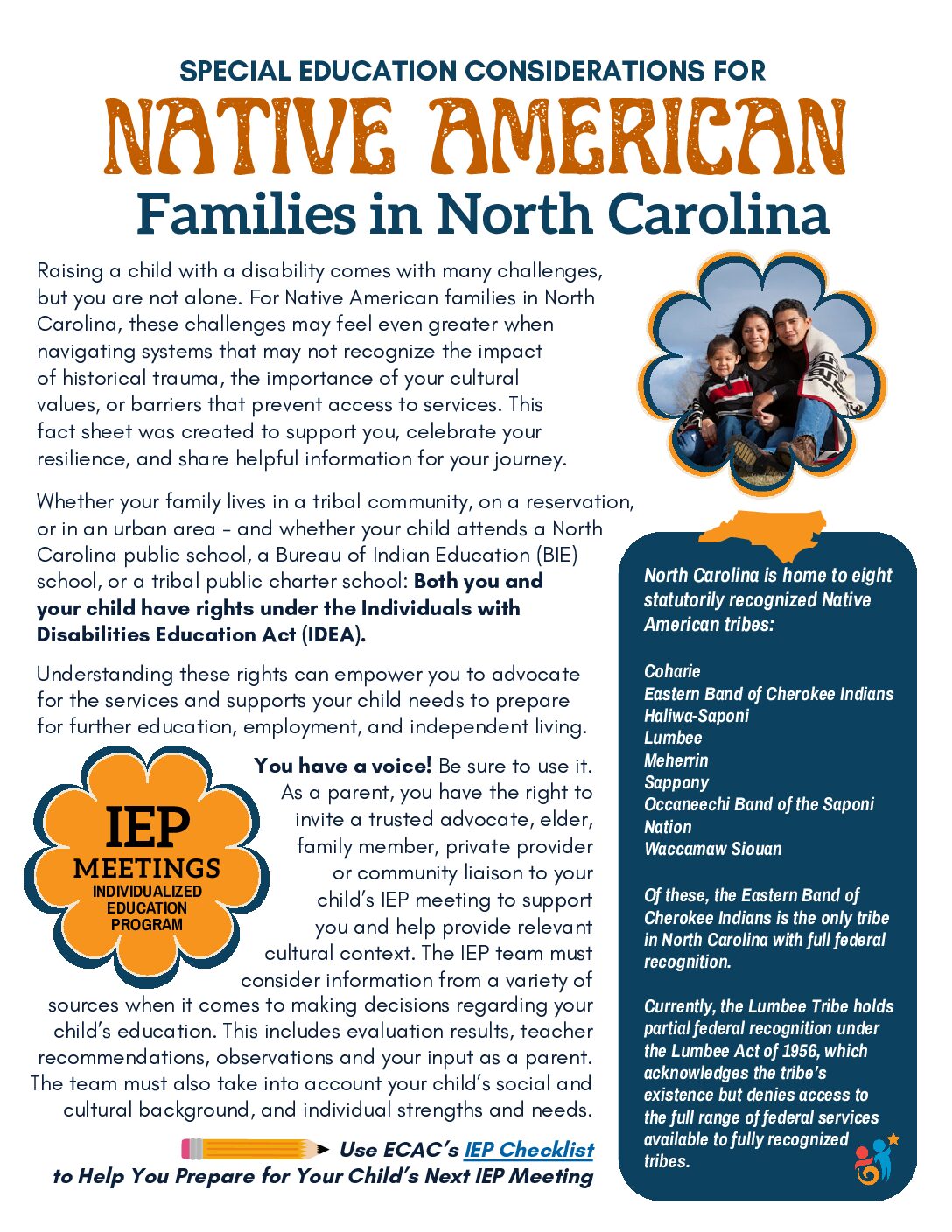
NA Fact Sheet 2025
Special Education Considerations for Native American Families in North Carolina
Raising a child with a disability comes with many challenges, but you are not alone. For Native American families in North Carolina, these challenges may feel even greater when navigating systems that may not recognize the impact of historical trauma, the importance of your cultural values, or barriers that prevent access to services. This fact sheet was created to support you, celebrate your resilience, and share helpful information for your journey.
Categories: Family Engagement, IEP
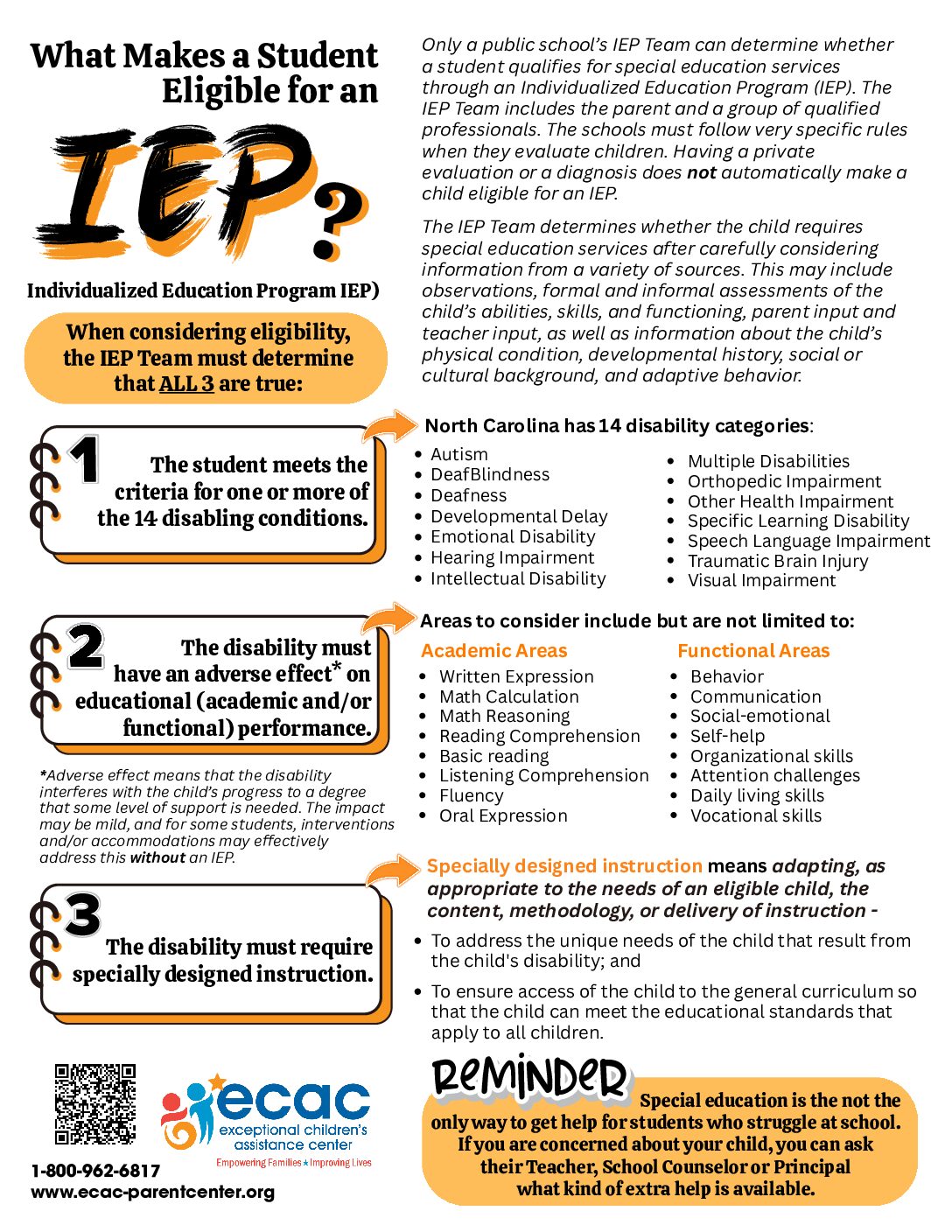
What makes a student eligible for an IEP (4)
What Makes a Student Eligible for an IEP?
Kategorien: IEP
SPANISH - Questions Parents can Ask About Behaviors (1)
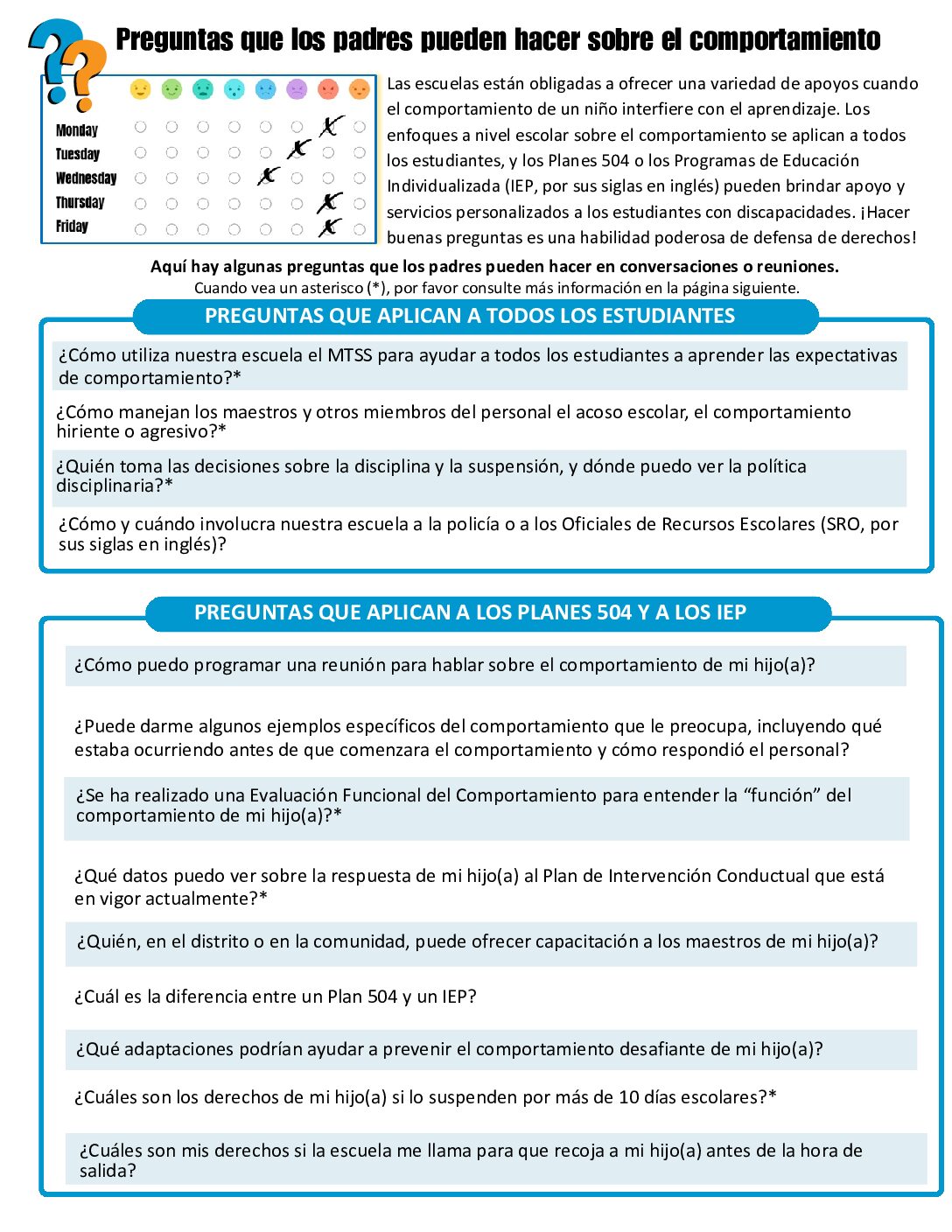
Preguntas que los padres pueden hacer sobre el comportamiento (Questions Parents Can Ask About Behavior)
Aquí hay algunas preguntas que los padres pueden hacer en conversaciones o reuniones.
Categories: Behavior, IEP, Spanish
Questions to ask at IEP
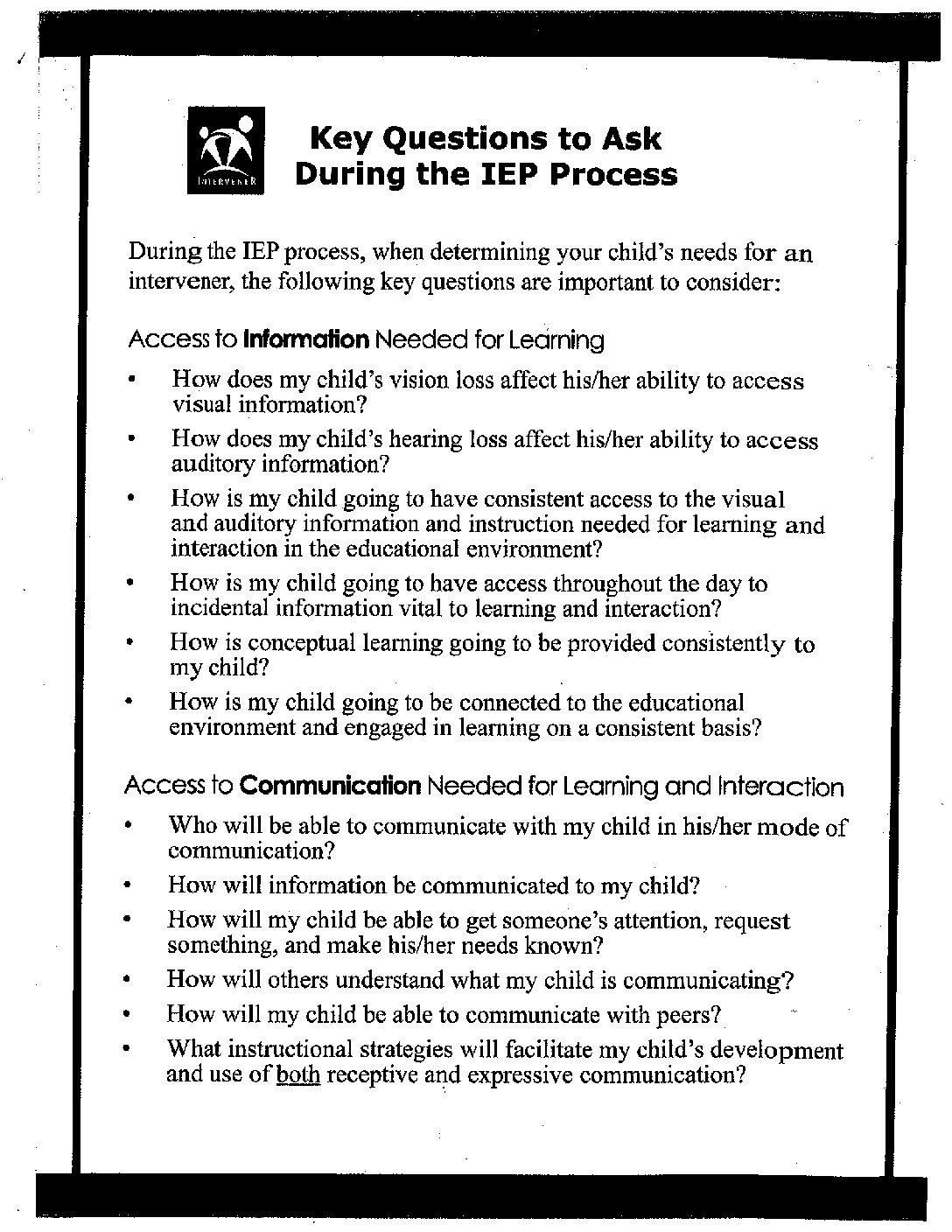
Key Questions to Ask During the IEP Process
During the IEP process, when determining your child's needs for an intervener, the following key questions are important to consider
Categories: IEP, NC Deaf-Blind Project
ENGLISH MDR 4.25
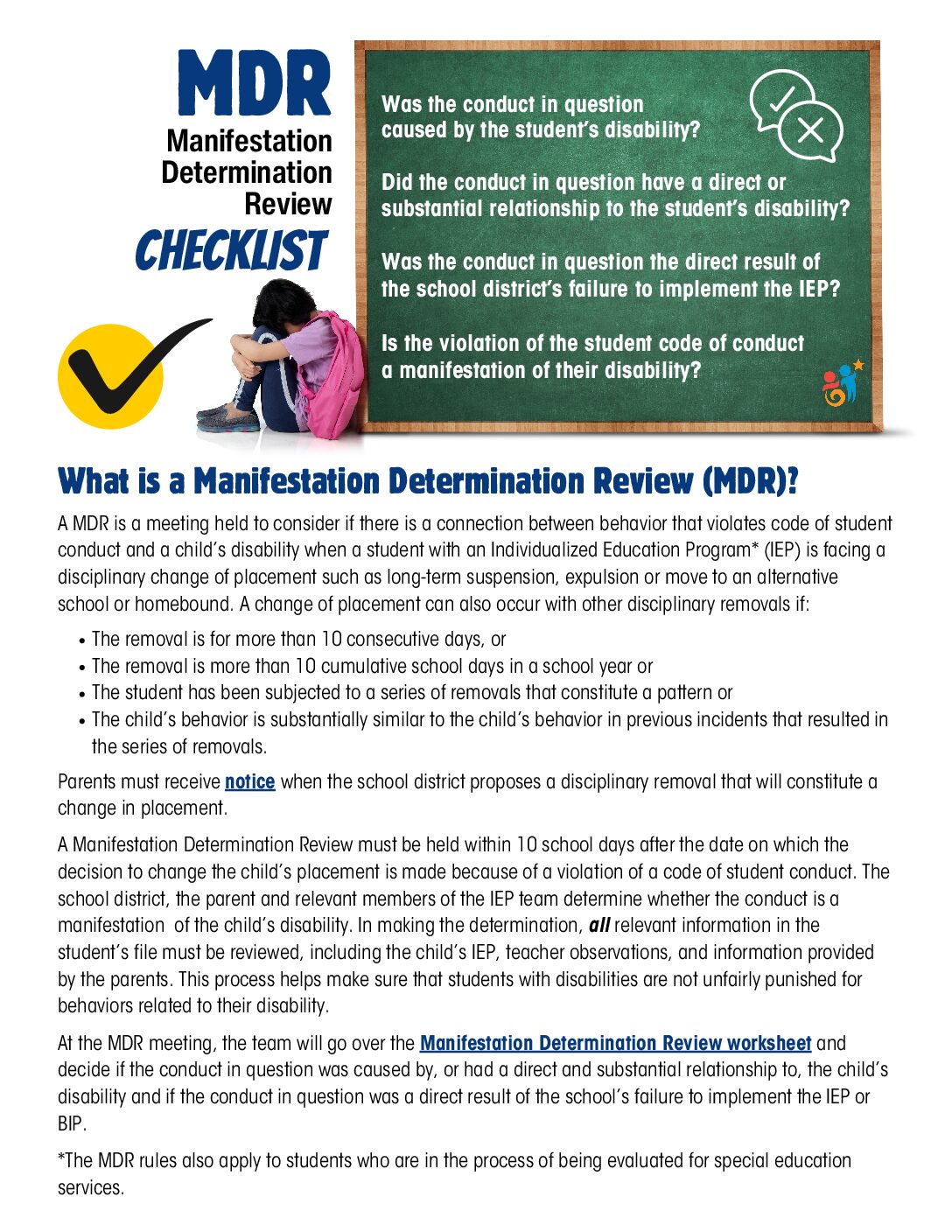
Manifestation Determination Review (MDR) Checklist
A MDR is a meeting held to consider if there is a connection between behavior that violates code of student conduct and a child’s disability when a student with an Individualized Education Program* (IEP) is facing a disciplinary change of placement such as long-term suspension, expulsion or move to an alternative school or homebound.
Categories: Behavior, IEP, Parent Rights, Special Education
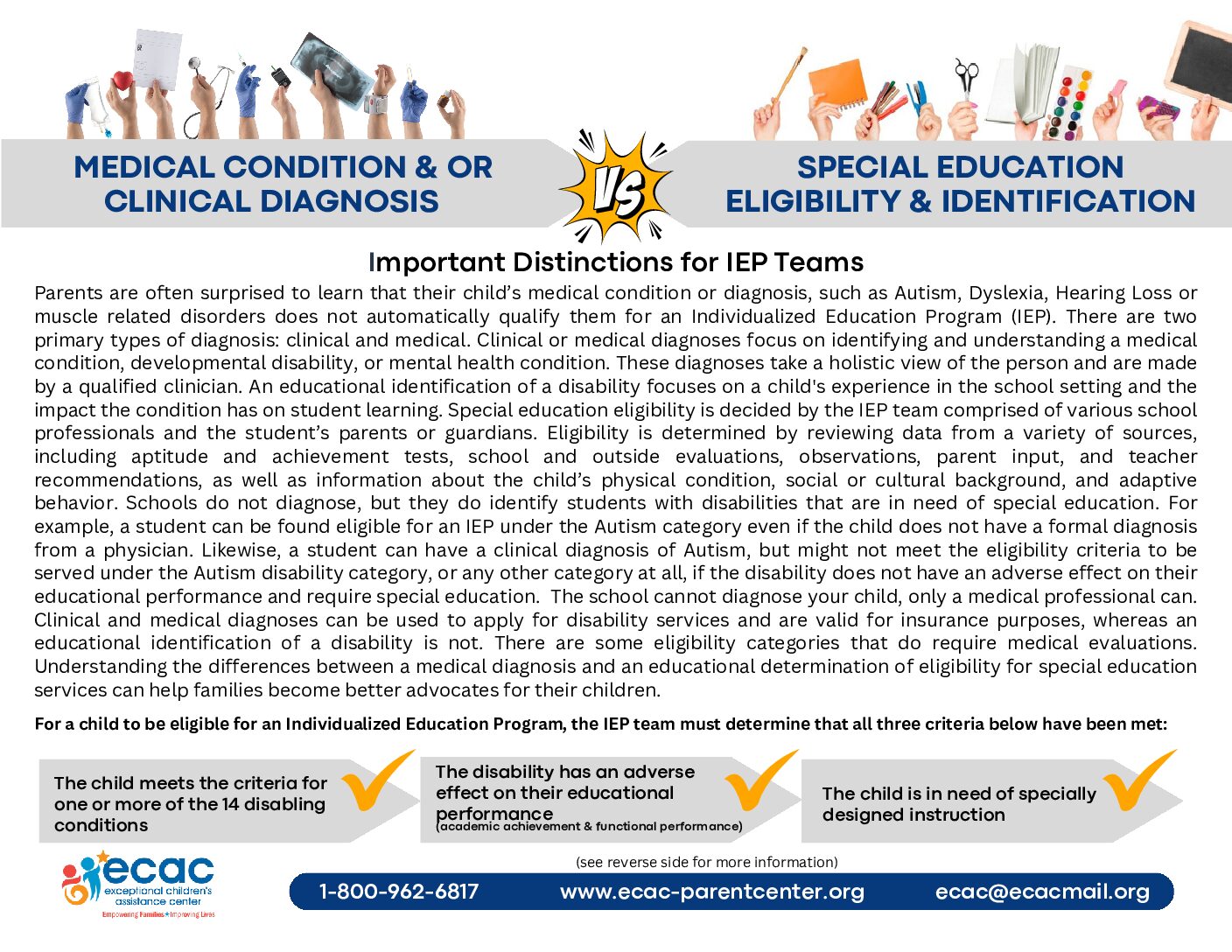
Medical vs Educational 2025
Medical Condition/Clinical Diagnosis vs. Special Education Eligibility & Identification
Parents are often surprised to learn that their child’s medical condition or diagnosis, such as Autism, Dyslexia, Hearing Loss or muscle related disorders does not automatically qualify them for an Individualized Education Program (IEP). Understanding the differences between a medical diagnosis and an educational determination of eligibility for special education services can help families become better advocates for their children.
Categories: Disability and Health Condition Specific Information, IEP, Special Education
IEP-Tip-Age-of-Majority
IEP Tip Sheet: Age of Majority
This tip sheet introduces and briefly defines age of majority. The age of majority is defined by state law and is the age at which the child is no longer a minor and assumes rights and responsibilities to make certain legal decisions. To learn more, review the additional resources and check with state law for specific information about age of majority in your state.
Categories: IEP, Special Education, Transition to Adulthood, Transitions
Transition_IEP_Tips
IEP Tip Sheet: Transition Services
This tip sheet introduces and briefly defines transition services. To learn more, review the additional resources and check with state law for supplemental requirements.
Categories: IEP, Special Education, Transition to Adulthood, Transitions
Date_Frequency_Services_IEP_Tips
IEP Tip Sheet: Dates, Frequency, Location and Duration of Services
This tip sheet provides information about dates, frequency, location, and duration of services. It includes a brief summary of federal regulations and tips for implementation. To learn more, review the additional resources and check with state law for additional requirements.
Kategorien: IEP, Sonderpädagogik
Participation_Assessment_IEP_Tips
IEP Tip Sheet: Participation in Assessment
This tip sheet provides information about participation in assessment and accommodations for assessments. It includes a brief summary of federal regulations and tips for implementation. To learn more, review the additional resources and check with state law for additional requirements.
Kategorien: IEP, Sonderpädagogik
Educational_Setting_IEP_Tips
IEP Tip Sheet: Explanation of Educational Setting
This tip sheet introduces and briefly defines educational settings that promote access to and progress in general education programming and provides tips for implementation. To learn more, review the additional resources and check with state law for supplemental requirements.
Kategorien: IEP, Sonderpädagogik

IEP-Tipps zur Erinnerung

  • JEDES Kind kann lernen und Fortschritte machen.
  • Die Schritte des IEP-Prozesses müssen in der richtigen Reihenfolge befolgt werden.
  • Das "I" in IEP steht für individualisiert. Der IEP für Ihr Kind muss Ihr Kind widerspiegeln.
  • Der IEP sollte spezifisch, detailliert und für jeden leicht verständlich sein - auch für jemanden, der nicht Mitglied des aktuellen IEP-Teams ist.
  • Sonderpädagogische Förderung ist KEIN Ort. Sonderpädagogik ist die Unterstützung und die Dienste, die Ihr Kind im Rahmen seines IEP erhält.
  • Im IEP ist die Einstufung NICHT ein Ort. Die Einstufung ist die Zeit, die mit sonderpädagogischen Leistungen verbracht wird.
  • Aussagen über das derzeitige akademische Leistungsniveau und die funktionale Leistungsfähigkeit Ihres Kindes sind wichtige Bestandteile des IEP. Sie müssen kristallklar und genau sein.
  • Die Ziele müssen logisch, messbar und für Ihr Kind relevant sein.
  • Das IEP-Team sollte zusammenarbeiten, um einen Konsens zu erreichen. Es gibt KEINE Abstimmung!
  • Bleiben Sie konzentriert! Lassen Sie sich nicht ablenken.
  • Die Eltern sind die Konstante - sie sorgen für Kontinuität in einem sich ständig verändernden IEP-Team.
  • Der Mangel an Geld und/oder anderen Ressourcen entbindet einen Schulbezirk nicht davon, die Bedürfnisse eines Kindes zu erfüllen.
  • Verlassen Sie die Sitzung nicht ohne eine Kopie des IEP Ihres Kindes!
  • Laden Sie eine Kopie der IEP-Checkliste der ECAC herunter ... und benutzen Sie sie!