كل طفل فريد من نوعه ، وبالتالي يجب أن يكون IEP كذلك
والتعليم الخاص هو التعليم الذي صمم خصيصا لتلبية الاحتياجات الفريدة للطفل المعوق. وهذا يعني التعليم الذي يتم تطويره بشكل فردي لتلبية احتياجات الطفل المحددة التي تنتج عن إعاقته.
ونتيجة لذلك، يمكن أن يكون برنامج التعليم الفردي (IEP) أحد أهم مكونات نجاح طفلك.
في هذه الصفحة، ستجد معلومات عامة ونصائح مفيدة وموارد قابلة للتنزيل - لمساعدتك في التنقل بشكل فعال في عملية IEP وضمان أفضل تجربة تعليمية لطفلك. إذا كان لديك أي أسئلة، لا تترددوا في الاتصال بنا.
يختلف التركيز والمناهج الدراسية لكل طفل
ولأن كل طفل فريد من نوعه، فمن الصعب إعطاء مثال شامل للتعليم الخاص. قد يكون بعض الطلاب يعملون في مرحلة ما قبل رياض الأطفال، والبعض الآخر في الصف الأول أو الثاني أو الثالث.
قد يكون هناك طلاب يركز تعليمهم الخاص في المقام الأول على تطور النطق واللغة، أو النمو المعرفي، أو الاحتياجات المتعلقة بإعاقة جسدية أو صعوبات في التعلم. التعليم الخاص لأي طالب يمكن أن تتكون من:
منهج دراسي فردي يختلف عن المنهج الدراسي للأقران من نفس العمر وغير المعاقين
(مثال: تعليم طالب أعمى القراءة والكتابة باستخدام طريقة برايل)
نفس المنهج (العام) كما هو الحال بالنسبة للأقران غير المعاقين ، مع تعديلات أو تعديلات للطالب
(مثال: تدريس الرياضيات في الصف الثالث ولكن بما في ذلك استخدام أدوات العد والتكنولوجيا المساعدة للطالب)
مزيج من هذه العناصر
ما يغطي IEP ، وما لا
ومن المهم أيضا أن نتذكر أن التعليم والخدمات والدعم المبين في التعليم المتكامل للطفل لا تغطي بالضرورة التعليم الكامل للطفل. ولا يتناول البرنامج الدولي للتعليم سوى الاحتياجات التعليمية الناجمة عن إعاقة الطفل. إذا كان الطفل بحاجة إلى دعم تعليمي خاص طوال اليوم الدراسي، لجميع الأنشطة، فإن البرنامج الدولي للتعليم سيغطي جميع هذه الاحتياجات.
إذا لم يكن الطفل بحاجة إلى دعم تعليمي خاص في مجال واحد أو أكثر (على سبيل المثال، التربية البدنية أو الموسيقى أو العلوم)، فإن برنامج التعليم الدولي لن يشمل هذه المواد. ويُدخل الطفل عليها من خلال المنهج الدراسي العام/الصف، دون أي خدمات تعليمية خاصة إضافية.
موارد IEP
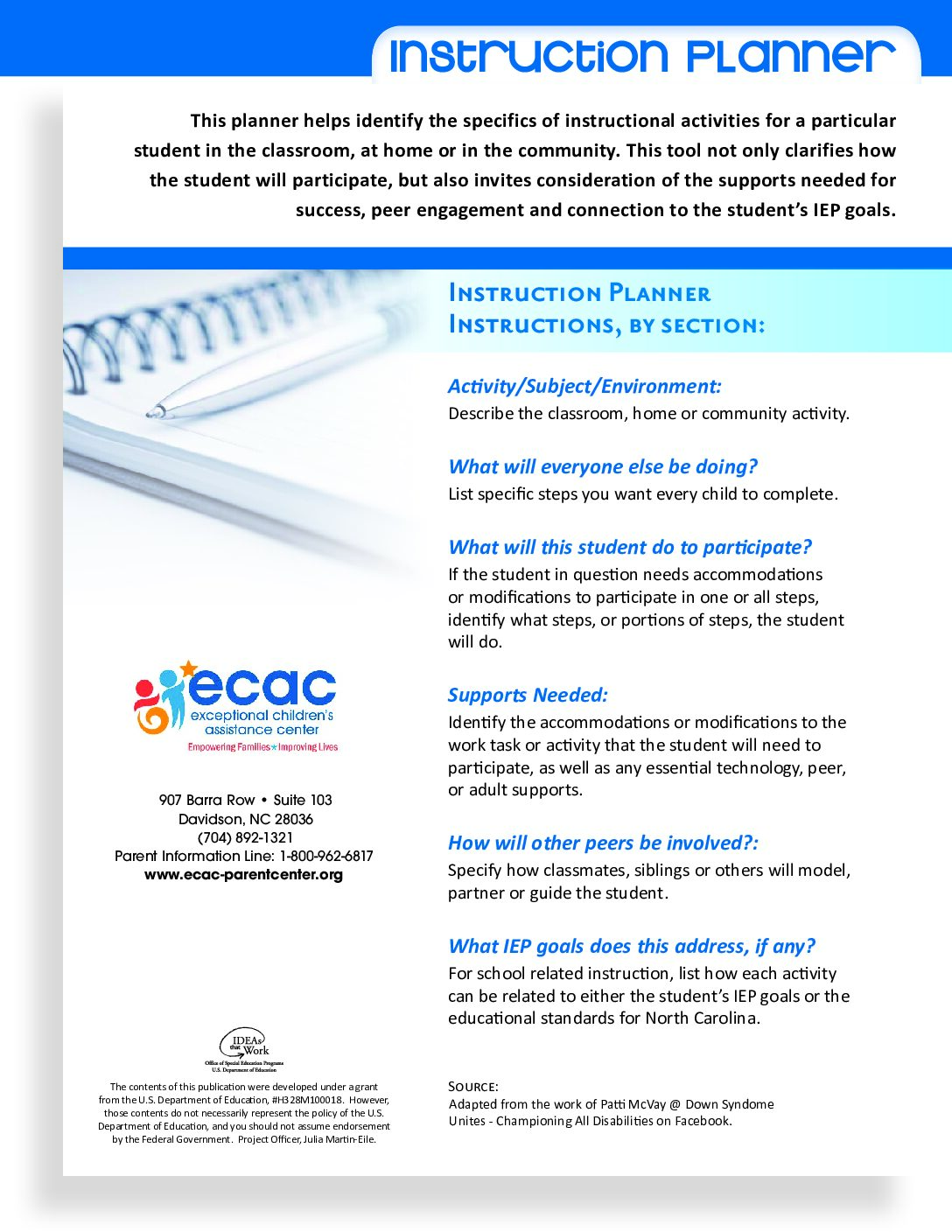
Instruction Planner
This planner helps identify the specifics of instructional activities for a particular student in the classroom, at home or in the community. This tool not only clarifies how the student will participate, but also invites consideration of the supports needed for success, peer engagement and connection to the student’s IEP goals.
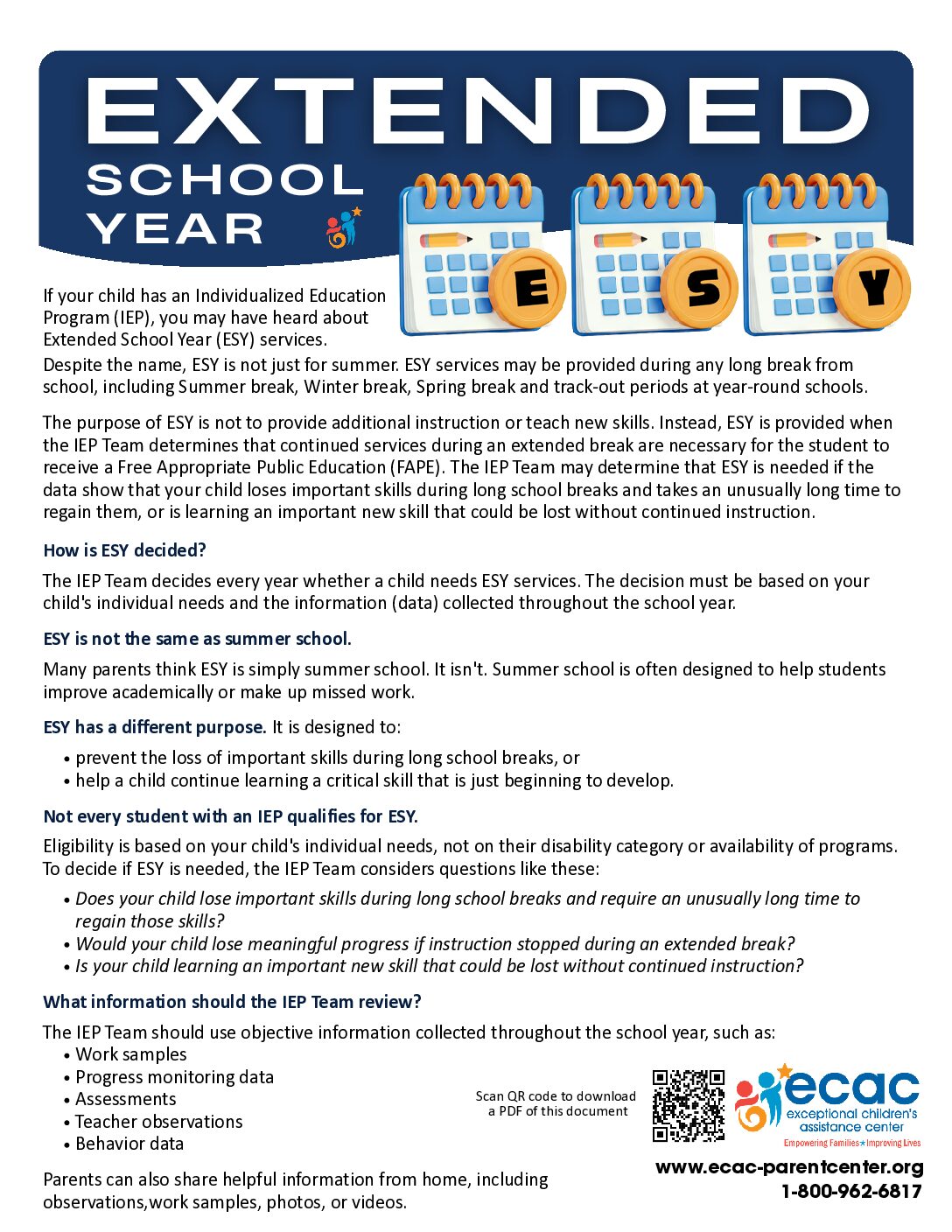
If your child has an Individualized Education Program (IEP), you may have heard about Extended School Year (ESY) services. Despite the name, ESY is not just for summer. ESY services may be provided during any long break from school, including Summer break, Winter break, Spring break and track-out periods at year-round schools.
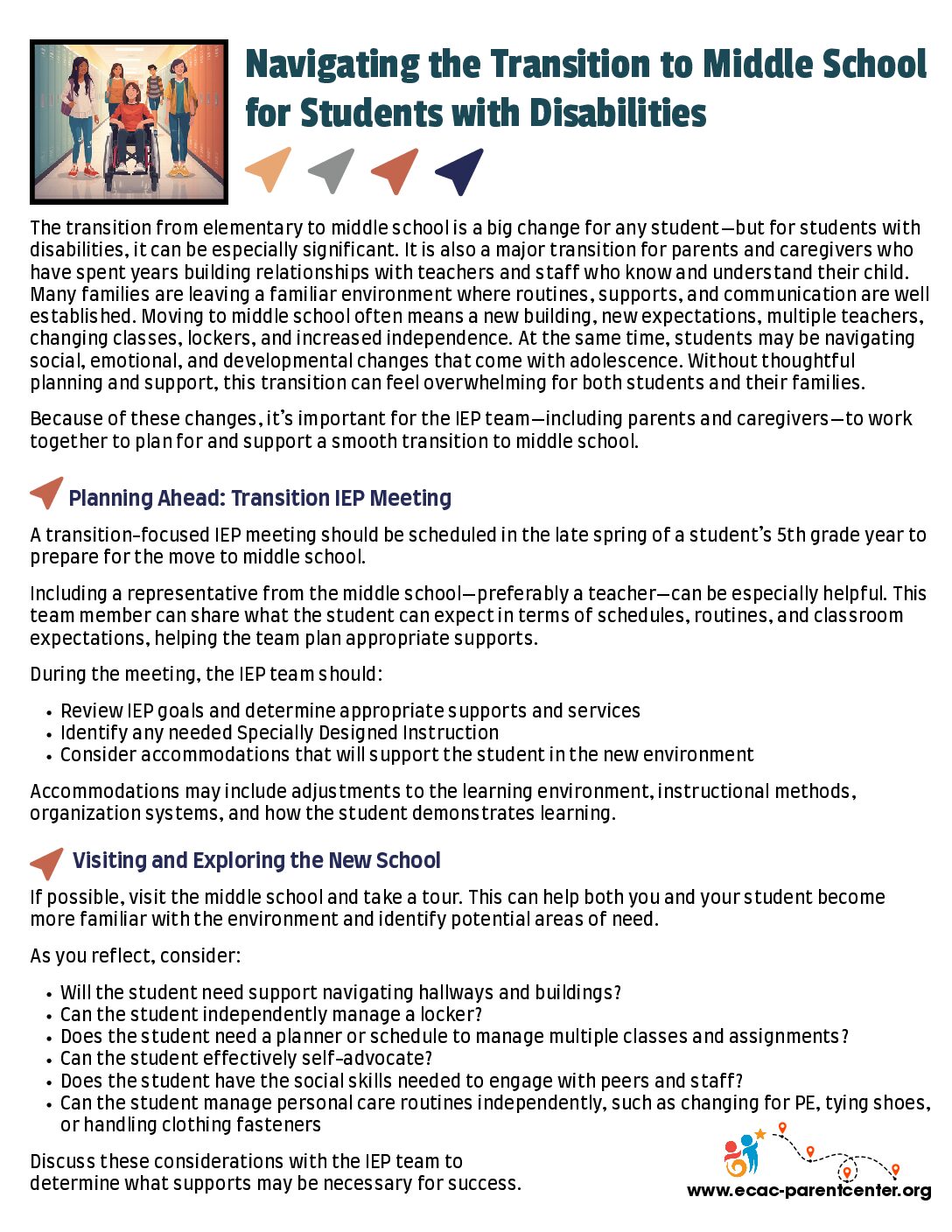
The transition from elementary to middle school is a big change for any student—but for students with disabilities, it can be especially significant. Because of these changes, it’s important for the IEP team—including parents and caregivers—to work together to plan for and support a smooth transition to middle school.
At ECAC, we believe that informed and empowered families are essential partners in achieving positive outcomes for children with disabilities. Our IEP Road Map is designed for North Carolina families whose child has been found eligible for an Individualized Education Program (IEP). This guide is intended to help families understand the IEP development process, navigate the North Carolina IEP forms and meaningfully participate in their child’s IEP meetings.
In this document, you will find a range of case scenarios suitable for high school students. Each case example describes a student with different strengths, abilities, needs, and desires. All these students are required to have a transition component in their IEP that includes measurable postsecondary and annual goals. Check out each example for ideas on how to write goals in education, employment, and independent living, and to learn about framing the transition services, activities, and coursework that each student needs to meet their post-school goals and desires.
Categories: IEP, Transition to Adulthood - Employment and Postsecondary Education
Transition IEP - Student
The Transition IEP is a plan that focuses on your future. It has your goals and includes the services and supports you need to be successful in school. Your Transition IEP also prepares you for life after school is over. When you are age 14, your team, which includes you and your parents, starts important planning for your future. This is called Transition Planning (moving from childhood to adulthood). The Transition IEP is your plan for reaching your adult goals.
Categories: IEP, Transition to Adulthood - Employment and Postsecondary Education
The Transition IEP - For Parents
Under the Individuals with Disabilities Education Act (IDEA), students with disabilities must have a Transition Plan by age 16, earlier if appropriate. The Transition plan is part of the Individualized Education Program (IEP). It is not a separate document, and it is often called the Transition IEP.
Categories: IEP, Transition to Adulthood - Employment and Postsecondary Education
Transition Planning for Youth in Foster Care
An Individualized Educational Program (IEP) and Foster Care Transition Plan can help you set goals that will let you achieve your dreams. You have the right to be actively involved and make decisions in both your school Transition IEP and Foster Care Transition Plan. This is your future so be sure you are a part of it.
Categories: IEP, Transition to Adulthood - Employment and Postsecondary Education
Transition IEP Activities
Transition activities should relate to the planned postsecondary outcomes and annual transition goals in the IEP. These services and activities should occur while your child is still in high school and can occur on or off school grounds
Categories: IEP, Transition to Adulthood - Employment and Postsecondary Education, Transition-age Youth
Self Directed IEPs - Student Fact Sheet
Your IEP (Individualized Education Program) is like a roadmap for planning your life after high school. It shows where you want to be and how you are going to get there. Paying attention to what is in your IEP is how you can make sure that you learn the skills in high school you need to live the life you want to live after high school.
Categories: IEP, Transition to Adulthood - Employment and Postsecondary Education, Transition-age Youth
Self Directed IEPs - Parent Fact Sheet
Your child’s (young adult’s) Individualized Education Program (IEP) is like a roadmap for planning their life after high school. It shows where the student wants to be and how they are going to get there. The earlier students are involved in developing their IEP, the better. Participating in the IEP process helps develop self-advocacy skills. They also learn the importance of the IEP. Paying attention to what is in the IEP is part of how students make sure they learn skills in high school that they need to have the life they want after high school.
Categories: IEP, Transition to Adulthood - Employment and Postsecondary Education
Who Is On My IEP Team?
The Individualized Education Program (IEP) is a roadmap for a student with a disability to get from a starting point to an end goal. It changes when your needs change and is the basis for your education. There are different people who can attend your IEP meeting and help make your goals and help plan your future.
Categories: IEP, Transition to Adulthood - Employment and Postsecondary Education
Roles Around the IEP Table
The Individualized Education Program (IEP) is a roadmap for a student with a disability to get from a starting point to an end goal. It changes when the student’s needs change and is the basis for your child’s education. The parent is an equal member of the IEP team. T
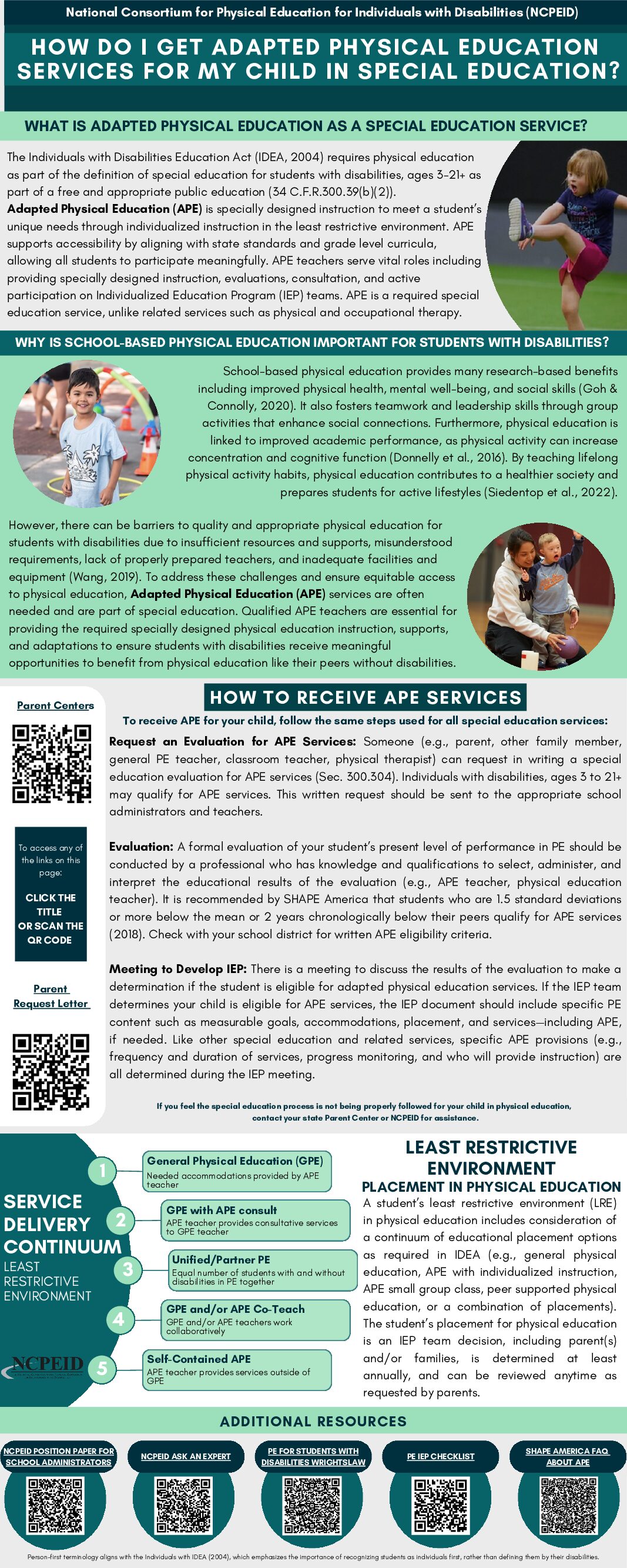
Adapted Physical Education (APE) is specially designed instruction to meet a student’s unique needs through individualized instruction in the least restrictive environment. APE supports accessibility by aligning with state standards and grade level curricula, allowing all students to participate meaningfully.
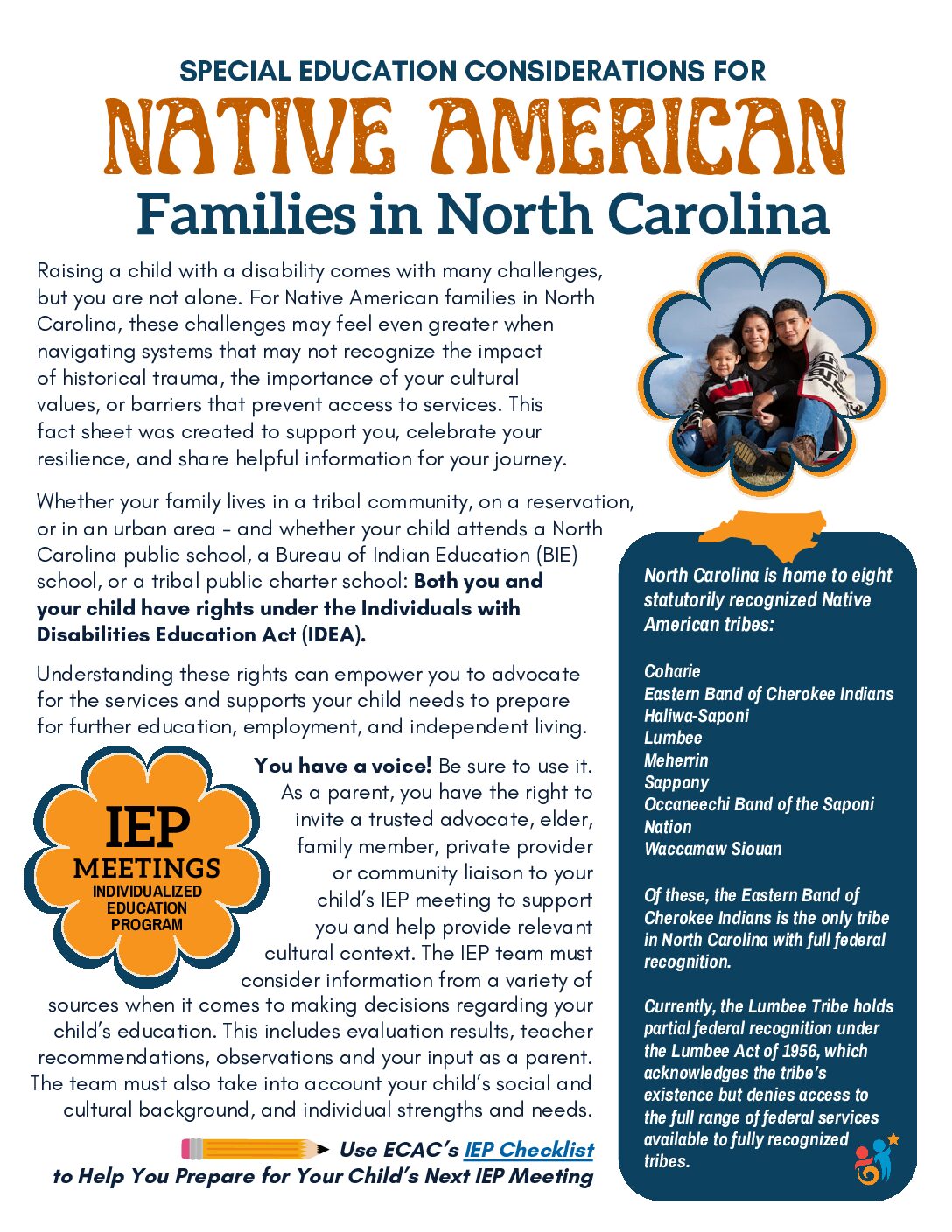
Special Education Considerations for Native American Families in North Carolina
Raising a child with a disability comes with many challenges, but you are not alone. For Native American families in North Carolina, these challenges may feel even greater when navigating systems that may not recognize the impact of historical trauma, the importance of your cultural values, or barriers that prevent access to services. This fact sheet was created to support you, celebrate your resilience, and share helpful information for your journey.
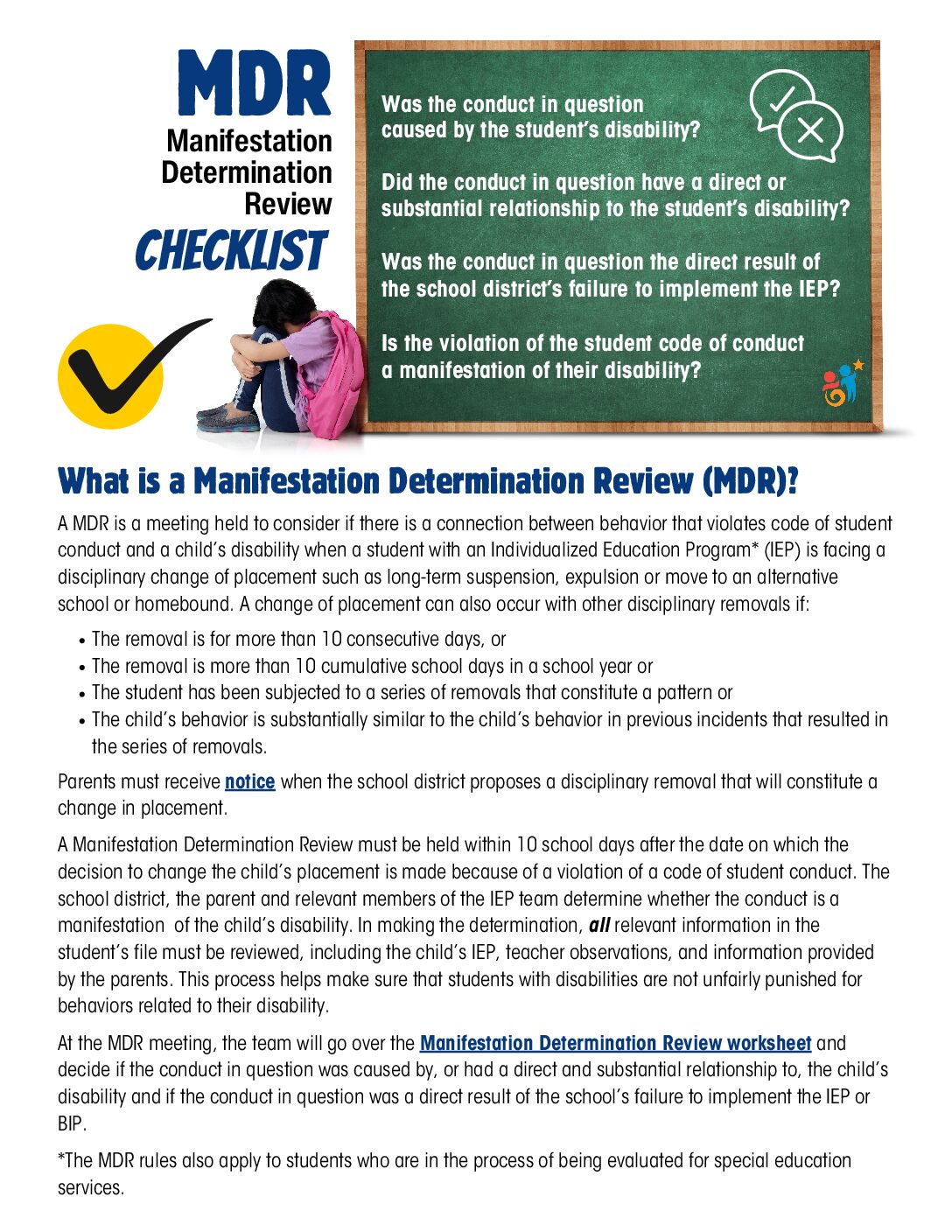
A MDR is a meeting held to consider if there is a connection between behavior that violates code of student conduct and a child’s disability when a student with an Individualized Education Program* (IEP) is facing a disciplinary change of placement such as long-term suspension, expulsion or move to an alternative school or homebound.