Chaque enfant est unique, c'est pourquoi le PEI doit être aussi
L'éducation spéciale est un enseignement spécialement conçu pour répondre aux besoins uniques d'un enfant handicapé. Cela signifie que l'enseignement est développé individuellement pour répondre aux besoins spécifiques d'un enfant qui résultent de son handicap.
Par conséquent, le programme d'enseignement individualisé (PEI) peut être l'un des éléments les plus critiques de la réussite de votre enfant.
Sur cette page, vous trouverez des informations générales, des conseils utiles et des ressources téléchargeables pour vous aider à naviguer efficacement dans le processus du PEI et garantir la meilleure expérience éducative possible pour votre enfant. Si vous avez des questions, n'hésitez pas à nous contacter.
L'accent et le programme d'études varient selon les enfants
Chaque enfant étant unique, il est difficile de donner un exemple global d'éducation spéciale. Certains élèves peuvent travailler au niveau de la pré-maternelle, d'autres au niveau de la première, deuxième ou troisième année.
Il peut y avoir des élèves dont l'éducation spécialisée est principalement axée sur le développement de la parole et du langage, le développement cognitif ou les besoins liés à un handicap physique ou d'apprentissage. L'éducation spéciale pour tout élève peut consister en :
Un programme d'études individualisé, différent de celui des pairs du même âge et non handicapés
(Exemple : apprendre à un élève aveugle à lire et à écrire en braille)
Le même programme (général) que celui des pairs non handicapés, avec des adaptations ou des modifications faites pour l'élève
(Exemple : Enseignement des mathématiques en 3e année, mais avec l'utilisation d'outils de comptage et de technologies d'assistance pour l'élève)
Une combinaison de ces éléments
Ce que le PEI couvre et ce qu'il ne couvre pas
Il est également important de se rappeler que l'éducation, les services et les soutiens décrits dans le PEI d'un enfant ne couvrent pas nécessairement toute l'éducation de cet enfant. Le PEI ne couvre que les besoins éducatifs résultant du handicap de l'enfant. Si un enfant a besoin d'une aide à l'éducation spécialisée tout au long de la journée scolaire, pour toutes les activités, le PEI couvrira tous ces besoins.
Si l'enfant n'a pas besoin d'une aide à l'éducation spécialisée dans un ou plusieurs domaines (par exemple, l'éducation physique, la musique ou les sciences), alors le PEI n'inclura pas ces matières. L'enfant y accède par le biais du programme d'études général/la classe, sans services d'éducation spécialisée supplémentaires.
Ressources de l'IEP
Extended School Year (ESY)
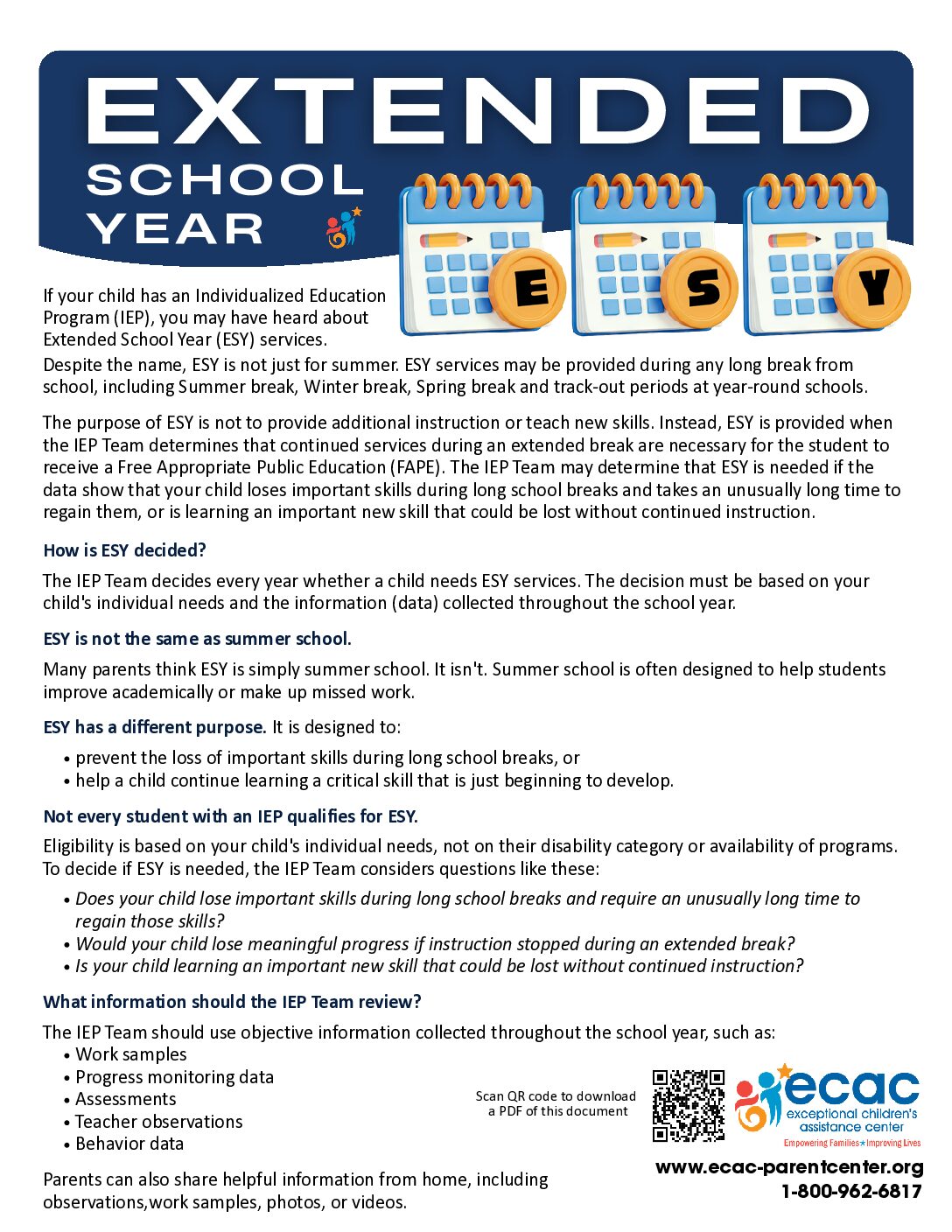
If your child has an Individualized Education Program (IEP), you may have heard about Extended School Year (ESY) services. Despite the name, ESY is not just for summer. ESY services may be provided during any long break from school, including Summer break, Winter break, Spring break and track-out periods at year-round schools.
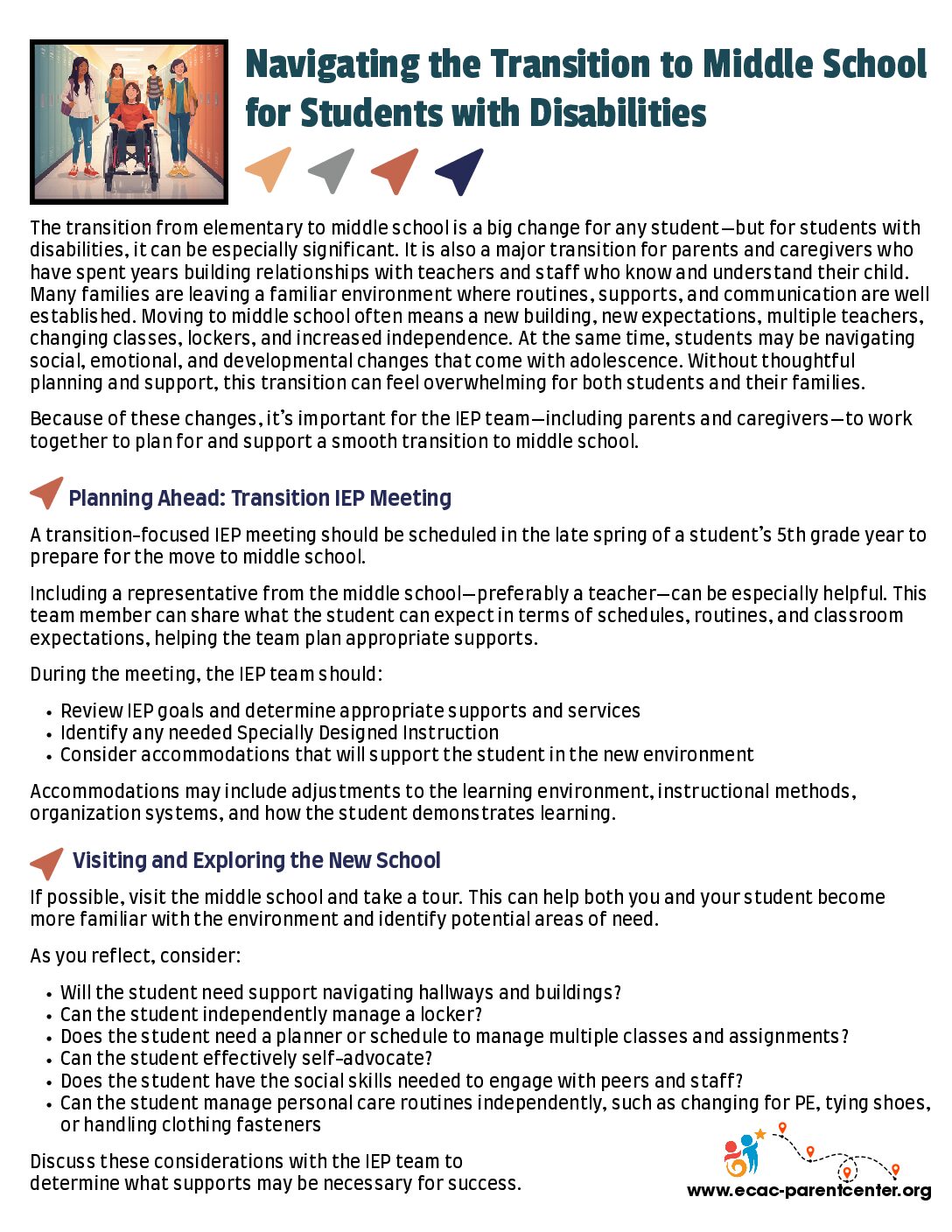
The transition from elementary to middle school is a big change for any student—but for students with disabilities, it can be especially significant. Because of these changes, it’s important for the IEP team—including parents and caregivers—to work together to plan for and support a smooth transition to middle school.
At ECAC, we believe that informed and empowered families are essential partners in achieving positive outcomes for children with disabilities. Our IEP Road Map is designed for North Carolina families whose child has been found eligible for an Individualized Education Program (IEP). This guide is intended to help families understand the IEP development process, navigate the North Carolina IEP forms and meaningfully participate in their child’s IEP meetings.
In this document, you will find a range of case scenarios suitable for high school students. Each case example describes a student with different strengths, abilities, needs, and desires. All these students are required to have a transition component in their IEP that includes measurable postsecondary and annual goals. Check out each example for ideas on how to write goals in education, employment, and independent living, and to learn about framing the transition services, activities, and coursework that each student needs to meet their post-school goals and desires.
Categories: IEP, Transition to Adulthood - Employment and Postsecondary Education
Transition IEP - Student
The Transition IEP is a plan that focuses on your future. It has your goals and includes the services and supports you need to be successful in school. Your Transition IEP also prepares you for life after school is over. When you are age 14, your team, which includes you and your parents, starts important planning for your future. This is called Transition Planning (moving from childhood to adulthood). The Transition IEP is your plan for reaching your adult goals.
Categories: IEP, Transition to Adulthood - Employment and Postsecondary Education
The Transition IEP - For Parents
Under the Individuals with Disabilities Education Act (IDEA), students with disabilities must have a Transition Plan by age 16, earlier if appropriate. The Transition plan is part of the Individualized Education Program (IEP). It is not a separate document, and it is often called the Transition IEP.
Categories: IEP, Transition to Adulthood - Employment and Postsecondary Education
Transition Planning for Youth in Foster Care
An Individualized Educational Program (IEP) and Foster Care Transition Plan can help you set goals that will let you achieve your dreams. You have the right to be actively involved and make decisions in both your school Transition IEP and Foster Care Transition Plan. This is your future so be sure you are a part of it.
Categories: IEP, Transition to Adulthood - Employment and Postsecondary Education
Transition IEP Activities
Transition activities should relate to the planned postsecondary outcomes and annual transition goals in the IEP. These services and activities should occur while your child is still in high school and can occur on or off school grounds
Categories: IEP, Transition to Adulthood - Employment and Postsecondary Education, Transition-age Youth
Self Directed IEPs - Student Fact Sheet
Your IEP (Individualized Education Program) is like a roadmap for planning your life after high school. It shows where you want to be and how you are going to get there. Paying attention to what is in your IEP is how you can make sure that you learn the skills in high school you need to live the life you want to live after high school.
Categories: IEP, Transition to Adulthood - Employment and Postsecondary Education, Transition-age Youth
Self Directed IEPs - Parent Fact Sheet
Your child’s (young adult’s) Individualized Education Program (IEP) is like a roadmap for planning their life after high school. It shows where the student wants to be and how they are going to get there. The earlier students are involved in developing their IEP, the better. Participating in the IEP process helps develop self-advocacy skills. They also learn the importance of the IEP. Paying attention to what is in the IEP is part of how students make sure they learn skills in high school that they need to have the life they want after high school.
Categories: IEP, Transition to Adulthood - Employment and Postsecondary Education
Who Is On My IEP Team?
The Individualized Education Program (IEP) is a roadmap for a student with a disability to get from a starting point to an end goal. It changes when your needs change and is the basis for your education. There are different people who can attend your IEP meeting and help make your goals and help plan your future.
Categories: IEP, Transition to Adulthood - Employment and Postsecondary Education
Roles Around the IEP Table
The Individualized Education Program (IEP) is a roadmap for a student with a disability to get from a starting point to an end goal. It changes when the student’s needs change and is the basis for your child’s education. The parent is an equal member of the IEP team. T
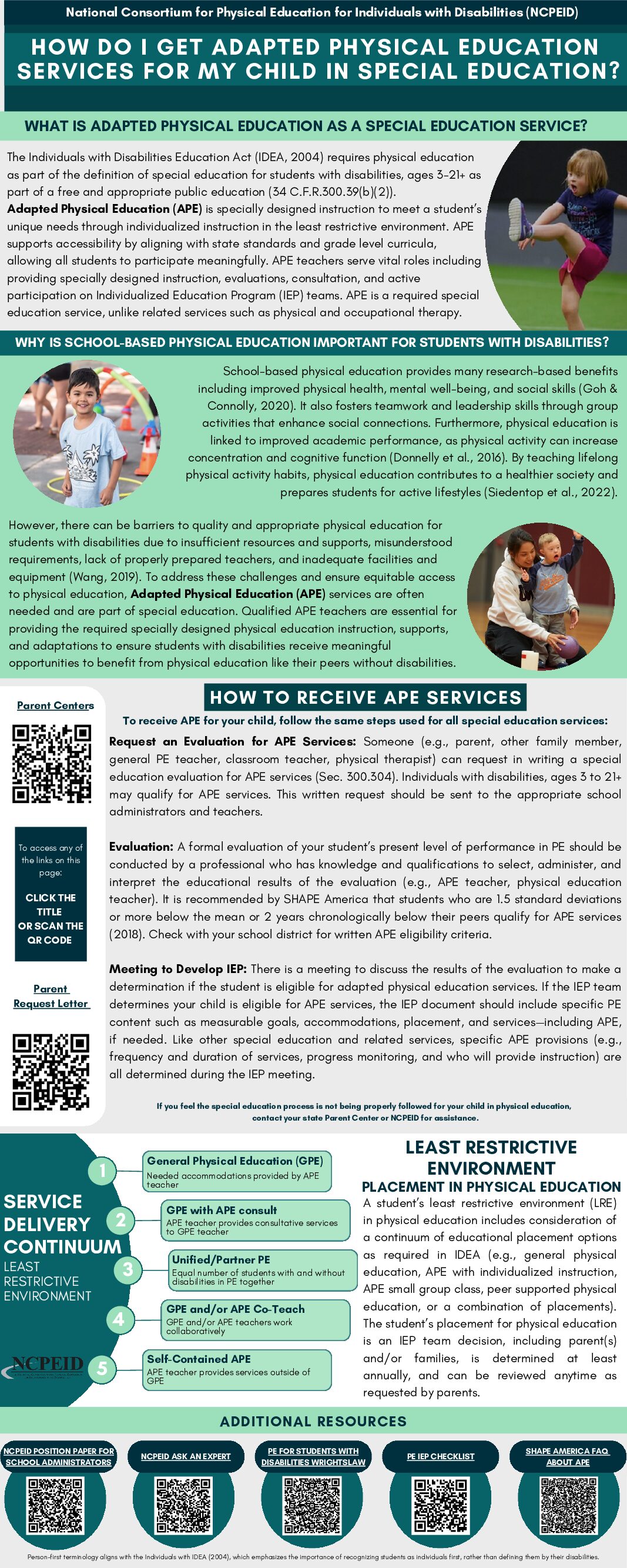
Adapted Physical Education (APE) is specially designed instruction to meet a student’s unique needs through individualized instruction in the least restrictive environment. APE supports accessibility by aligning with state standards and grade level curricula, allowing all students to participate meaningfully.
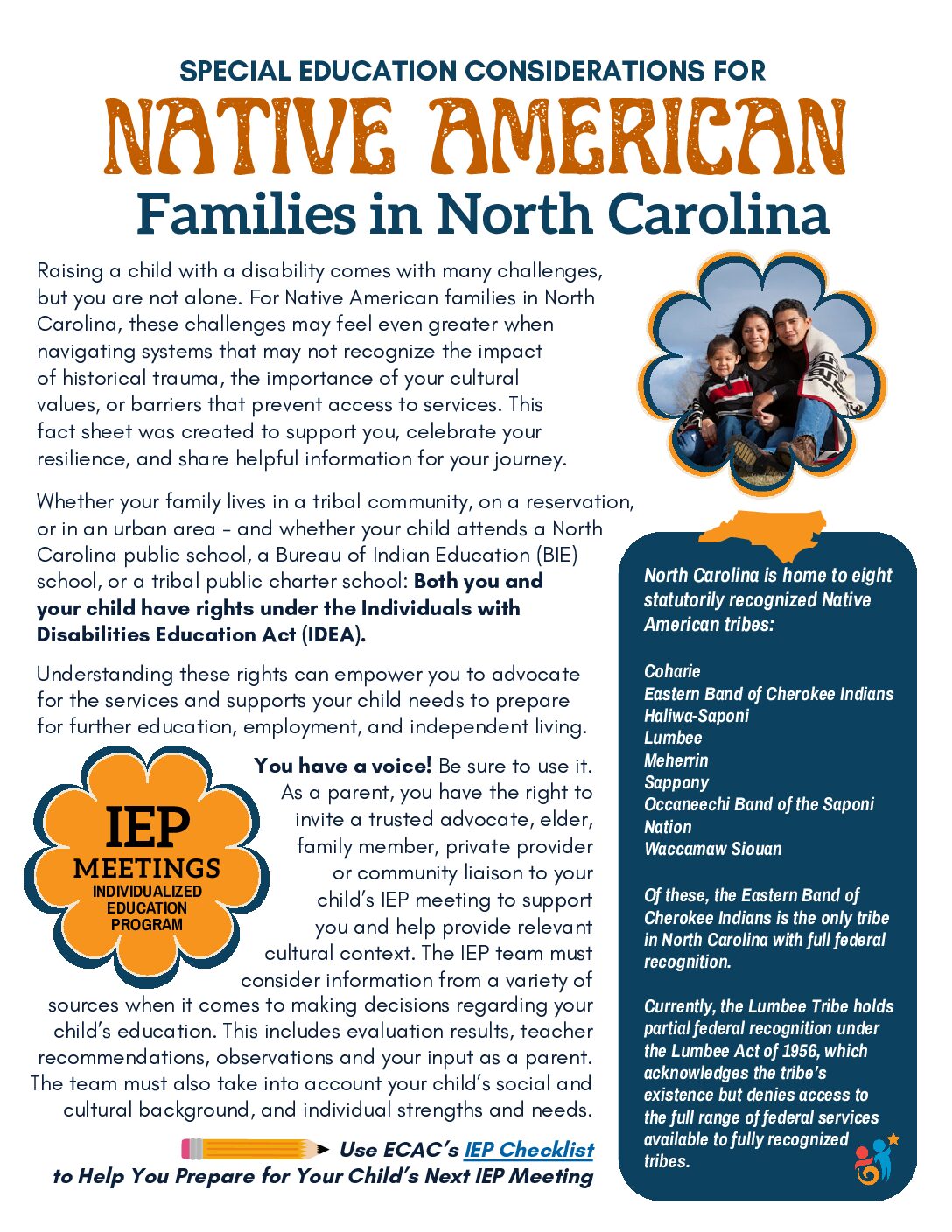
Special Education Considerations for Native American Families in North Carolina
Raising a child with a disability comes with many challenges, but you are not alone. For Native American families in North Carolina, these challenges may feel even greater when navigating systems that may not recognize the impact of historical trauma, the importance of your cultural values, or barriers that prevent access to services. This fact sheet was created to support you, celebrate your resilience, and share helpful information for your journey.
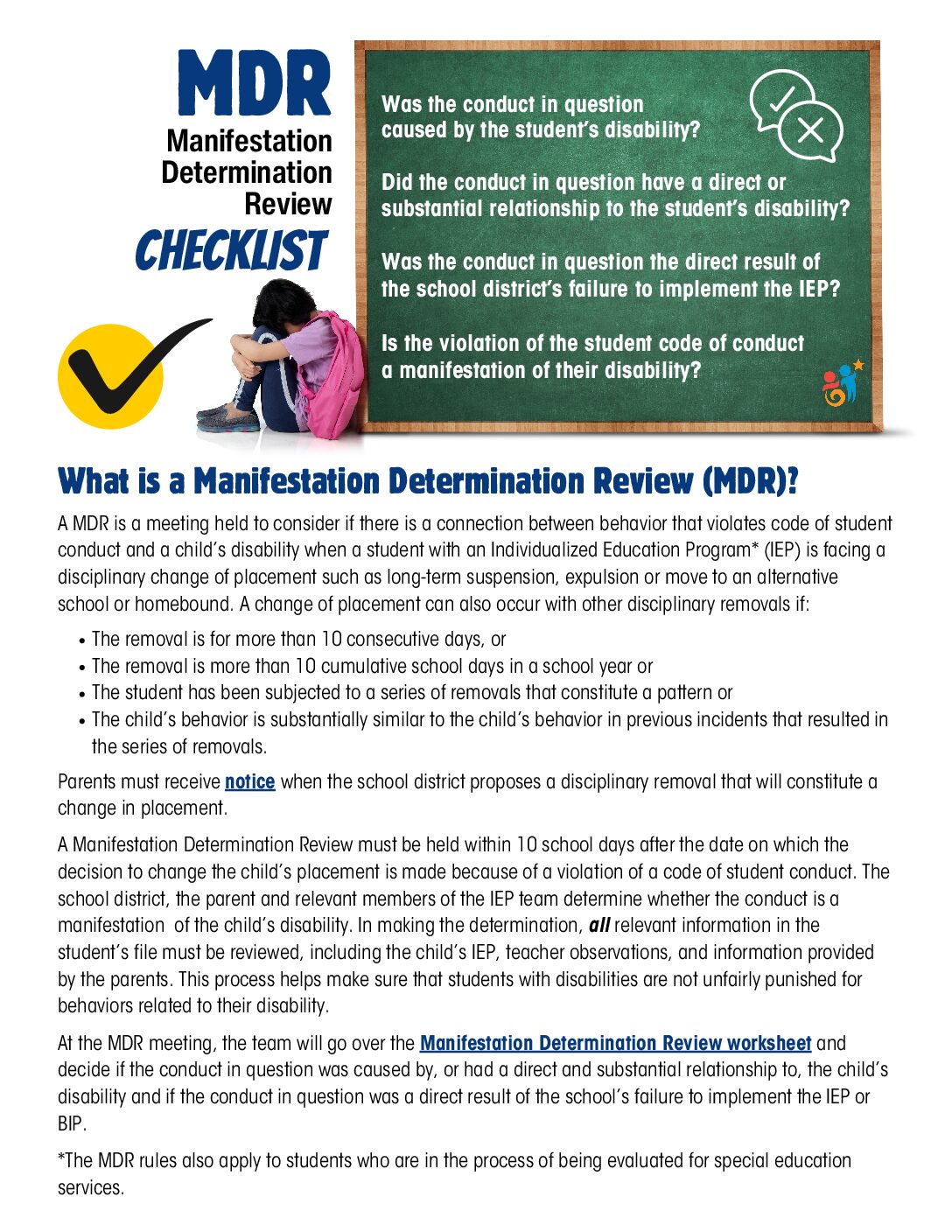
A MDR is a meeting held to consider if there is a connection between behavior that violates code of student conduct and a child’s disability when a student with an Individualized Education Program* (IEP) is facing a disciplinary change of placement such as long-term suspension, expulsion or move to an alternative school or homebound.
Categories: Behavior, IEP, Parent Rights, Special Education
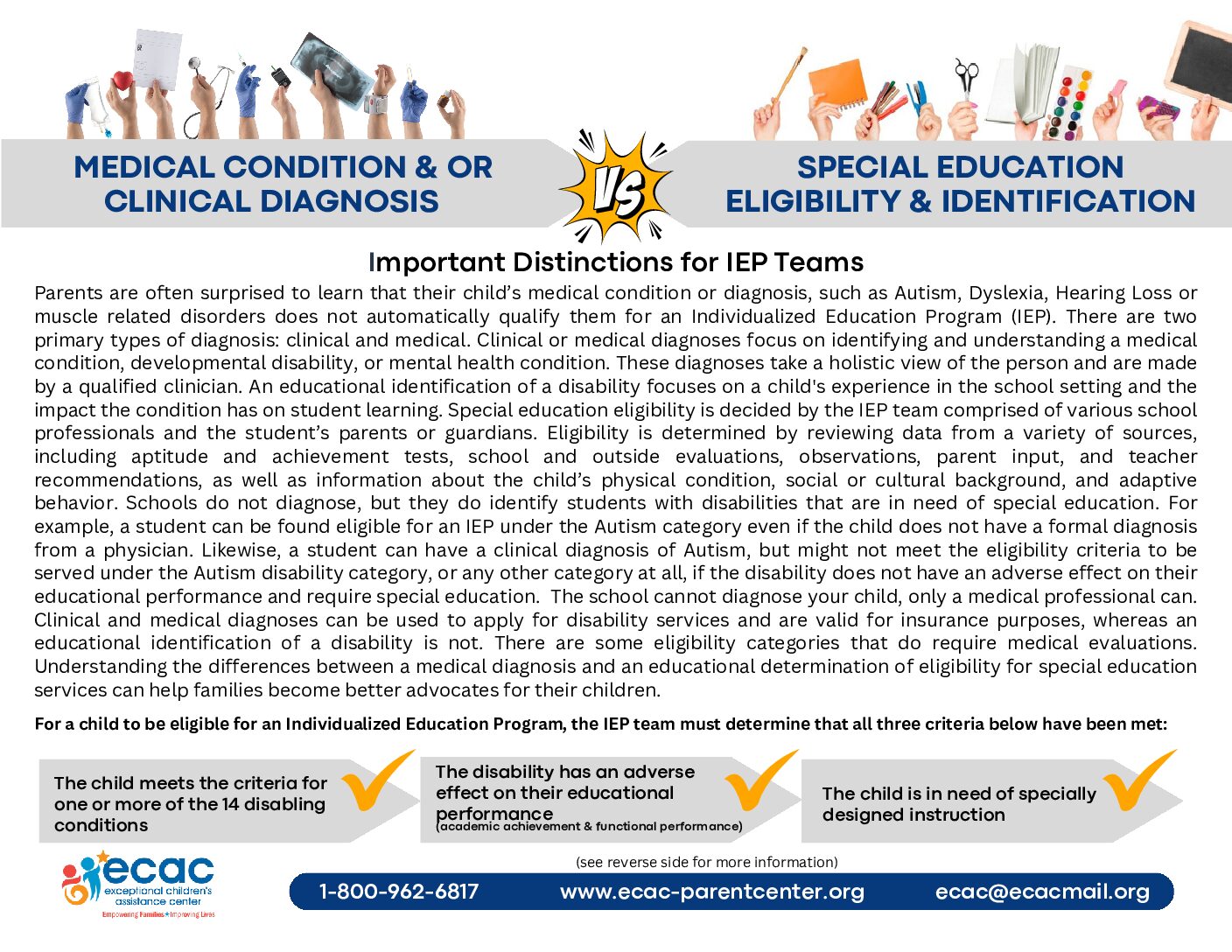
Medical Condition/Clinical Diagnosis vs. Special Education Eligibility & Identification
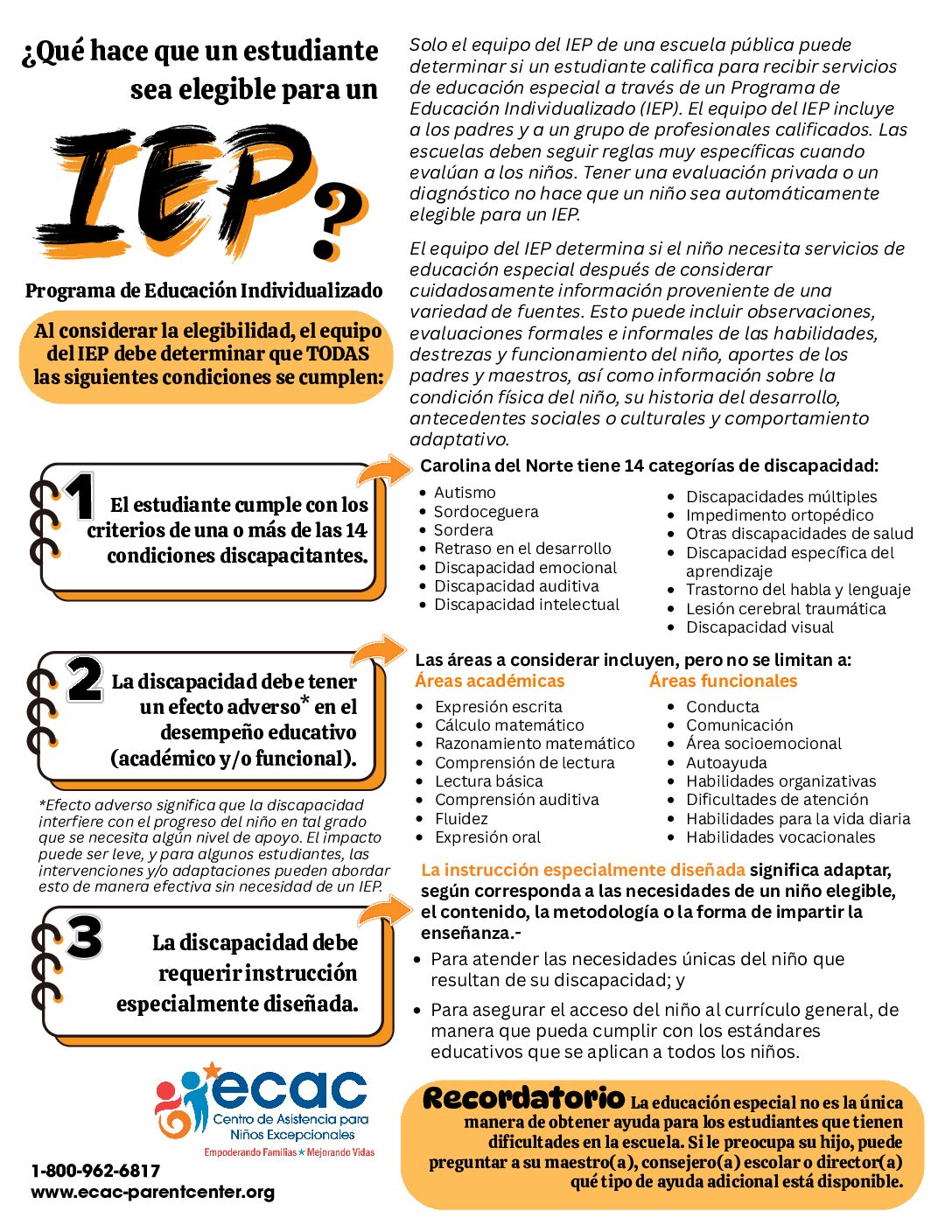
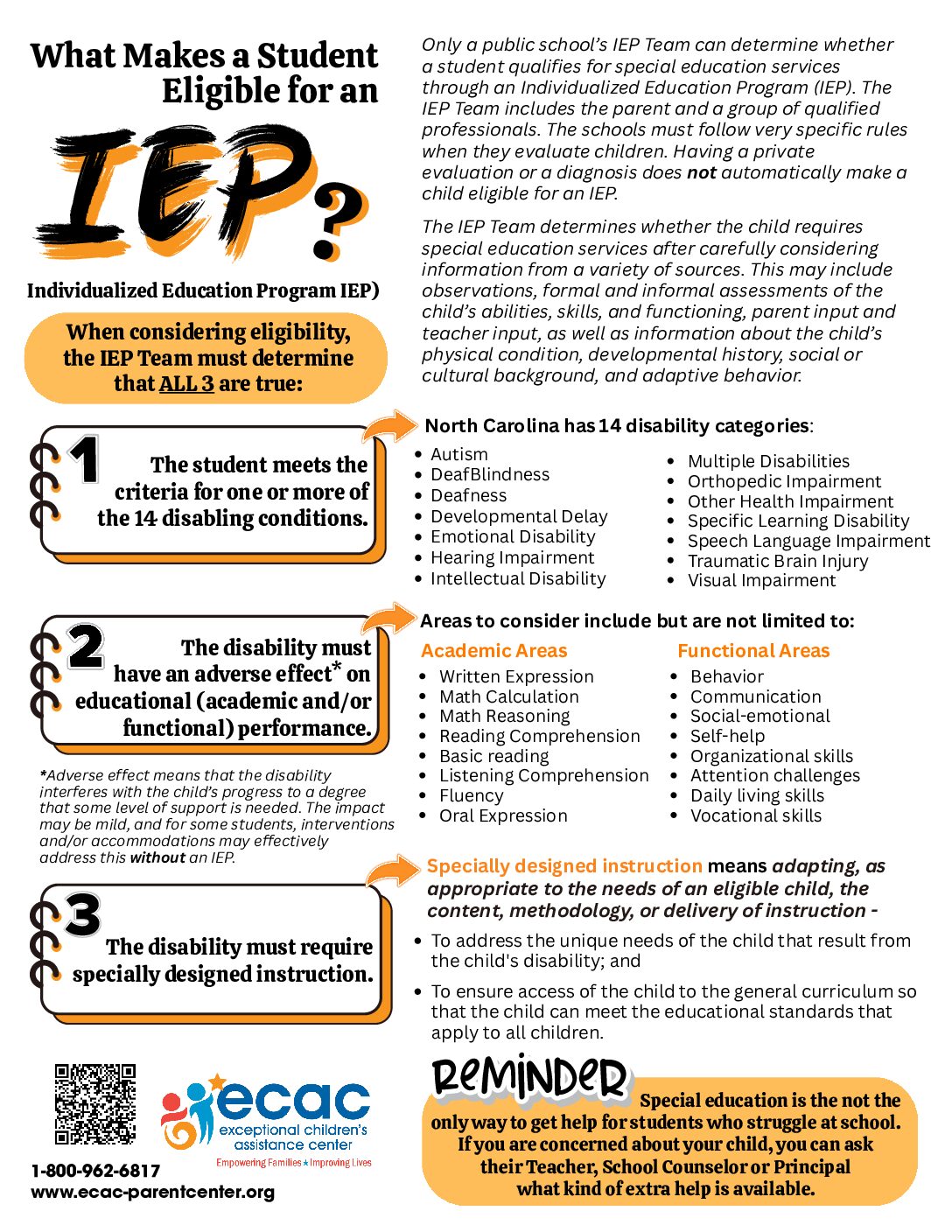
Parents are often surprised to learn that their child’s medical condition or diagnosis, such as Autism, Dyslexia, Hearing Loss or muscle related disorders does not automatically qualify them for an Individualized Education Program (IEP). Understanding the differences between a medical diagnosis and an educational determination of eligibility for special education services can help families become better advocates for their children.
Categories: Disability and Health Condition Specific Information, IEP, Special Education
Conseils de l'IEP à retenir
CHAQUE enfant peut apprendre et faire des progrès.
Les étapes du processus PEI doivent être suivies dans l'ordre correct.
Le "I" dans IEP signifie individualisé. Le PEI de votre enfant doit refléter votre enfant.
Le PEI doit être spécifique, détaillé et facilement compréhensible par quiconque - même s'il ne s'agit pas d'un membre de l'équipe actuelle du PEI.
L'éducation spéciale n'est PAS un lieu. L'éducation spéciale est le soutien et les services que votre enfant reçoit par le biais de son PEI.
Sur l'IEP, le placement n'est PAS un lieu. Le placement est le temps passé avec les services d'éducation spécialisée.
Les déclarations concernant le niveau actuel des résultats scolaires et fonctionnels de votre enfant sont des éléments essentiels du PEI. Elles doivent être claires et précises.
Les objectifs doivent être logiques, mesurables et pertinents pour votre enfant.
L'équipe PEI doit travailler ensemble pour parvenir à un consensus. Il n'y a pas de vote !
Restez concentré ! Ne vous laissez pas distraire.
Les parents sont la constante - assurant la continuité d'une équipe PEI en constante évolution.
Le manque d'argent et/ou d'autres ressources ne dispense pas un district scolaire de fournir ce dont un enfant a besoin.
Ne quittez pas la réunion sans une copie du PEI de votre enfant !
Téléchargez une copie de la liste de contrôle PEI de la CEAC... et utilisez-la !