As we move into the new year, we’re feeling reflective and thankful. This year marks the retirement of three extraordinary ECAC team members: Beverly Roberts, Cheryl Strupe, and Doreen Byrd - who together dedicated an incredible 93 years of service to families. Their knowledge, compassion, and commitment helped shape ECAC into what it is today, and their impact will continue to be felt long after their last day. We are deeply grateful for their leadership and the countless families whose lives they touched along the way.
 Doreen Byrd
When did you begin working at ECAC, and what inspired you to join the organization?
I started on January 4, 1999. I had spent almost 10 years as the Screening Specialist with the Mecklenburg County Developmental Evaluation Program. When parents had issues with their child’s school or were just starting out with the special education process, we frequently referred them to ECAC. At some point, I concluded that I wanted to be part of helping parents in that way—without any conflicts of interest.
What roles have you held during your time here?
I have been a Parent Educator throughout my entire 27 years with ECAC. At some point, I was given the title of Lead Parent Educator to officially recognize that I often provided consultation to other Parent Educators.
What has been the best part about working at ECAC?
As a person with ADHD myself, I love that no two days are ever the same. Every person who contacts ECAC for individual assistance has a unique situation. Sometimes things come up that totally throw off the plan that you had for the day. You have to have some cognitive flexibility to do this work and not go crazy. It is not for everyone. In addition to our standard activities, over the years I have had other great opportunities to attend all types of trainings and conferences (sometimes as a speaker), offer input on state policies and even participate in a national “think tank” focused on graduation requirements and students with disabilities.
What has been the hardest part of your work at ECAC?
I am a problem solver by nature, but some of the problems that come to us do not have clear or easy solutions. I knew that I did not have a magic wand, but I was sometimes haunted by not being able to at least point a parent toward a light at the end of their tunnel. Sometimes, all I could do was validate their feelings and assure them that they had done all that they could do as a parent living within imperfect systems.
What is one of your favorite memories from your years at ECAC?
Witnessing parents grow in their confidence as they learned the rules of the special education “game” and essential advocacy skills. Whenever folks ask me about my most satisfying experience as a Parent Educator, what immediately comes to mind is a Dad who went from repeatedly saying that “they are the professionals…” as I prepared him for his child’s IEP meeting, to literally taking charge of the IEP meeting in a constructive way the following day. I just sat back and watched him roll! He realized that his knowledge of his child had as much value as the college degrees that the professionals held.
What advice or takeaway would you share with families raising a child with disabilities?
I have shared this advice with parents of children with and without disabilities: Do the best that you can with what you have to work with at the time…and don’t look back! There is nothing to gain by second-guessing yourself. Perfection is not a reasonable standard for human beings, even parents.
What advice or takeaway would you share with professionals who serve children and youth with disabilities?
The message is similar. Recognize that you don’t have all of the answers and shouldn’t be expected to. Be willing to ask for help. Also, place value on the knowledge that parents have about their own child. Every person is unique, and parents probably know things that can help you be more effective. True partnerships are built on mutual respect.
What message or advice would you share with current and future ECAC staff?
Support each other and everyone will be better off for it. Regardless of the role, we all share a passion for serving families and youth. That common mission is what has made the organization great and allows staff to push through the challenges that will inevitably come your way. You are not on an island by yourself.
What are your plans for retirement?
I am really looking forward to having more time to focus on my personal priorities, instead of trying to squeeze life in around my work. I want to get more exercise (and actually do the activities recommended by my Physical Therapists), spend more time with my grandchildren and see more of the natural marvels in our national and state parks.
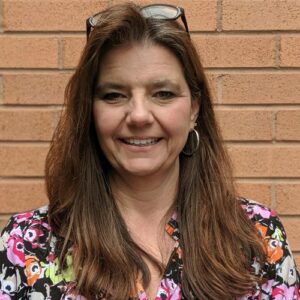 Cheryl Strupe
When did you begin working at ECAC, and what inspired you to join the organization?
I began working at ECAC in September 1995. I attended a preschool conference that ECAC was putting on. I wanted to learn more about how I could help my child. I learned a lot and that inspired me want to help other parents.
What roles have you held during your time here?
I started as the Administrative Assistant to Executive Director, Connie Hawkins. I moved to the Production and Data position and with the help from my assistant, we put together thousands of information packets set to families across the state and finally Data Manager.
What has been the best part about working at ECAC?
Meeting other parents and staff who are living/raising children with disabilities. I've made many memories that will go with me into retirement.
What has been the hardest part of your work at ECAC?
Probably leaving such a wonderful group of friends that I have made here.
What is one of your favorite memories from your years at ECAC?
Working with other parents and of course working with Rachel in the Production Department.
What advice or takeaway would you share with families raising a child with disabilities?
Some of the best advice I was given was to treat my child the same as you would any child. Push her to do as much as she can. Help her be as independent as possible.
What advice or takeaway would you share with professionals who serve children and youth with disabilities?
Listen to the parents, they are truly your best opportunity to learn the most about the child/youth. We live it. We know what we see and how it affects our child.
What message or advice would you share with current and future ECAC staff?
Each and every staff member plays an important role in helping parents/professionals in NC help children with disabilities.
What are your plans for retirement?
Currently I sew/quilt for several charities for children and am wanting to increase my time sewing for them. I also will be enjoying time with my grandsons and going to spend long periods of time at the beach.
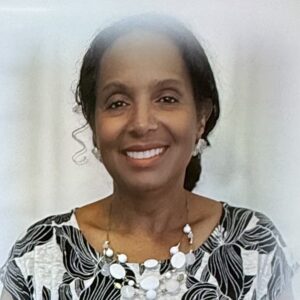 Beverly Roberts
When did you begin working at ECAC, and what inspired you to join the organization?
I began working at ECAC in 1991, though my connection started years earlier when I attended a workshop in 1986. At the time, I needed help to understand the special education process for my son, Charles Eric, and ECAC’s support made a real difference. Over the years, my involvement grew from volunteer to Board member and eventually staff. I was inspired to join the ECAC team because ECAC had walked alongside me when I needed guidance most, and I wanted to be part of offering that same support to other families.
What roles have you held during your time here?
I started at ECAC as an Outreach Coordinator and Parent Educator. In 2001, I became Project Coordinator for the Parental Information and Resource Center, which supported Title I families and schools. After that project ended, I worked on state contracts and Early Intervention projects. Since 2014, I’ve served as Family Engagement Manager, focusing on building strong relationships between families and schools to support student success.
What has been the best part about working at ECAC?
The best part of working at ECAC has been the strong sense of community and the feeling that the work we do together, really matters to families and to us.
What has been the hardest part of your work at ECAC?
Early on, one of the hardest lessons for me was learning how to care while also keeping an appropriate professional distance. As a parent, it was natural to care deeply, but I also had to keep enough perspective to best support families.
What is one of your favorite memories from your years at ECAC?
What stands out most are the moments when families reached back out over the years to share the milestones, those small and big victories they wanted me to know about. Being trusted with those moments was always a gift.
What advice or takeaway would you share with families raising a child with disabilities?
Trust your instincts, no one knows your child better or wants more for your child than you. Speak up when it matters, ask questions, and take time to pause and care for yourself. As they say, life is a journey, not a race, pace yourself!
What advice or takeaway would you share with professionals who serve children and youth with disabilities?
See families as true partners and take the time to listen, understand, and honor their experiences. Dream alongside them for what’s possible for their child. The work you do matters, sometimes in ways you may never know.
What message or advice would you share with current and future ECAC staff?
Take care of yourselves. Use your PTO, step away when you need a break, and recharge. You can only give your best when you take care of yourself.
What are your plans for retirement?
Retirement will be a new chapter, and for now I’m giving myself permission to take it slow and see where it leads. One thing I know for sure, I will continue advocating for children/adults with disabilities, honoring the parents who came before me, so we don’t lose ground but pass the legacy forward.